FIELD Guide – A Terrestrial Lexicon & Multispecies Index
Digital edition 2026
EDITORS
Gareth Kennedy and Seoidín O'Sullivan
DESIGN
Dervla Clarke, POND Studios, www.pondstudios.com
Published by National College of Art & Design (NCAD), Dublin, Ireland, 2023–24.
This book is published within the framework of the programme Museum of the Commons, taking place between 2023 and 2027, organised by the European confederation L’Internationale and co-financed by the Creative Europe Programme of the European Union.
Contents
-
1.Preface: On Becoming Terrestrial & Commoning Knowledge
-
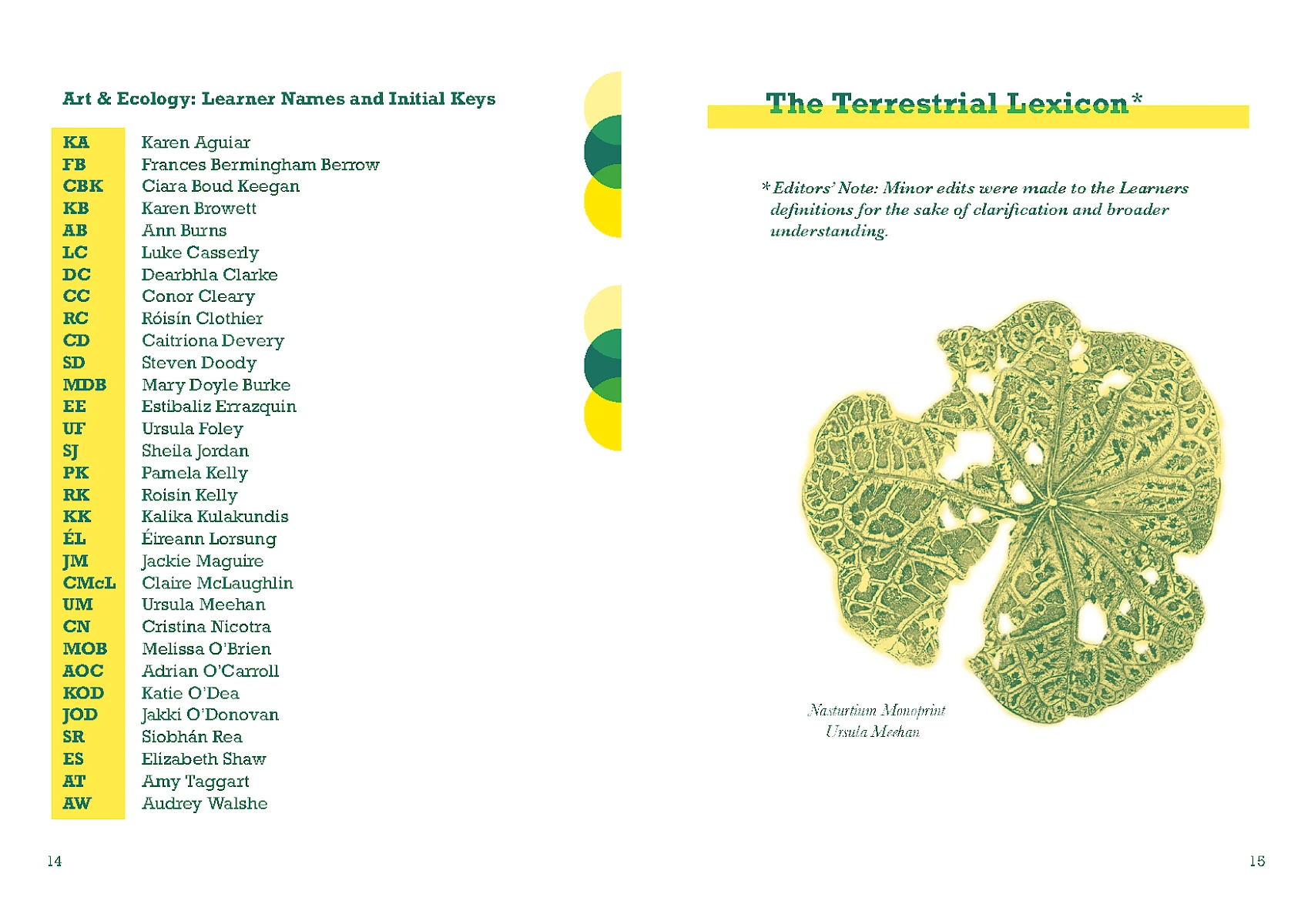
2.Art & Ecology: Learner Names & Initial Keys
-
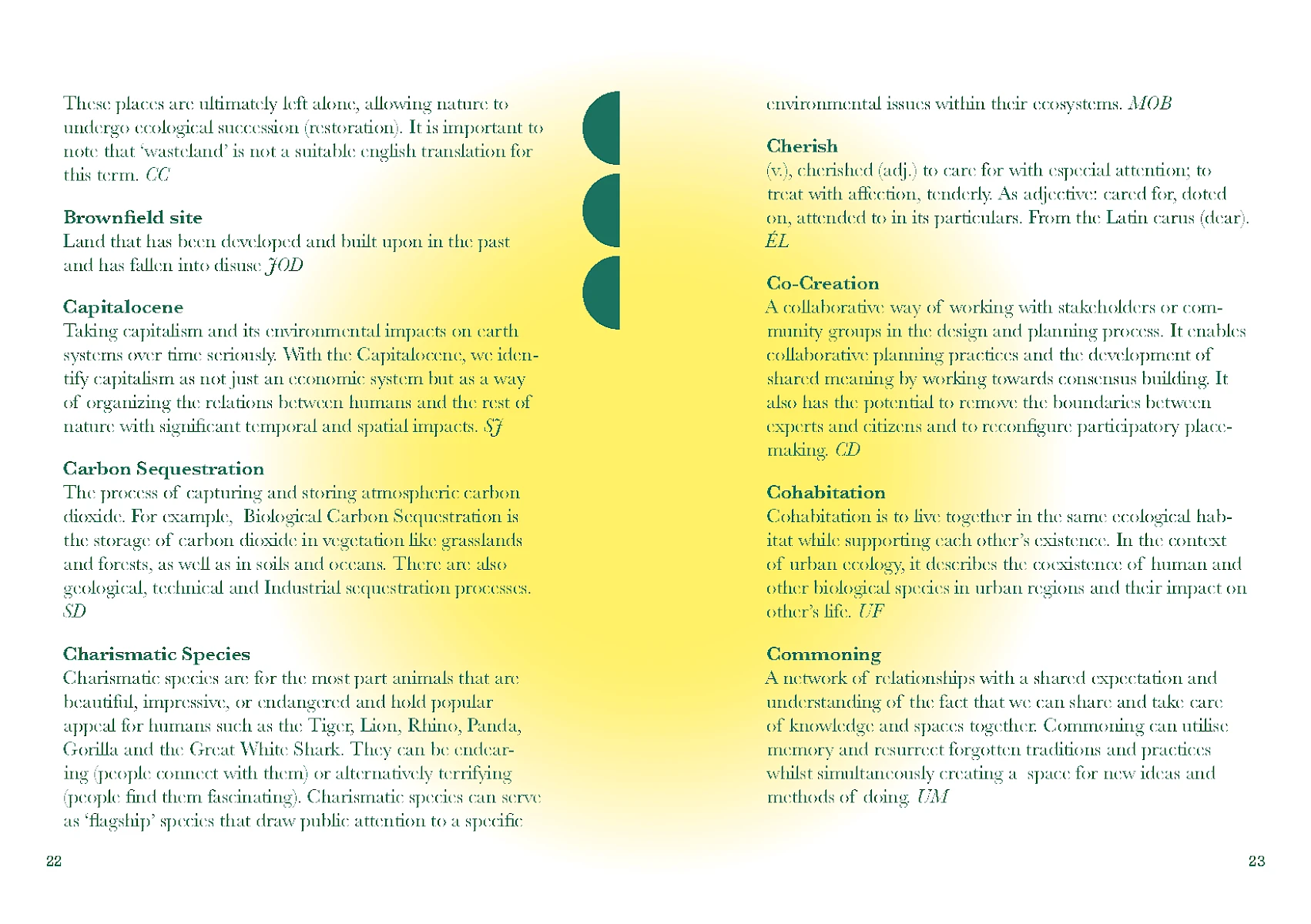
3.The Terrestrial Lexicon
-
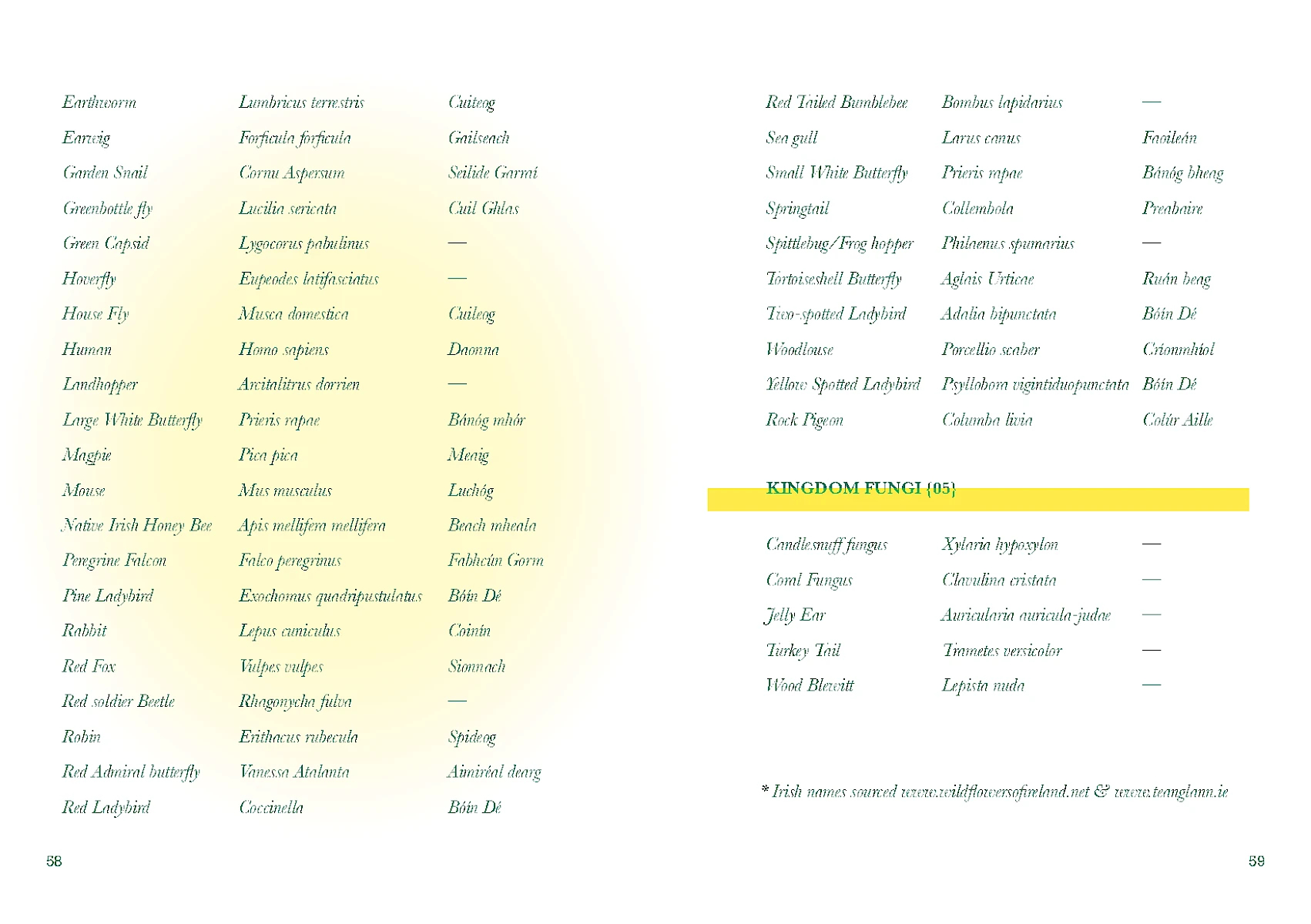
4.The Multispecies Index
-
5.Tutor & Learner Biographies
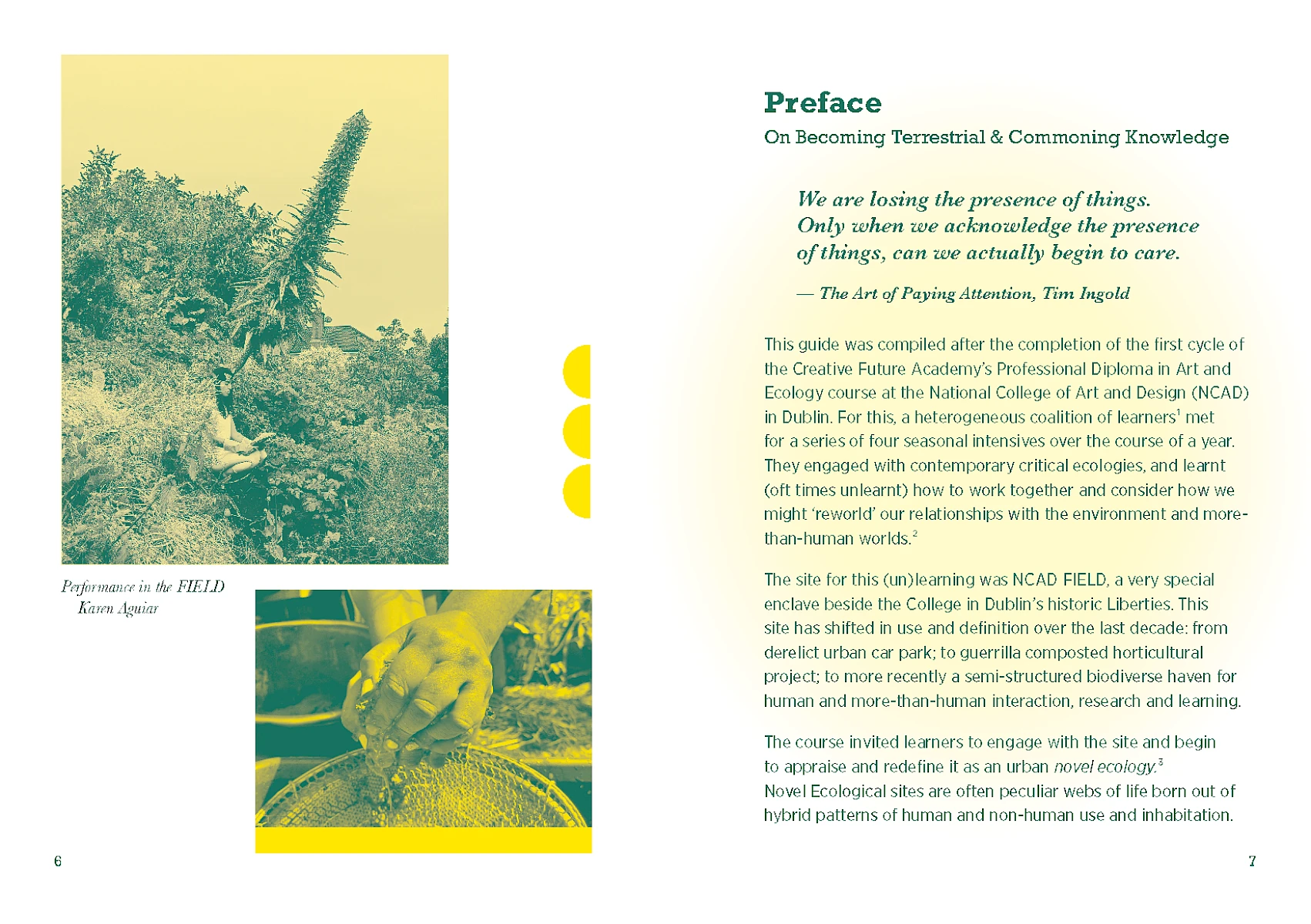
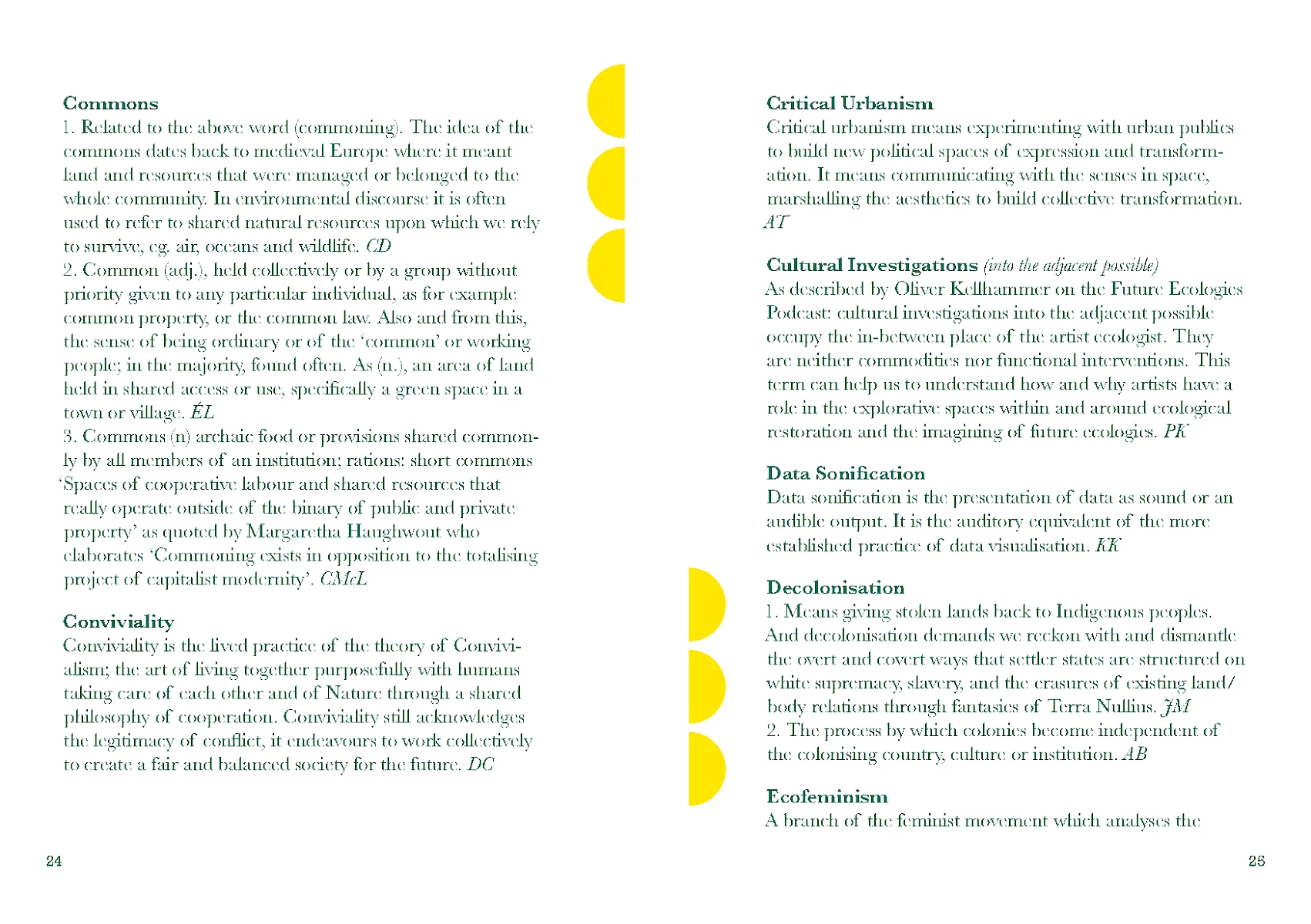
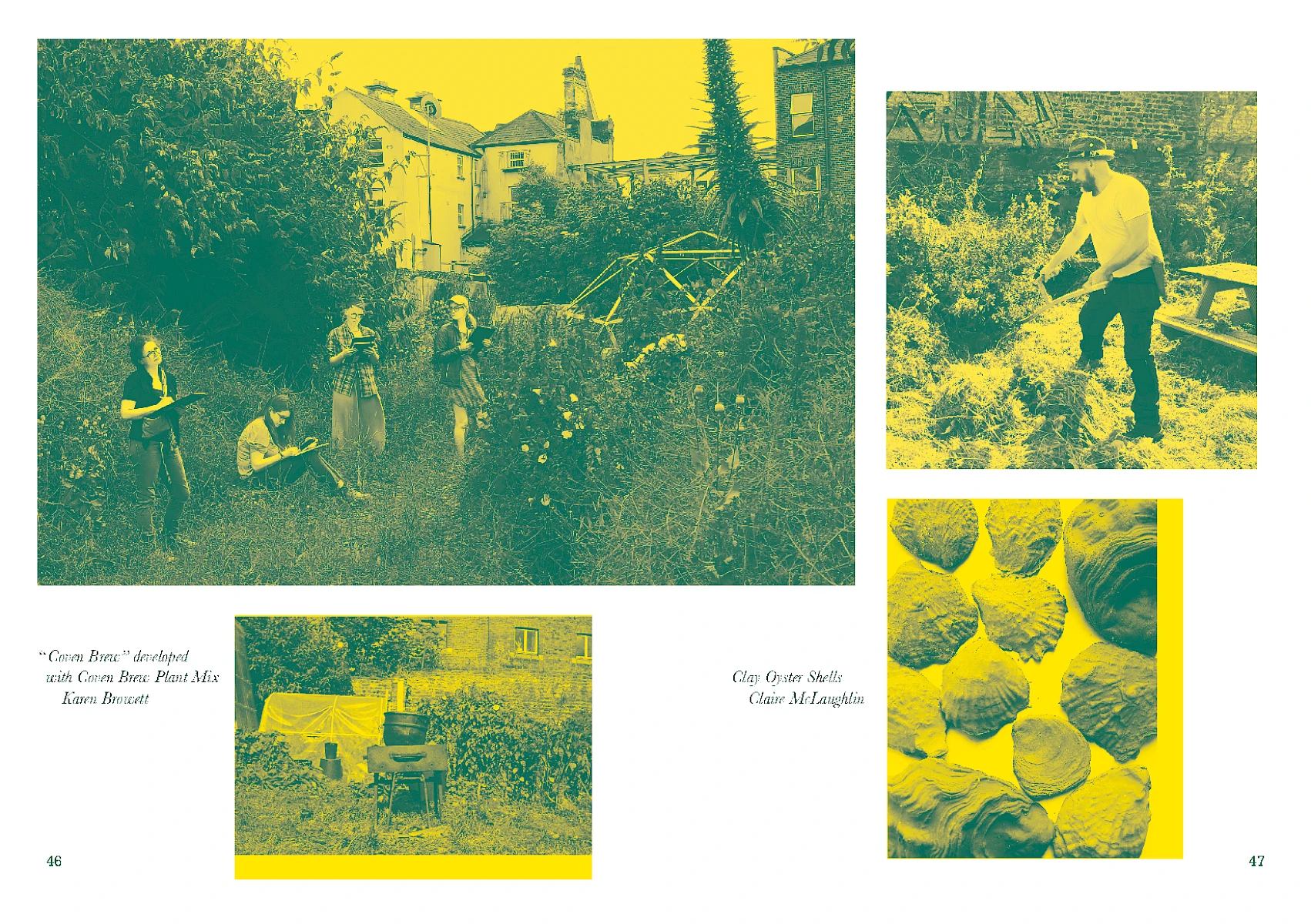
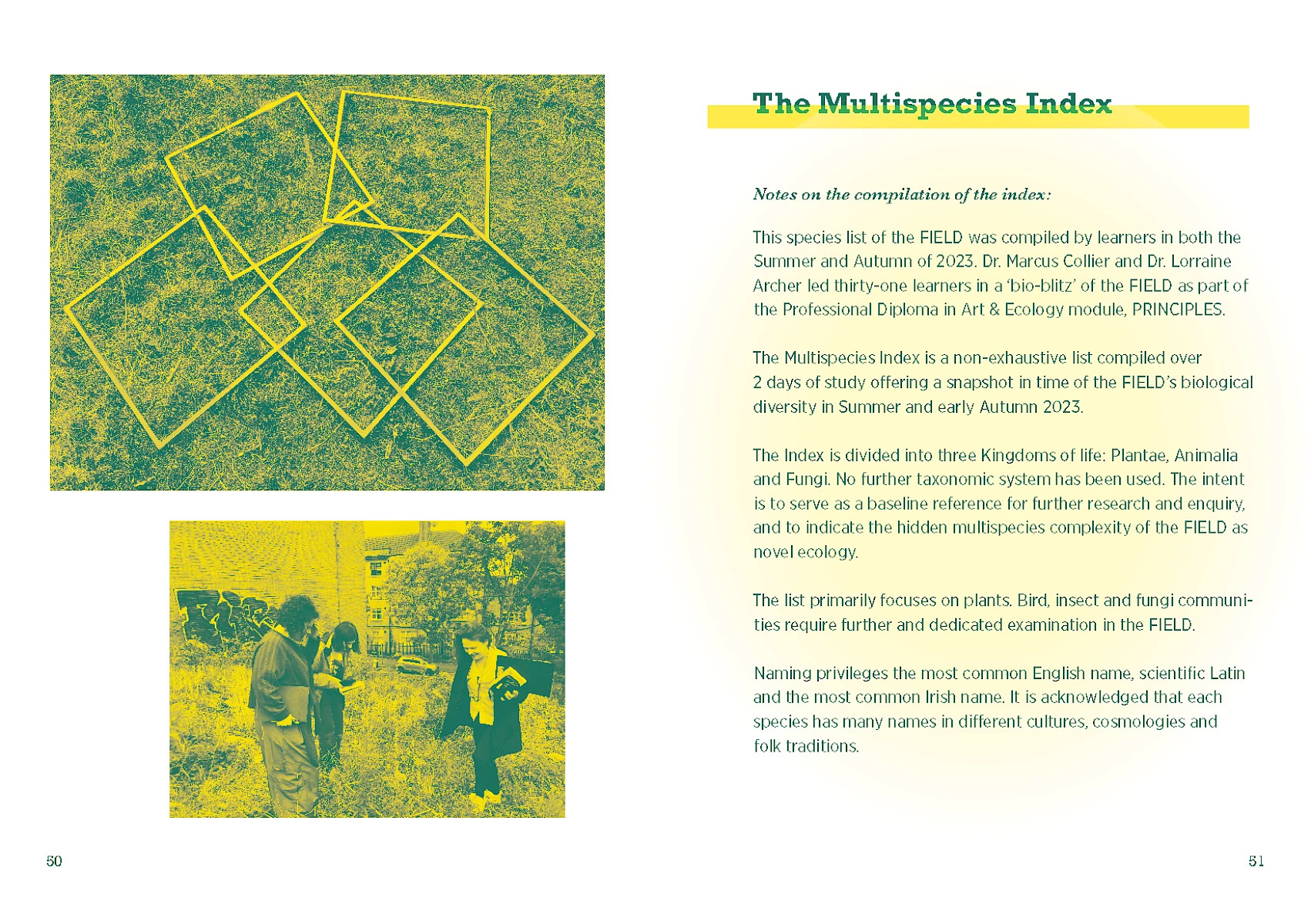
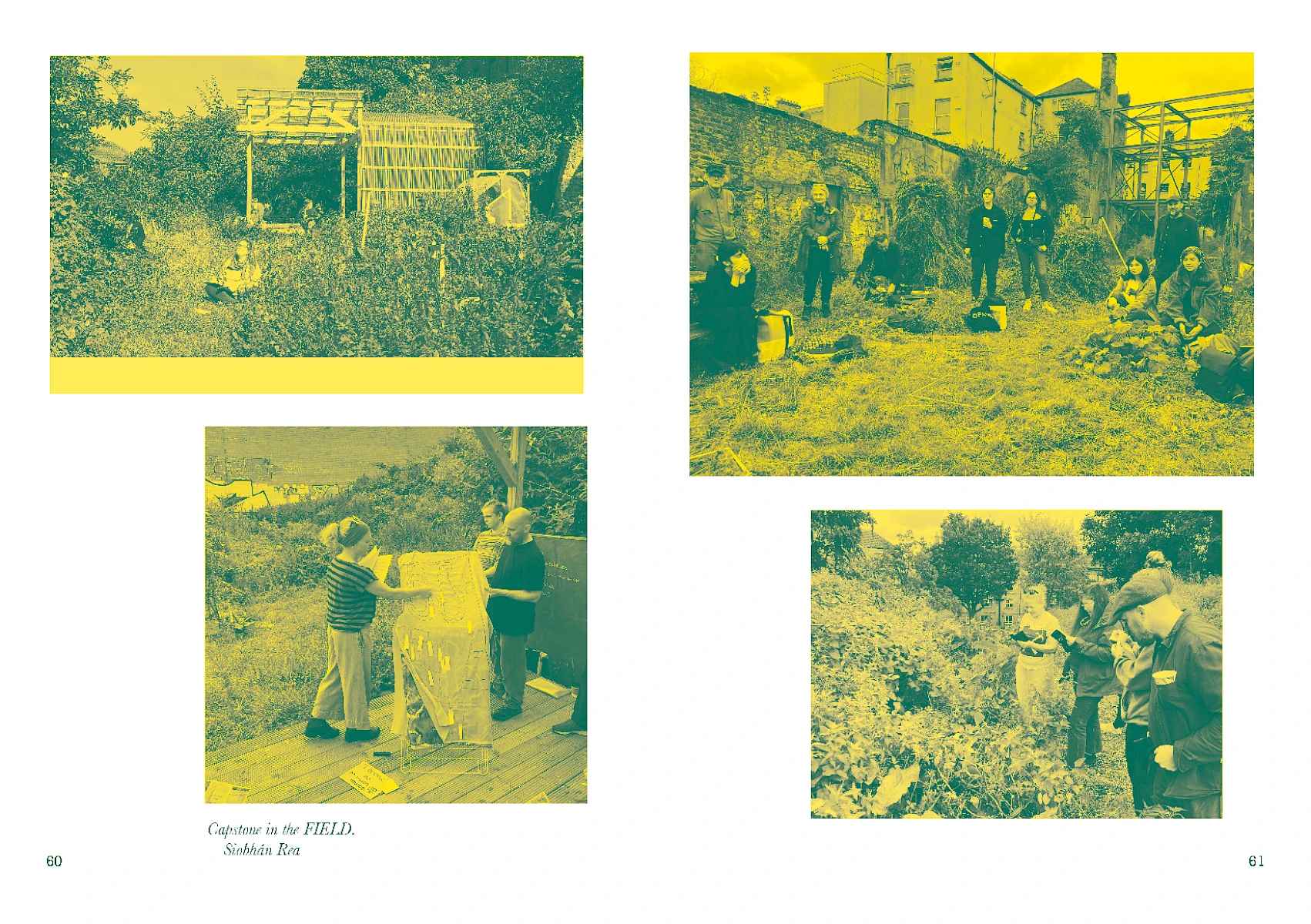
FIELD Guide – A Terrestrial Lexicon & Multispecies Index was compiled after the completion of the first cycle of the Creative Future Academy’s Professional Diploma in Art and Ecology course at the National College of Art and Design (NCAD) in Dublin. A heterogeneous coalition of learners met for a series of four seasonal intensives over the course of a year. They engaged with contemporary critical ecologies, and learnt (oft times unlearnt) how to work together and consider how we might ‘reworld’ our relationships with the environment and more- than-human worlds.
The site for this (un)learning was NCAD FIELD, a very special enclave beside the College in Dublin’s historic Liberties. This site has shifted in use and definition over the last decade: from derelict urban car park; to guerrilla composted horticultural project; to more recently a semi-structured biodiverse haven for human and more-than-human interaction, research and learning.
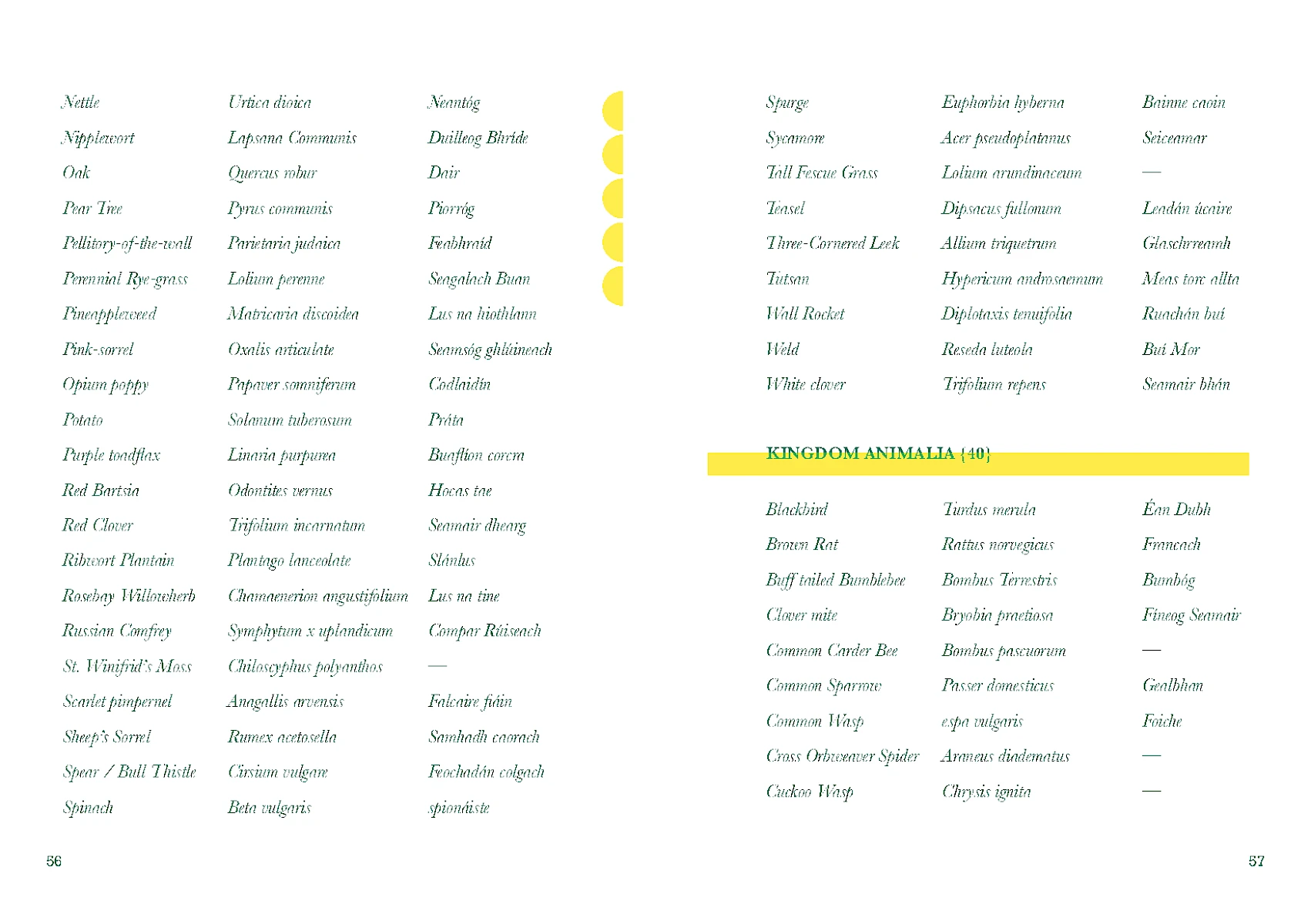
As a snapshot in time and an inexhaustive index, the Multispecies Index points to the surprising web of complex life in the FIELD, affirming it as a true novel ecology, and not merely a brown field or derelict terra nullius awaiting future development. Ongoing pedagogical work tasks us with creating the conditions that all the species in the index (and more besides) might flourish, as well as the learners and staff that find themselves entangled in the FIELD conducting research, making work or even just enjoying the space.