I Call Out to You
In her text, originally published for the ‘The Soils Project’ and accompanying book (Van Abbemuseum, 2024), Zena Cumpston reflects on her relationship with plants as a First Peoples (Barkandji) artist. Riffing on the significance of ‘Country’ to Aboriginal and Torres Strait Islander people she explains the interwoven nature of ‘the cultural, political, spiritual and physical aspects of what many may call "soils"’.
Our Barkandji way of saying hello is to say ‘ngayi’.1 This is not literally a ‘hello’, but more a way of calling out to someone. It is pertinent that our way of greeting and acknowledging cannot directly translate because now, in the terrible times we bear witness to together, we must not just connect through inane social conventions, we must call out to each other.
My world revolves around my love of plants, which, if you visit my work as part of ‘Soils’ (2024) at Van Abbemuseum, will be obvious. I am in love with plants because they bring people into a relationship with Country, and when we are properly in relation, we begin to care more. We get excited as we learn, and we perhaps start looking at the world around us in a more connected way. When people learn of the deep knowledge embedded in indigenous plants, I see them open themselves to a pathway towards meaningfully respecting and understanding my people, and importantly, better understanding their responsibility to look after the place they call home.
Plants have been the foundation of our ability to thrive and to survive as the oldest living culture on Earth. We have ingeniously utilized them over many millennia to provide around 80 percent of our diets.2 We have learnt to utilize plants, sometimes taking them through multiple distinct and highly scientific processes that can change them from highly poisonous and deadly to highly nutritious and life-giving. For many years I have researched, written and spoken about Indigenous plant use. At the end of 2022 I learnt to make linocuts, a strong art form in my Barkandji community. We have always been known for carving. For tens of thousands of years we have carved our knowledge of Country and our stories into rock. Today we are well known as carvers still, but now more often with wood, emu eggs and linocut. Within a few weeks of joyous and prolific making I created my first series ngarta kiira (to return to Country). Art-making is an exciting new way for me to explore my research, to map my learning, to share my understanding of and love for my plant kin. The many years I have spent reading, researching and speaking with my Elders and my community have gifted me with more stories than I will perhaps ever have time to tell within this new visual adventure. I utilize many symbols and unique pairings to convey plant knowledge in this series, and many Aboriginal or Torres Strait Islander people will see aspects within it that are perhaps invisible to those outside. Within this series I also speak to the symbiotic relationships between people, plants and animals on my Barkandji country.3
Our cultures as Aboriginal and Torres Strait Islander peoples are incredibly diverse. Before our homelands were invaded by the colonizers we had more than three hundred and fifty distinct languages and many, many more dialects. Just as our languages are diverse, so too are our knowledges, our Laws, our landscapes and our cultural practices. While we shared and co-operated with other groups (intermarrying, trading, coming together to share culture, language, technologies and resources) this exchange was always undertaken by following strict codes of behaviour that particularly honoured the rights of those whose lands were being visited. The colonizers continuously failed to recognize our diversity – as those who wish to overtake, negate, erase, suppress and eradicate always do – as one homogenous group and, sadly, this misconception continues today, working to reduce, redact and obscure through stereotype. Homogenizing effects a watering-down of our individual rights to our cultural landscapes and our complexity, unique identities and inheritance.4 It hides the power and the truth of what we have to offer in the effective care and management of Country.
And here I must add complexity to our shared understanding of our cultural diversity as the First Peoples of ‘Australia’, for we also have many shared beliefs and understandings, perhaps the most important of which is our understanding of Country. We don’t talk much of ‘soils’ across our cultures. Instead we speak of ‘Country’ and our shared conceptualization of Country is important to understand, because it is how we collectively envisage much of the cultural, political, spiritual and physical aspects of what many may call ‘soils’:
But to Indigenous people, Country is so much more than the land, seas and waters. It encompasses all living things and all aspects of the environment, as well as the knowledge, cultural practices and responsibilities connected with this. A common view is that we belong to Country, rather than Country belonging to us.
Caring for Country is holistic, with the physical interconnected with the social, the cultural and the spiritual. Sustainable environmental practices are embedded in our culture through traditional hunting, harvesting, and managing plants and animals. Our cultural expressions reflect our symbiotic relationship with Country. Our stories are evidence of the countless generations of interaction with and nurturing of Country, and we continue to speak, sing and enact our connections. In Indigenous world views, the health of the land, water, sky and people are deeply interconnected. If Country is sick, our people are sick. Healing Country means healing ourselves.5
The stories of our plants are a landscape that I have spent much time traversing. For me, Aboriginal and Torres Strait Islander interactions with our plant kin over deep time illuminate not only the complexity of our knowledge and the effectiveness of oral transmission over millennia, but also the ignorance and ongoing extractive project at the core of colonization. Due to many incursions across our cultural landscapes (but most especially intensive agriculture and land clearing) there are now more introduced plant species in Australia than native species.6 This is particularly troubling when we consider that two hundred scientists from thirty countries worldwide recently identified Australia as the country with the highest proportion of unique plant species on Earth.7 So, we are integral to the continued health of biodiversity on the planet but we are also overrepresented as a leader in extinction since colonization began in Australia just over two hundred years ago.
In my co-authored book, Plants: Past, Present and Future (2022), I devoted an entire chapter (‘Looking Back, Moving Forward’) to the history of past failures to recognize our custodianship and knowledge and how this relates to the ongoing circumstance and rampant extraction that sits at the core of the colonial project in Australia today:
Botanists interacted with Indigenous peoples across Australia, these connections were so rarely conducive to respectful engagement. The Indigenous people who accompanied botanists provided vital knowledge of Country needed to find and identify specimens and explain their many uses, as well as word lists and the context of their importance, not only for people but within the larger ecology: for example, their symbiotic relationships with other plants and animals. Despite their centrality to the collection and documentation processes, Aboriginal guides were seen merely as informants, not skilled knowledge holders; resources to be mined and discarded when they no longer served a purpose. Curiously, these early botanists and naturalists are still credited with the discovery of species, completely erasing many millennia of Indigenous peoples’ expert knowledge, custodianship, stewardship and innovation related to plants.8
Over and over we see the ongoing harms of colonization in the disrespect for and erasure of Indigenous knowledge. Today, many scholars, both Indigenous and non-Indigenous, have posited colonization and its ongoing circumstance as irrefutably linked to climate change.9 While some cling to the idea that our climate catastrophe is the great equalizer (affecting all peoples), in truth, climate change has been proven as more immediately, directly and catastrophically affecting Indigenous peoples worldwide.10 In a cruel irony, as articulated here by the United Nations, we contribute to climate change the least:
Climate change poses threats and dangers to the survival of indigenous communities worldwide, even though indigenous peoples contribute the least to greenhouse emissions. In fact, indigenous peoples are vital to, and active in, the many ecosystems that inhabit their lands and territories and may therefore help enhance the resilience of these ecosystems. In addition, indigenous peoples interpret and react to the impacts of climate change in creative ways, drawing on traditional knowledge and other technologies to find solutions which may help society at large to cope with impending changes.11
The Intergovernmental Panel on Climate Change (IPCC), for the first time since it began over three decades ago, acknowledged in a 2022 report that colonialism is a historic and ongoing driver of the climate crisis.12 Until we accept that in order to heal our Earth we must stop subjugating people and lands, it seems the climate crisis will remain on its same terrifying trajectory.
Today, many would have us believe that Indigenous knowledge is finally being respected and empowered. In ‘Australia’ I assert that this is certainly not the case. We hear government, scientists and the wider community speaking of its importance and centrality, without meaningful action to empower the holders of this knowledge, Aboriginal and Torres Strait Islander communities. Perhaps no greater evidence of the lie of this supposed respect and wish to empower can be seen than in our recent referendum to empower First Peoples in decision making, to give Australia’s First Peoples a ‘Voice to Parliament’ (much like the one surreptitiously enjoyed for decades by mining companies). After many months of enduring soul-destroying racist tirades in the media we watched a landslide ‘no’ vote prevail before polls had even closed across the country.[[thirteen]
As an Aboriginal person who worked in academia for many years, I have seen the institutional smoke and mirrors that tips its hat to ‘decolonizing’ practices in knowledge production. I eventually limped away from the institution, battered, bruised and demoralized. Over and over again, I saw our knowledges being extracted, our Indigenous Intellectual and Cultural Property receiving no protections. Promises of reciprocity were broken and our people kicked to the curb once the ‘decolonizing’ optics no longer required their presence. I saw non-Indigenous people repeatedly elevated as leaders in Indigenous knowledge.14 I cried myself to sleep too many times after falling into traps that used all the right language but were in fact designed to ‘show’ engagement while enacting dispossession and white supremacy.15
There is perhaps no better example of the ways in which this respect-for-Indigenous-people-and-knowledge-sleight-of-hand plays out in Australia than the ‘bush foods’ industry. This industry revolves around cultivating and commodifying the ancient foodways of Australia’s First Peoples and is highly lucrative, generating more than 80 million Australian dollars in revenue. By 2025 this is estimated to double to 160 million Australian dollars.16 Sadly, less than 2 percent of the benefit of this industry goes to Aboriginal and Torres Strait Islander people. An industry built on our knowledge and use of plant foods, our thousands of years of custodianship and scientific innovation delivers very little benefit to Aboriginal and Torres Strait Islander communities. And yet, it is almost continuously conceptualized, spoken of and showcased as a celebration and empowerment of our people and culture.
The text included in my series ngarta-kiira (to return to Country) seeks to draw attention to what I see are very strong parallels between the Aboriginal art industry and the bush foods industry. My text pays homage to and directly references the work of Kamilaroi, Kooma, Jiman and Gurang Gurang activist/artist Richard Bell: specifically ‘Bell’s Theorem: Aboriginal Art—It’s a White Thing!’ (2002).17 Bell brilliantly illuminates and critiques the disparities in benefit of the (also highly lucrative) Aboriginal art industry. This industry also most often sits within the Australian psyche as one which uplifts and empowers Aboriginal and Torres Strait Islander communities, but which, in real terms, too often delivers more gains to its non-Indigenous participants. The inequities and injustices of this, our shared world, must be taken apart and examined.
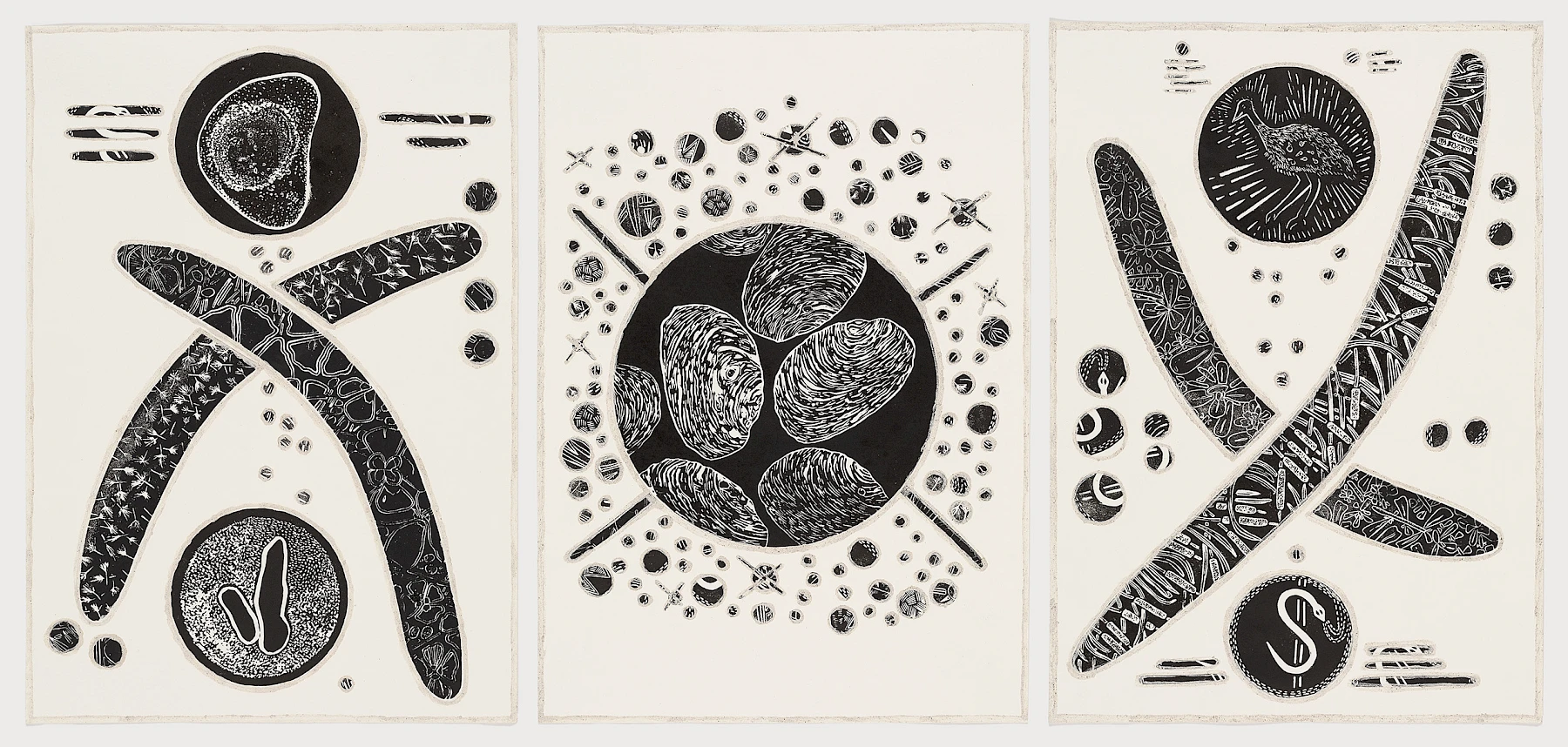
Zena Cumpston (Barkandji people), Ngayi – I call out to you, 2024, triptych, Melbourne, Wurundjeri Country, lino collage, kopi, on Fabriano paper, artist’s proof, 59.4 x 42 cm. Courtesy the artist
I cannot be given a platform to speak without speaking for those whose voices are being denied. To fail to do so renders my daily mission, every part of the work I do to empower my own colonized people, devoid of any integrity. Many conflicts are happening right now, many of them may be conceptualized as, at their core, fights over land that enact both colonization and genocide. But whether you can truly see what is being enacted or not, there is no question that colonization and capitalism have been proven over time to coalesce to destroy our lands, and with this, eventually, all life.
As artists we are privileged as the storytellers of our communities, but we also have a responsibility to hold a mirror to our society and to speak for those who do not have a platform to be heard. To create works that matter, artists must be brave, they must boldly tell the stories of their people and culture and importantly, be supported with safe cultural spaces in which to operate, no matter how difficult and challenging some of those stories may be. Our arts community is terminally ill if it is a place of bullying, of fear, of censorship, of self-interest, of silencing. It must never be a space bereft of community, to be healthy and vibrant it must embrace and support collective action, solidarity, but most importantly care. If you advocate only for yourself as an artist you are, at best, narcissus, frozen within vacuous self-interest and failing miserably in the deep honour bestowed upon you as a storyteller.
It is not too late. There is much we can all do, big and small, to fight against the horror, violence and toxicity ever-present in our world today. Leading with active care is perhaps the first step, and may reveal to us all a collective path forward.
I call out to you with a call to empower our shared humanity, with a call to action from my dear friend, activist and organizer LJ Amsterdam:
Taking action right now does not require that you have your analysis perfectly articulated, or understand the entirety of history; it does, however, require a moral fury. And choosing action is a commitment to changing and being changed. I am not stuck–not stuck in my ways, my beliefs, my language. I can unmoor myself from my reference points, from what I was conditioned to accept as truth, from the diversionary excuse not to act because no action I could do could possibly be of any impact. Doing more is being more. What the hands do, the heart learns.18
Related contributions and publications
-
Decolonial aesthesis: weaving each other
Charles Esche, Rolando Vázquez, Teresa Cos RebolloLand RelationsClimate -
Climate Forum I – Readings
Nkule MabasoEN esLand RelationsClimateHDK-Valand -
…and the Earth along. Tales about the making, remaking and unmaking of the world.
Martin PogačarLand RelationsClimatePast in the Present -
Art for Radical Ecologies Manifesto
Institute of Radical ImaginationLand RelationsClimateInstitute of Radical Imagination -
Pollution as a Weapon of War
Svitlana MatviyenkoClimate -
The Kitchen, an Introduction to Subversive Film with Nick Aikens, Reem Shilleh and Mohanad Yaqubi
Nick Aikens, Subversive FilmSonic and Cinema CommonslumbungPast in the PresentVan Abbemuseum
Related activities
-
HDK-Valand
Climate Forum I
The Climate Forum is a space of dialogue and exchange with respect to the concrete operational practices being implemented within the art field in response to climate change and ecological degradation. This is the first in a series of meetings hosted by HDK-Valand within L'Internationale's Museum of the Commons programme.
-
–Van Abbemuseum
The Soils Project
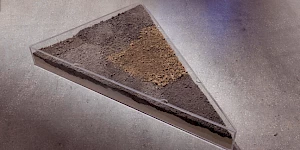
‘The Soils Project’ is part of an eponymous, long-term research initiative involving TarraWarra Museum of Art (Wurundjeri Country, Australia), the Van Abbemuseum (Eindhoven, Netherlands) and Struggles for Sovereignty, a collective based in Yogyakarta, Indonesia. It works through specific and situated practices that consider soil, as both metaphor and matter.
Seeking and facilitating opportunities to listen to diverse voices and perspectives around notions of caring for land, soil and sovereign territories, the project has been in development since 2018. An international collaboration between three organisations, and several artists, curators, writers and activists, it has manifested in various iterations over several years. The group exhibition ‘Soils’ at the Van Abbemuseum is part of Museum of the Commons. -
–VCRC
Kyiv Biennial 2023
L’Internationale Confederation is a proud partner of this year’s edition of Kyiv Biennial.
-
–MACBA
The Open Kitchen. The fermented seed, colonialism and extractivism
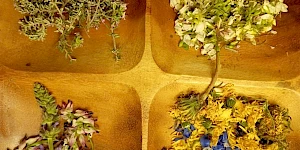
The MACBA Kitchen is a working group situated against the backdrop of ecosocial crisis. Participants in the group aim to highlight the importance of intuitively imagining an ecofeminist kitchen, and take a particular interest in the wisdom of individuals, projects and experiences that work with dislocated knowledge in relation to food sovereignty.
-
MACBA
The Kitchen: Workshop by Marina Monsonís
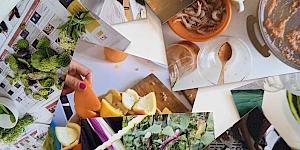
The Kitchen is a meeting place open to the participation of all, especially people and organizations that want to share their knowledge and experiences around the kitchen.
-
–MSN Warsaw
Multicultural Youth Center
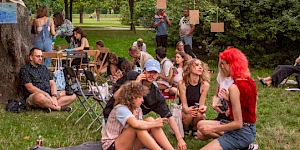
The Museum of Modern Art in Warsaw, together with the confederation of museums L'Internationale, is establishing a Multicultural Youth Center. This is a unique space for 16-24 year olds to explore and develop their creativity, make new friends and hang out in a friendly and supportive environment.