L’Internationale Ethics Guide. Towards a healthier arts ecosystem
Since 2022, a group of volunteers from L'Internationale partner institutions have met to discuss ethical cooperation within the confederation. First drafted in 2024 by a working group specializing in ethics in their institutions, this document is the result of numerous consultations with colleagues and the L'Internationale Board. The following text reflects the values and needs of the cultural workers of L’Internationale. It is a working document – as the guide articulates, ethical practices in cultural institutions is necessarily incomplete and in constant need of re-specification.
1. Introduction to the Ethics Guide – what is this?
We, the cultural workers of L’Internationale, collectively commit to cultivate ethical conditions in our shared practice. Our values are what bring us together and give meaning to our collaboration across institutions, projects, discussions and studies.
In articulating our values and how we currently understand them, offering concrete examples of how they might be upheld or breached, and setting out ways of responding when those values are challenged in practice, the Ethics Guide is intended not as a static document but as a working tool to help us hold these values present in how we collectively act, decide and relate to one another.
We offer the Ethics Guide as a practical resource not only for members of L’Internationale, but also for our partners, collaborators and activity participants across the network. By issuing the Ethics Guide at a moment characterized by ecosocial and political crises and the erosion of guaranteed human rights, we also intend to influence institutions and organizations that are part of the L’Internationale confederation in the hope that they will subsequently implement standards equivalent to those set out in it.
In creating this Guide, we are attentive to social changes, scientific developments and linguistic dynamics. We respectfully acknowledge differences of background and perspective, and remain open to discussion whenever there is apparent friction between the values of those concerned.
The Ethics Guide sets out what we strive and aim for. We acknowledge that this work will never be finished or complete. The field of ethics is one of ongoing self-reflection, discussion and improvement, and this document will change as we grow in this regard.
2. Who wrote the Ethics Guide?
L’Internationale’s first Mission Statement was written in 2013. It has served as the basis for the creation of this Ethics Guide. (The current Mission Statement is available on L’Internationale’s platform.) Since 2022, a group of volunteers from partner institutions has been meeting to discuss the shape of ethical cooperation within L’Internationale and our needs in this area. In 2024 we created a group of people specializing in ethics in their institutions, and together they created the first version of the Ethics Guide. The document has undergone numerous consultations with working groups and the Board to ensure that it truly reflects the values and needs of the cultural workers of L’Internationale.
3. Actions / Collaborative Ethics
We believe that values are realized through actual daily work. We shall therefore strive to integrate these principles into all aspects of our activities in practice. In our understanding, art institutions are not only aesthetic spaces but also platforms for political engagement. Our initiatives amplify decolonial, anti-fascist, intersectional, feminist, queer, more-than-human and ecological perspectives (see more → projects, contributions). In doing so, we seek to avoid simplistic definitions of values, instead considering their meanings in different local contexts.
Harassment and Discrimination: We reject and shall promptly address any form of harassment and discrimination, whether verbal, written, digital, psychological, or physical, in all aspects of our work, including in relation to hiring, working conditions, evaluations, collaborations, and any other interaction within or on behalf of L’Internationale. Where such conduct occurs, it shall be addressed through the response pathways outlined below.
Prevention and Support: We shall support a diversity of voices throughout L’Internationale and take preventative measures to reduce the risk of harm across its structures and activities. The network shall ensure gender balance across the Board and in its working groups, exhibitions, collections and projects, and monitor gender representation within its teams. In relation to race, ethnicity, nationality and socio-economic background, we acknowledge that diversity remains limited and uneven across the network’s institutions at this time. Addressing this lack requires sustained structural change and cannot be reduced to short-term corrective measures. We are committed to developing practices that expand who is able to participate in, influence and shape L’Internationale’s programmes, collaborations and institutional frameworks. This includes rethinking conditions of access, decision-making and resource distribution across the network.
Communication: We shall use non-violent language, respecting human dignity, promoting empathy and openness to feedback, taking responsibility for our emotions and behaviours. We shall use gender-neutral and accessible language, avoiding ageist, ableist, classist, racist, gender-biased and other discriminatory language. We shall ensure that all people, regardless of race, ethnicity, religion, nationality, age, gender identity or expression, sexual orientation, disability, appearance, medical history, marital status, pregnancy, parenthood, political affiliation, union membership or any other category protected by law, are addressed justly. Our materials shall adopt an intersectional perspective, selecting visuals and including texts that reflect diversity. We shall exclude pejorative and demeaning language.
Knowledge Production: We shall prioritize local languages over English dominance, inviting local experts and ensuring that people are fairly compensated on the basis of accepted existing standards. Our approach to knowledges shall be based on learning rather than extraction. We aim to ensure respectful discussions in which different perspectives can be expressed and can meaningfully shape the conversation, making sure to open space for everyone to express their points of view on the topics that concern them. Each of our collaborations shall conclude with an evaluation, to incorporate feedback and create space for all voices.
Publishing: We shall ensure proper attribution of authorship and clearly indicate sources and ownership of all materials used. We shall reference both first and last names for visibility, and respect language diversity by preserving diacritics and language-specific characters. References to non-English publications shall include both original titles and English translations.
Collaborations: We shall apply principles that seek to reduce structural inequalities in our selection and participation processes, avoiding institutional biases and other exclusionary practices. We shall ensure transparent selection procedures and prioritize knowledge and experience over prestige and ‘buzz capital’, avoiding short-term, exploitative arrangements or partnerships driven by institutional branding, metrics or soft power. In organizing events, exhibitions and other projects, we shall take into account different conditions of participation and of labour, including the need to balance professional and private responsibilities. Where resources allow, support measures such as childcare shall be made available. We acknowledge and seek ways to support unpaid and reproductive labour.
Funding: L’Internationale shall engage with public and private funders in ways that seek to safeguard its independence, integrity and values. We recognize that funding relationships may at times create real or perceived constraints on programming, partnerships and public discourse. We shall give particular attention to identifying and addressing situations in which funding conditions may influence curatorial or organizational decisions, including the omission or avoidance of certain topics, for this reason. We are committed to transparency regarding our funding sources, and to making visible any significant limitations that may affect our work. Such situations shall be addressed collectively within the network’s governance structures, with careful consideration of all ethical, reputational and institutional implications. We retain the right to question, renegotiate or withdraw from funding relationships where alignment with a source of funding or its values cannot be ethically maintained.
Conflicts of Interest: Conflicts of interest arise when personal, professional, financial or institutional relationships may influence, or appear to influence, a member’s judgement or role in decision-making. Members must disclose any actual, potential or perceived conflict without delay to protect the integrity of decisions. Conflicts of interest shall be managed through appropriate measures, including the recusal or adjustment of responsibilities to protect the integrity of decisions.
We recognize that we do not yet fully embody all of these principles. They represent what we aspire and commit to achieving together. We believe that the Ethics Guide shows us the right path towards creating ethical cooperation in L’Internationale. We know that this is a task that never ends.
4. Implementation Plan
We recognize that the implementation of the Ethics Guide is an ongoing process and that further work is required to embed its principles across the network. An implementation plan is currently in development to support this process and translate the Guide into concrete practices and procedures. The plan will be available for consultation soon, and interested parties are welcome to contact the network for access or further information.
5. Breaches of Values
Breaches of the values set out in the Ethics Guide can take different forms, including but not limited to:
Discrimination and harassment, including verbal, non-verbal, or behavioural conduct based on race, ethnicity, religion, nationality, age, gender identity or expression, sexual orientation, disability, appearance, medical history, marital status, pregnancy, parenthood, political affiliation, union membership, or any other characteristic protected by law, as well as omissions that result in exclusion, harm, or unequal treatment.
Violent communication, referring to any form of verbal, emotional or symbolic aggression or microaggression that causes harm, fear, humiliation, or degradation, diminishes or humiliates others, creates intimidation or undermines equal dialogue and mutual respect.
Lack of diversity and difference, including leadership and decision-making bodies remaining homogenous, or exhibitions, panels, residencies and other projects predominantly featuring artists from dominant cultural, gender, or socio-economic groups, while marginalized voices are absent, tokenized or given no real influence.
Exploitative and exclusionary practices such as unpaid internships or the underpayment of artists, particularly those from historically marginalized communities.
A lack of transparency in relation to funding sources or partnerships that amount to ethical violations, as well as knowingly accepting such partners or sources of funding in the first instance, such as sponsorships from corporations tied to human rights abuses, weapons production, the surveillance and military complex or environmental destruction.
Exclusionary communications that disregard linguistic diversity or accessibility, such as through the absence of accommodations for people with disabilities, or that exclude on the basis of other normative assumptions or through the use of gendered language, for example.
Organizing work in exclusionary or otherwise harmful ways that assume standardized forms of ability, availability or productivity, failing to take into account different forms of embodiment or access needs; working conditions that result in exclusion, harm, or unequal participation.
Ignoring or failing to act upon reports, concerns, or evidence of discrimination, harassment, or unfair treatment.
Instituting performative diversity without a long-term commitment to change.
To uphold our commitment and prevent breaches of values at both institutional and interpersonal levels, we shall promptly address all breaches that occur. This includes addressing discrimination, harassment, and other harmful behaviours in all professional interactions. Our protocols shall ensure that all reports or information of misconduct are taken seriously, investigated transparently, and met with appropriate consequences.
6. Remediations
L’Internationale shall respond to breaches of these values through proportionate and context-sensitive processes. Across all cases, the aim is to ensure fairness, accountability and care, while prioritizing the safety and dignity of those affected.
Principles of remediation
We are committed to facilitating an environment where all individuals feel safe to raise concerns without fear of retaliation. Reporting issues is an act of accountability and a contribution to the collective ethical fabric of the network and of its shared resources. Speaking up represents a form of mutual responsibility and care, strengthening our commitment to each other and the organization.
All members of L’Internationale share responsibility for upholding the network’s values and may raise concerns regarding their breach. Concerns may be raised by individuals directly affected, by witnesses, or by others who become aware of a situation.
Responses to breaches should be initiated as close in time as possible to the context in which they occur, and may develop over time as part of a process aimed at achieving an appropriate resolution. Where feasible, initial responses should be timely and proportionate.
Responses should be conducted with due regard for fairness, confidentiality, and the dignity of all persons involved. Particular attention should be given to the wellbeing, agency and, where appropriate, the consent of individuals directly affected.
Responsibility for responding may vary depending on roles and contexts. In certain settings, including meetings, public events and collaborative projects, designated individuals (such as facilitators or coordinators) may have a specific responsibility to address emerging concerns.
The form and scope of response will depend on the nature of the breach and the distribution of roles and responsibilities within the situation. Comparable situations may require different approaches.
All responses must be consistent with the values of L’Internationale and carried out in a manner that avoids further harm.
Harassment or discrimination
Cases involving harm between individuals, such as harassment or discrimination, shall be treated with particular care and confidentiality. A Person of Trust shall act as the first point of contact, providing a space to raise concerns and consider possible next steps. In more complex or sensitive situations, an Ethics Committee may be convened on a case-by-case basis to ensure impartiality. The process may involve hearing all parties involved, facilitating dialogue where appropriate, and identifying proportionate forms of response. Depending on the situation, this may lead to mediation, formal procedures within the relevant institutions, or adjustments to roles and responsibilities.
Structural issues
Issues related to institutional practices, governance, or collaboration between partners shall be addressed collectively and with attention to transparency. These shall be raised and reviewed via the network’s governance structures and by the Board, according to our shared values and responsibilities. Such reviews may involve collective discussions, consultations across institutions, or independent input where needed. Outcomes shall focus on structural adjustments such as revising processes, redistributing roles, or adapting collaborative frameworks in order to prevent recurrence.
Remediation scenarios
We shall address breaches of values through proportionate and context-sensitive processes. This approach is designed to allow for multiple entry points, depending on context, safety and urgency, so that a person is not required to follow a linear sequence and may access the level of response that best fits the situation.
a. Raising concerns
Concerns may be raised by any person who is directly affected, has witnessed a breach, or has become aware of relevant information.
Where appropriate and safe, concerns may first be addressed directly between the persons involved. This is only recommended where there is no risk to safety, no risk of retaliation, and no significant power imbalance.
Where this is not possible or appropriate, concerns may be raised with a facilitator or coordinator responsible for the relevant activity or context. Facilitators shall act within the limits of their role and may escalate concerns when needed.
Where issues cannot be addressed within the immediate context and / or where escalation is required, concerns may be referred to the Person of Trust.
b. Person of Trust
The Person of Trust is the first designated point of contact for the formal support process. Their role is not to make binding decisions but to support the handling of cases and provide guidance on procedures. As part of this, they may recommend escalation.
The Person of Trust shall be selected from among members of the L’Internationale network through an open nomination process and appointed via a collective vote by representatives of partner institutions (the collective voting is regulated by our internal cooperation agreement, and details are available upon request). The Board shall then validate the appointment to ensure that the role is formally recognised within the network.
The Person of Trust shall acknowledge concerns within a reasonable timeframe (i.e. immediately in urgent cases involving safety or wellbeing, or otherwise within seven days) and ensure appropriate next steps are taken.
c. Ethics Committee
The Ethics Committee shall serve as an advisory body in cases that require additional support, though it shall not take decisions that are binding. It shall be convened separately for each case and consist of three members selected by the Board to ensure independence and impartiality. Committee members must have no connection to the individuals involved in the case nor any potential conflict of interest. The role of the Committee shall be to gather information from relevant parties, review whether processes are fair and proportionate, and issue recommendations. In this way, the Committee shall also contribute to reflection and learning, with the aim of strengthening future practice.
Where appropriate, cases may also be addressed through the procedures of the institutions involved.
d. Outcomes and escalation
Depending on the nature of the case, responses may include facilitated dialogue, mediation (including external mediation where appropriate), adjustments to roles or responsibilities, or structural changes within institutions or collaborations.
If proportionate remedial measures do not lead to resolution, the Person of Trust and Ethics Committee may, after consideration of all relevant perspectives, recommend termination of cooperation with a person or institution.
Final decisions on termination shall be taken by the Board, based on the recommendations of the Person of Trust and the Ethics Committee and in line with principles of due process.
7. Continuous Improvement
Board members shall hold collective responsibility for reflecting on the structural conditions that may have contributed to the breach and for identifying how this Ethics Guide and related processes may need to be adjusted, as part of an ongoing practice of care and institutional accountability.
The Board shall gather and review all relevant information, seeking additional perspectives where appropriate. This shall include reflecting on how the response process has unfolded in practice: whether it has been effective in addressing the situation, whether the timeframe allowed for meaningful support, whether sufficient material was made available, and whether those involved were adequately supported throughout the process. Where needed, external expertise may be brought in at this stage of the process, including independent mediation or consultation.
Together with the Person of Trust, the Board shall conduct an annual collective review of how response processes have functioned across the network. This shall include attention to recurring patterns in how breaches of values have been addressed, with the aim of learning from practice and adjusting structures, protocols, and ways of working as needed.
Every four years, the Ethics Guide shall be opened to a broader process of collective revision through an open consultation involving members of the network. All parts of the Guide shall remain open to change, including how values are defined and understood. The Ethics Committee shall gather and organize proposed amendments, support the collective drafting of revisions, and facilitate the process of endorsement. The revised Guide shall then be submitted to the Board for approval.
The evolution of the Guide is an open conversation. We invite all to join in and share their thoughts at info@internationaleonline.org
The current Person of Trust may be contacted here: to be announced soon
8. Questionnaire – self-assessment tool
A questionnaire for ensuring that a project aligns with the values of L’Internationale is available below, designed as a tool for the purposes of both self-evaluation and the evaluation of collaborative projects. The questionnaire is divided into sections, some or all of which might be applied to locate potential ethical tensions within, or in relation to, an activity. It is recommended that this tool be used both before and after the actioning of a project. (Questions can be shifted easily into the past tense as needed, so from ‘Will they’ to ‘Did they’, and so on.)
Who is the project for?
- Who will the proposed project benefit?
- How will it benefit them?
- Will they be remunerated?
- How were these demographics decided on and by whom?
- Have their points of view been integrated?
- Do they align with L’Internationale’s diversity values?
Is the project ecologically ethical?
- Have you mapped all of ‘actors‘ in the given scenario – human and more-than-human?
- Does the project account for socially and environmentally healthy ecologies?
- In what ways does the project contribute to the above?
- Have you made the best ecological decisions for each process (transportation and travel, material consumption, type of materials in use)?
- How does the project contribute to regeneration rather than simply to corporate-style ‘sustainability’?
How does the project contribute to the local community?
- Have efforts been taken to ensure the redistribution of capital? Who will be remunerated?
- Has there been sufficient diversity in the planning, execution and evaluation stages of the project?
- What does it mean for this work to be done in this territory by these people?
- Have communities in the territory been contacted? Will they be represented? Will they contribute?
- Will it be short-term and extractive? Will it provide a long-term perspective?
How is the project being resourced?
- Where do the financial resources come from?
- Do they align with our agreed values, as set out in the Ethics Guide?
- How will they be, or how have they been distributed through the creation of the project, both internally and externally?
- What are the long-term financial outcomes and costs of the project?
What will be the afterlife of the project?
- What language will be, or was, used?
- Who has, or will have, access through this language?
- What will be the lifespans of the research and its findings?
- How can the outcomes of the project be used?
- Who owns the outcomes of the project, or will do?
- Have efforts been made to ensure the redistribution of social, symbolic and economic capital produced by the project?
The Values of L’Internationale
a. Pluriversality
We embody and affirm differences. In our actions, we strive to reflect and appreciate the diversity and complexity of the world’s communities. We take into account differences in positions of power, in matrices including but not limited to: race, ethnicity, religion, nationality, age, gender identity or expression, sexual orientation, disability, appearance, medical history, marital status, pregnancy, parenthood, political affiliation, union membership, and other categories protected by law.
We are mindful to redistribute our cultural, symbolic and economic capital (that means sharing it in a fairer way). Among the ways we aim to do so are by collaborating with a wide plurality of people and by listening to voices from outside the institution and those who are too frequently not heard.
We reject assimilation (negating difference into the norm) and tokenism (performative or superficial inclusion); we aim for systemic and structural change in and beyond the art world. This also applies to our collaborating institutions, within which pluriversality will be embedded, as well as the practitioners we collaborate with. This will inform our hiring, policy-making and planning.
When organizing and conducting L’Internationale actions, we seek to create conditions that enable the participation and involvement of people who may experience barriers and challenges, and that ensure a sense of security and physical, social, sensory and emotional accessibility for all.
b. Justice
We understand justice as the redistribution of power, including material and symbolic conditions that shape access, recognition, and participation. We strive to address the systemic and structural roots of inequality and to educate ourselves on their racist, colonial and imperial histories and causes. We reject the neoliberal subjectivity which places the burden of opportunity on the individual.
Acknowledging the power of the institutions that form L’Internationale, we strive to use these spaces, resources and capital for the benefit of communities, especially those historically disempowered by Western art institutions. We remain critically engaged with how our collections are formed, interpreted and made visible, and we approach collaborations as situated relations shaped by power dynamics, access to resources, and responsibility.
Our aim is to create fairer relations and conditions of producing art and culture. We seek to practice justice in our actions by amplifying and listening to different voices and by sharing knowledge and material resources according to the necessities and capacities of each. Opening up these institutions for use by plural communities is our responsibility.
We strive to create fairer interpersonal relations in our day-to-day work as a confederation and to treat each other justly.
c. Solidarity
We understand solidarity both as a practice and as a sensibility or attitude towards others and the world, based on planetary responsibility (see below), mutual support and the sharing of knowledge and resources. We find sense in creating a space for being together and caring for each other.
We create alliances of solidarity as a radical response to current violence and repression. We understand cultural and artistic practices as tools of solidarity, to be used to support voices to be heard and narratives and imaginaries to be spread.We also seek to practice solidarity within, both in our everyday work and – as an organizational model – as a continuation of the internationalist movement. Solidarity means shared responsibility.
Solidarity is not charity; that means individual acts with no systemic implications. Solidarity is a political position since it involves a commitment to be concerned with others that doesn’t negate conflict and difficulty. Ultimately, after feminist thinker Sara Ahmed, we understand solidarity as a recognition that even if we do not have the same feelings, or the same lives, or the same bodies, we do live on common ground.
d. Care and planetary responsibility
Care is all the labour that is done to maintain, sustain and continue life and the material conditions of the world so that all can live in it as well as possible.
Our understanding of care is rooted in decolonial feminist practices. Collectively, we understand that all the living and non-living components of our planet’s ecologies are interdependent. Therefore, we are all involved in caring activities that imply differential power relations. Care is not neutral but political.
In line with our position on justice, we seek to redistribute both the benefits of care and the labour of caring. As cultural workers, we resist historical distributions of the labour of care that force those in precarity to be those who care the most.
Care is a question: What do we value as essential? Towards creating a more liveable planet, we aim to move beyond operational actions such as carbon-footprint calculation; to deeply ecologize our thinking and to balance our actions on the human and more-than-human scales. We do not aim to guilt or shame the individual, but to use our position to call into question institutional, multinational and governmental failings.
Towards these aims, we use artistic and cultural practices to imagine more careful ways of relating, visualizing and narrating how to live and create alongside many different beings. As institutions operating mostly in the urban environment, we imagine how to share our world with birds, rodents, weeds, plastics, and other feral beings. To do so, we commit to listening and learning from regeneration practices and activists’ perspectives.
e. Commons
In economic theory, commons are characterized by their non-excludability. This means producers or managers cannot limit their use. We act on the principle of the commons to rethink ownership, heritage and access to and of culture, practicing communality as a form of resistance to neoliberal imaginaries in the globalized art world.
Communality means moving away from ways of making art and culture rooted in property and capital relations. We work as a network where knowledge and resources are shared fairly and justly, both with our publics and constituencies and across institutions in our confederation. Through economies of reciprocity and practices of horizontality, we establish shared territories and resources: these are the commons of L’Internationale.
Related contributions and publications
-
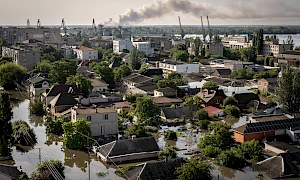
Statement on the attack on Kakhovka Water Dam
L’Internationale ConfederationStatements and editorials -
Prácticas lumbung para resistir y colaborar desde el arte
Constanza Yévenes BiénzobasEN eslumbungSituated OrganizationsMuseo Reina Sofia -
Algunos términos que guían a lumbung press: Definiendo “edición”
Erick BeltránEN eslumbungSituated OrganizationsMACBA -
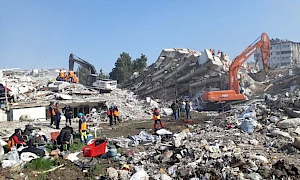
In solidarity with all the people affected by the earthquake in Turkiye and Syria
L’Internationale ConfederationStatements and editorials -
Public letter on WHW termination as directors of Kunsthalle Wien
L’Internationale ConfederationStatements and editorials -
Statement in support of documenta fifteen
L’Internationale ConfederationStatements and editorialslumbung
Related activities
-
–MACBA
The Open Kitchen. The fermented seed, colonialism and extractivism

The MACBA Kitchen is a working group situated against the backdrop of ecosocial crisis. Participants in the group aim to highlight the importance of intuitively imagining an ecofeminist kitchen, and take a particular interest in the wisdom of individuals, projects and experiences that work with dislocated knowledge in relation to food sovereignty.
-
MACBA
The Kitchen: Workshop by Marina Monsonís
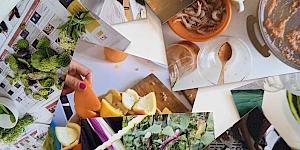
The Kitchen is a meeting place open to the participation of all, especially people and organizations that want to share their knowledge and experiences around the kitchen.
-
–MSN Warsaw
Multicultural Youth Center
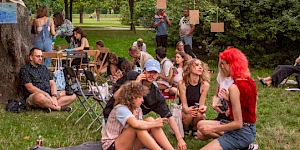
The Museum of Modern Art in Warsaw, together with the confederation of museums L'Internationale, is establishing a Multicultural Youth Center. This is a unique space for 16-24 year olds to explore and develop their creativity, make new friends and hang out in a friendly and supportive environment.
-
–MACBA
Where are the Oases?
PEI OBERT seminar
with Kader Attia, Elvira Dyangani Ose, Max Jorge Hinderer Cruz, Emily Jacir, Achille Mbembe, Sarah Nuttall and Françoise VergèsAn oasis is the potential for life in an adverse environment.
-
MACBA
Mobile Garden. A Place to Meet
An open space, a social space. How could the Museum be more open to the needs of the neighbourhood?
-
Museo Reina Sofia
School of Commoning Practices
This exchange programme gathers different schools organized by volunteers and migrant communities in Athens (Open School for Migrants) and Madrid (School of Rights, Escuela de Español and Situated mediation School) in order to share their knowledge, exchange strategies and reflect on the experience of working together with migrant communities.