Reading List: School of Common Knowledge. 2025
To accompany the School of Common Knowledge (SCK) that took place in Madrid and Barcelona in November 2025 under the title 'UP/ROOTING | DES/ARRAIGO', L’Internationale Online is publishing a reading list. The reading list offers contextual material both for those present at the SCK and for the platform’s wider readership.
Study Session I:
rooting & uprooting
This first study session tackles the question of up/rooting in its relation to key dimensions such as political community, nationality, rights and language. Lyndsey Stonebridge’s book is a literary history of modern statelessness that raises vital questions about sovereignty, humanism, and the future of human rights by drawing on the work of authors such as Hannah Arendt, Franz Kafka or Samuel Beckett. We focus on Chapter 4’s exploration of Simone Weil’s notion of up/rootedness. Seyla Benhabib’s The Rights of Others examines the boundaries of political community by exploring the boundaries that define some as political members and others as aliens and strangers. “Beyond language” is a polyphone conversation constellating the experiences of the Mesopotamia Solidarity School, the Open School for Migrants in Pireaus and Museo Reina Sofía’s Escuela de Mediación Situada.
Lyndsey Stonebridge, ‘Chapter 4: Simone Weil’s Uprooted’, Placeless People. Writing, Rights and Refugees, Oxford University Press, 2018, pp. 96-118.
Seyla Benhabib, ‘Chapter 2: “The right to have rights.” Hannah Arendt on the contradictions of the nation-state.’, The Rights of Others, Cambridge University Press, 2004, pp. 49-70.
Buraya, Sara et al. (eds), Beyond Language. School of Commoning Practices., Museo Reina Sofía and L’Internationale, 2025 (in press).
Study Session 2:
exile & the popular minoritarian
Study session II draws on Museo Reina Sofía’s exhibition of painter Maruja Mallo, Mask and Compass, to delve into topics of exile and the popular vis-a-vis artistic and intellectual production. Spanish philosopher characterised by her civic commitment and poetic thought Maria Zambrano writes on the long exile experienced by many Spanish intellectuals and artists – such as Mallo – after the civil war. The text assemblage reuniting excerpts by Italian anthropologist Ernesto di Martino, curator Patricia Molins and artist and curator Pedro G. Romero questions what is the popular, what is its emancipatory practice and what is the relation between intellectuals and popular culture.
María Zambrano, ‘Letter on exile’ Paris: Congress Notebooks for the Freedom of Culture, no. 49, June, 1961, pp. 65-70.
Ernesto di Martino, Patricia Molins, Pedro G. Romero, The Popular: text assemblage, sources: Barcelona: Museu d’Art Contemporani de Barcelona / Universitat Autònoma de Barcelona, 2008; Valencia: IVAM Centre Julio González, 2023; Madrid: Museo Nacional Centro de Arte Reina Sofía / Fundación Botín / This Side Up, 2025, various pages.
Study Session 3:
communal luxury
Through the work and practice of Paisanaje, an exploration and action group tackling the ecosocial crisis through art, and La Cuina del MACBA, the museum’s communal kitchen, we will engage with notions such as Kristin Ross’ “communal luxury” and the land dimension of up/rooting under contemporary conditions.
Study Session 4:
project a black planet
This study session takes as a starting point MACBA’s exhibition Project a Black Planet: The Art and Culture of Panafrica. It prompts us to question the relationship between cultural roots and colonial routes through a reading workshop. Sara Ahmed’s paper suggests we can approach whiteness as a phenomenology that orientates bodies in specific directions, affecting how they take up space and what they can do. Achille Mbembe offers a genealogy of the category of blackness as a technology of subjectivation – from the Atlantic slave trade to the present. Souleymane Bachir ’s essay further contributes to the discussion on the existentialist v. essentialist approaches to (black) identity.
Sara Ahmed, ‘A Phenomenology of Whiteness’, Feminist Theory, vol. 8, Issue 2, August 2007, pp. 149-168.
Achille Mbembe, ‘Six. The Clinic of the Subject.’, Critique of Black Reason, New York: Duke University Press, 2017, pp. 151-178.
Souleymane Bachir Diagne, ‘Négritude as Existence’, Nka. Journal of Contemporary African Art, vol. 42-43, November 2018, pp. 10-19.
Past in the Present Assembly
Past in the Present is one of the three strands composing Museum of the Commons, L’Internationale’s current 4-year project. It focuses on the crucial roles our local and shared (colonial) histories hold in constituting contemporary identities and politics. Fred Moten’s talk examines colonization schemes and Palestine’s struggle for the right to exist.
Fred Moten, ‘A Dam Against the Motion of History’, Millennials Are Killing Capitalism Live!, ep. 25 October 2023.
L’Internationale Online Resources
(extended reading & listening)
“Collective Study in Times of Emergency” is a publication strand by L’Internationale Online, L’Internationale’s editorial platform. It takes the form of essays, selections of poetry, listening sessions, and more. It poses the question of what does a practice of collective study look like under conditions of public spheres’ closedness and censorship.
Nick Aikens et al. (eds), Collective Study in Times of Emergency, L’Internationale Online, 2024.
Jokkoo with Miramizu, Rasheed Jalloul & Sabine Salamé, ‘Opening Performance: Song for Many Movements, live on Radio Alhara (live performance 23 Feb 2024)’, L’Internationale Online, 2024.
Precolumbian, ‘Live set: A Love Letter to the Global Intifada (live performance, 13 Jun 2024)’, L’Internationale Online, 2024.
Rana Issa (ed), ‘We Have Been Here Forever. Palestinian Poets Write Back’, L’Internationale Online, 2024.
Related contributions and publications
-
Activating Pink Triangle. Didactic materials and pedagogical proposals for a diverse school
Museo Reina Sofia -
Glossary of Common Knowledge, Vol. 2
Schools -
Glossary of Common Knowledge
Schools -
Prácticas lumbung para resistir y colaborar desde el arte
Constanza Yévenes BiénzobasEN eslumbungSituated OrganizationsMuseo Reina Sofia -
Algunos términos que guían a lumbung press: Definiendo “edición”
Erick BeltránEN eslumbungSituated OrganizationsMACBA -
In the Battles of Language / En las batallas del lenguaje
Marina Garcés, Silvia Rivera CusicanquiDialoguesMACBA
Related activities
-
–MACBAMuseo Reina Sofia
School of Common Knowledge 2025
The second iteration of the School of Common Knowledge will bring together international participants, faculty from the confederation and situated organizations in Barcelona and Madrid.
-
–MACBA
The Open Kitchen. The fermented seed, colonialism and extractivism
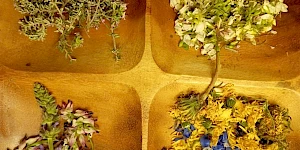
The MACBA Kitchen is a working group situated against the backdrop of ecosocial crisis. Participants in the group aim to highlight the importance of intuitively imagining an ecofeminist kitchen, and take a particular interest in the wisdom of individuals, projects and experiences that work with dislocated knowledge in relation to food sovereignty.
-
MACBA
The Kitchen: Workshop by Marina Monsonís
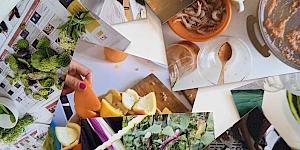
The Kitchen is a meeting place open to the participation of all, especially people and organizations that want to share their knowledge and experiences around the kitchen.
-
–MACBA
Where are the Oases?
PEI OBERT seminar
with Kader Attia, Elvira Dyangani Ose, Max Jorge Hinderer Cruz, Emily Jacir, Achille Mbembe, Sarah Nuttall and Françoise VergèsAn oasis is the potential for life in an adverse environment.
-
MACBA
Mobile Garden. A Place to Meet
An open space, a social space. How could the Museum be more open to the needs of the neighbourhood?
-
MACBA
Anti-imperialism in the 20th century and anti-imperialism today: similarities and differences
PEI OBERT seminar
Lecture by Ramón GrosfoguelIn 1956, countries that were fighting colonialism by freeing themselves from both capitalism and communism dreamed of a third path, one that did not align with or bend to the politics dictated by Washington or Moscow. They held their first conference in Bandung, Indonesia.
-
Museo Reina Sofia
School of Commoning Practices
This exchange programme gathers different schools organized by volunteers and migrant communities in Athens (Open School for Migrants) and Madrid (School of Rights, Escuela de Español and Situated mediation School) in order to share their knowledge, exchange strategies and reflect on the experience of working together with migrant communities.