Right now, today, we must say that Palestine is the centre of the world
As part of the publishing strand ‘Towards Collective Study in Times of Emergency’ decolonial feminist Françoise Vergès brings into sharp focus the west’s investment, complicity and hypocrisy in its drive to maintain the status quo in Israel-Palestine. At the same time, reflecting on the City of Paris’s recent cancellation of an event Vergès co-organised, the article underscores the role of censorship in sustaining violence within the project of modernity.
…They said they were victims. They said you were
Arabs.
They called your apartments and gardens guerrilla
stongholds.
They called the screaming devastation
that they created the rubble.
then they told you to leave, didn’t they?
–June Jordan, 1982
In 1982, June Jordan, African American poet, playwright, and essayist, wrote ‘Apologies to All the People in Lebanon’1 (from which the above excerpt is taken), after the Israeli-backed massacre of Palestinian refugees in the camps of Sabra and Shatila (Lebanon). The poem made Jordan the target of vicious charges of anti-Semitism. Between the mid-1980s and mid-1990s, she could not publish. Jordan taught us what it means to be in the world, rather than merely observing it, which acknowledges the messiness of the practical, of the not-perfect; in other words, when principles – love of life, demand for dignity and equality – must live within contradictions. The refusal to consider that we live within contradictions led to the silencing of debate, smearing, distortions, and censorship. Weaponizing anti-Semitism has long been used to silence the criticism of the politics of the State of Israel. This is what we are witnessing again since Hamas’s 7 October attack in Israel, which lead to 1,200 deaths and around 240 hostages taken to the Gaza Strip.
At the time of writing, on 7 December 2023, Israeli bombing of Gaza has led to the death of more than 17,400 Palestinians – babies, children, women, and men of all ages – and an estimated 7,600 missing under the rubble.2 On 8 December 2023, a ceasefire resolution in Gaza backed by more than 90 member states at the United Nations was vetoed by US Ambassador Robert A. Wood.3 After the vote, he declared that a ceasefire ‘would only plant the seeds for the next war – because Hamas has no desire to see a durable peace, to see a two-state solution’.4 Demands for a ceasefire have been systematically rejected by the state of Israel and its allies. A ceasefire is simply a temporary suspension of fighting, a truce. It is certainly not peace. For decades now, ceasefires have been replacing peace in military conflict, but even that moment of truce is presented as a threat to an order founded on systemic violence, censorship, and repression. Rosa Luxembourg called that moment ‘armed peace’, militarism by other means,5 in a state of permanent war, imperialism, and settler colonialism. Gaza today brings to light the necessity of war for a settler colony masked as a war for civilization.
Liberal Democracy and Settler Colonial Regime
When Isaac Herzog, president of Israel, declared on MSNBC – ‘This war is not only a war between Israel and Hamas, it’s a war that is intended, really, truly, to save western civilization. To save the values of western civilization’6 – he could not have been clearer. Western wars have long been waged to impose, enforce, and save western ‘values’. These values just are, immediately comprehensible and recognizable, evidently principled, moral, and noble. Herzog’s understanding of the necessity of waging war to save western civilization against an essentialist threat belongs to the long history of the fiction that sustains settler nation-states. Settler colonialism seeks ‘to obscure the persistence of colonialism as anything other than a historical trace, as well as to ostensibly naturalize settlers by habitation and descent’.7 States such as the US, Canada, New Zealand, and Australia, which have been founded on genocides, ethnic cleansing, segregation, land theft, and structural racism present themselves as liberal republican democracies. The United States, Canada, and Australia have been able to claim to defend freedom and human rights while their cities were built on the corpses and villages of the peoples they exterminated, while they stole indigenous children from their families and took them to horrendous boarding schools where they were harassed, beaten, tortured, killed, and subjected to forced assimilation. While not the focus of this text, there are many who work to resist or bypass these regimes founded on genocide. The purpose of reiterating the ramifications of these regimes is to underscore how they are shaping the response to Palestine now. These nation-states possess internationally acclaimed museums with prestigious collections of stolen objects from colonized or exterminated peoples. They have a veto right at the United Nations Security Council. Their decisions about climate disaster and militarism affect the whole world. They launch devastating wars with total impunity. But their declared love of liberty, of women’s rights, of children, of freedom of expression, they claim, is limitless. They love children more than any other people. Why would the state of Israel not feel entitled to follow their example? If these states had succeeded in hiding their crimes, if they had been able to protect each of their criminals from being tried, why not Israel? These countries are the embodiment of a benevolent and civilized order, while the crimes of other states have tainted their reputation. Colonial occupation inevitably contaminates liberal democracy, laws must be adopted to protect property rights over stolen land, to distinguish between citizens, to militarize society, and a feeling of being under constant threat must be nurtured. That sentiment is not wrong, settlers know that those whom they discriminate against, humiliate, criminalize, hold dreams of revenge as Frantz Fanon has shown, but they also entertain a sense of omnipotence that when it is shattered push them to terror and violence. Interests are economic, ideological and psychic. In a 1986 speech, then US Senator Joe Biden, now president, said it well: ‘Whether or not [there was] an Israeli State, the United States would have to invent an Israel to protect our interest in the region.’8 Indeed, the US has largely contributed to making Israel into ‘the only democracy in the Middle East’, where gays and women enjoy full rights. Biden was not talking about a land for the Jews, but about a militarized front post of imperialism, with its homo-nationalism and femonationialism. Supporting Israel is for the West the proof that the European genocide against the Jews is forgiven while delegating them the task to get rid of Palestinians. The double move innocents the West.
What is urgent is total ceasefire, the withdrawal of Israeli troops from Gaza, and the end of brutal repression in the West Bank. Killing has to stop. People are dying, entire social infrastructures are being destroyed with the goal of forbidding social life. Around the world, immediate ceasefire has been a rallying cry, especially among the youth. Despite defamatory accusations, incredible social pressure, threats, and punishment, huge protests are taking place. This is why it is important to document in Europe and North America, acts of censorship and witch hunt, their vocabulary and representations for what they reveal in the current moment of the rise of far-right parties and libertarianism. Further, there is a Left that has not undertaken a process of decolonization, adhering to the old argument of a civilizing mission as justification for colonization. Little has changed since 1956, when Aimé Césaire resigned from the then very powerful French Communist Party, denouncing its deafness and blindness to the colonial question, and to racism, writing:
This is not a desire to fight alone and a disdain for all alliances. It is a desire to distinguish between alliance and subordination, solidarity and resignation. It is exactly the latter of these pairs that threatens us in some of the glaring flaws we find in the members of the French Communist Party: their inveterate assimilationism; their unconscious chauvinism; their fairly simplistic faith, which they share with bourgeois Europeans, in the omnilateral superiority of the west; their belief that evolution as it took place in Europe is the only evolution possible, the only kind desirable, the kind the whole world must undergo; to sum up, their rarely avowed but real belief in civilization with a capital C and progress with a capital P (as evidenced by their hostility to what they disdainfully call ‘cultural relativism’).9
For this reason the liberation of Palestine (and this has nothing to do with deciding for the Palestinians which political movements they chose to follow) strikes at the heart of a western modernity built on racialization and colonisation. What is at stake is the abolition of the colonial as an ideological, economic, and visual regime of oppression, extraction, dispossession, and exploitation.
‘Palestine is the Centre of the World at this Moment’
If I am talking here about another example of censorship, it is to contribute to the documentation of a moment: the weaponization of anti-Semitism. At the beginning of 2023, I was in a group of friends who thought that we, decolonial, feminist, antiracist intellectuals, artists, and activists, had to intervene against the weaponization of anti-Semitism and feminism by the right, the far right, and some on the institutional Left.10 We decided it was essential that this analytical work should be done in public with the voices of intellectuals and activists. We thought of inviting Judith Butler for her writing and her membership in the important organization Jewish Voice for Peace; Jeremy Corbyn, for his persistent solidarity with the people of Palestine that led to his expulsion by the Labour leadership and anti-Zionist French Jewish organizations.
Following the attack by Hamas on 7 October, organizing a public meeting along what we had imagined at the beginning of 2023, became more urgent than ever. Despite divergent opinions of Hamas, we were critical of the total adhesion, without any restrictions, by European and Northern American states to Israel’s punitive, brutal, and murderous military offensive. We witnessed the ban or repression of pro-Palestine protests, state-funded institutions disinviting artists and writers, the interdiction of wearing keffiyehs, of using the phrase: ‘From the river to the sea, Palestine will be free.’ The outsourcing of European responsibility and guilt in historic and murderous anti-Semitism to Arabs, Muslims, migrants, refugees, leftists, to anyone critical of colonial occupation manifested itself in maintaining a colonial State. We had to resist these Thanatocratic times, this loss of ethics when the French institutional Left accepts in its march against anti-Semitism the presence of the National Front, a far-right party funded by former Waffen SS, or men nostalgic for colonial Algeria, or members of fascist groups.11
We secured a place for a public meeting.12 The first part of the evening would have included Judith Butler. I had reread her books and interviews on the topic of anti-Semitism and its instrumentalization and chosen excerpts that would serve as prompts for the conversation that we sent her. We wanted the French public to reject the tit for tat imposed by media and governments and reflect, think critically, and be disturbed, questioned, and reassured about opposing colonial occupation as right and having nothing to do with anti-Semitism. We needed that public conversation with Butler who had declared on 31 October that what was being done in Gaza was ‘genocide’, that ‘Zionism has from the start engaged in a racist project’, adding: ‘This is not a “conflict” between two parties, but a form of violent dispossession that dates back to 1948, if not before, and constitutes not a new Nakba, but the continuation of one that has never stopped for millions of people.’13 In the second part of the programme, French Jewish organizations for peace and revolutionary organizations would have spoken. As soon as the meeting was announced, we received tens of thousands of messages of support, and many people expressed their desire to attend the meeting.
On Friday 1 December, the city of Paris called the venue, ordering that the meeting be cancelled, threatening to cut subventions and adding that it was non-negotiable. The city invoked potential threats to public order and polemics that would, as well, threaten public peace. Aurélie Filippetti, a feminist, and former minister of culture under a socialist government, now director of cultural affairs at the city of Paris, first claimed that we had ‘manipulated’ Butler whom she ‘loved’ and admired. Confronted with a large protest, the arguments shifted – it was the presence of some organizations, then finally the physical presence of decolonial activist Houria Bouteldja in the audience and the fact that ‘extremist organizations’ were among the organizers. It was no longer about what would be discussed but who had the right to attend a public meeting. Culture ‘contributes to the construction of a common future, not to the exacerbation of antagonisms’,14 a Paris communiqué said. They had nothing against the meeting, only against Bouteldja, and even if she was not speaking, the fact that she would have been there as well as her collective was enough.
We looked for other venues, but either they were unavailable due to prior programming, or they feared the cutting of subventions. We reluctantly cancelled the meeting, posted online the filmed message of support that Angela Davis had given us when she went through Paris on 19 October and the questions we would have asked Butler. In her message, which is worth quoting in full here, Davis reaffirmed the centrality of the Palestinian struggle for justice and freedom:
All of us are called together to stand with Palestine, to express our solidarity with Palestine during this moment. People who had fought for justice for so many decades are under attack in Gaza. Palestine is the centre of the world at this moment. It is incumbent all of us to understand that whatever we are doing, we should stand in solidarity with Palestine. As my friend June Jordan, the phenomenal Black feminist poet always used to say: ‘Palestine serves as a measure of what we are capable of doing with respect to changing the entire world.’ Stand together with the people of Gaza, of Palestine and if we come together, stand together, we will one day be free. There is a reason Palestine is under such attack at this particular moment. Palestinians have been involved in the struggle that goes back to the end of the 1920s. There are more Palestinian refugees than any other people. Their land was taken from them. Israel is a settler colonial government and not only does it espouse settler colonialism, it is the only settler colonial government that tries to continue to expand in the twenty-first century. It is our duty, wherever we are, whatever we are doing, whether we are involved in antiracist struggle, whether we are involved in feminist movements, in trade unions, we must prevent the settler colonial government from continuing its project of expansion, we must stand with the Palestinian people for freedom and peace for all humanity.15
This was the message that the socialist majority in Paris censored. On the rare occasion of Judith Butler taking part in a public meeting in France, we would have asked her explicitly about her qualification about what happened in Gaza as ‘genocide’ and her remarks that ‘Zionism has from the start engaged in a racist project. Theodor Herzl said there were no inhabitants on that land so that the Jews, a people without a land, could seize it without compunction. What that meant was that the Palestinians there were not regarded as people – they literally could not be seen as human forms.’16 We also wanted Butler to expand on the following opinion:
I am not sure that a humanistic appeal to Israeli Jews will do the trick, for the roots of the problem are in a state formation that depended on expulsions and land theft to establish its own ‘legitimacy’. There is no resolution to the violence we see until the right of return for Palestinians is honored, and very few Israelis have been able to grasp the legitimacy of that claim, and to be part of imagining how that might come about.17
This act of censorship is far from exceptional or from being the most punitive. Nobody lost a job. Among the daily instances of censorship against Palestinians, it does not stand either as the most brutal. What matters in the decision of the city of Paris, qualified as ‘a farce’ by Butler,18 is that it shows not who has the right to speak, but who is in the public.
As Angela Davis has remarked, Palestine is a defining moment. It shows the urgency of abolishing settler nation-states that inevitably wage war against human and non-human lives. Settler regimes require militarization, repression, and censorship. Decolonization in the twenty-first century is the abolition of racial patriarchal capitalism and its intimacy with colonial expansion. There cannot be peace with occupation. A decolonial future in Palestine means the justice and peace for all, hence the end of colonial occupation. The settler disappears, a human being stays. It is the abolition of settler politics because the settler wants the land of the other and the erasure of its presence, and that means permanent war. Our future is linked to the liberation of Palestine.
Related activities
-
–Van Abbemuseum
The Soils Project
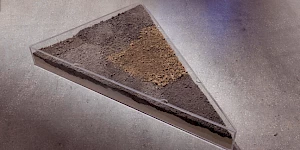
‘The Soils Project’ is part of an eponymous, long-term research initiative involving TarraWarra Museum of Art (Wurundjeri Country, Australia), the Van Abbemuseum (Eindhoven, Netherlands) and Struggles for Sovereignty, a collective based in Yogyakarta, Indonesia. It works through specific and situated practices that consider soil, as both metaphor and matter.
Seeking and facilitating opportunities to listen to diverse voices and perspectives around notions of caring for land, soil and sovereign territories, the project has been in development since 2018. An international collaboration between three organisations, and several artists, curators, writers and activists, it has manifested in various iterations over several years. The group exhibition ‘Soils’ at the Van Abbemuseum is part of Museum of the Commons. -
–VCRC
Kyiv Biennial 2023
L’Internationale Confederation is a proud partner of this year’s edition of Kyiv Biennial.
-
–MACBA
Where are the Oases?
PEI OBERT seminar
with Kader Attia, Elvira Dyangani Ose, Max Jorge Hinderer Cruz, Emily Jacir, Achille Mbembe, Sarah Nuttall and Françoise VergèsAn oasis is the potential for life in an adverse environment.
-
MACBA
Anti-imperialism in the 20th century and anti-imperialism today: similarities and differences
PEI OBERT seminar
Lecture by Ramón GrosfoguelIn 1956, countries that were fighting colonialism by freeing themselves from both capitalism and communism dreamed of a third path, one that did not align with or bend to the politics dictated by Washington or Moscow. They held their first conference in Bandung, Indonesia.
-
–Van Abbemuseum
Maria Lugones Decolonial Summer School
Recalling Earth: Decoloniality and Demodernity
Course Directors: Prof. Walter Mignolo & Dr. Rolando VázquezRecalling Earth and learning worlds and worlds-making will be the topic of chapter 14th of the María Lugones Summer School that will take place at the Van Abbemuseum in Eindhoven.
-
–MSN Warsaw
Archive of the Conceptual Art of Odesa in the 1980s
The research project turns to the beginning of 1980s, when conceptual art circle emerged in Odesa, Ukraine. Artists worked independently and in collaborations creating the first examples of performances, paradoxical objects and drawings.
-
–Moderna galerijaZRC SAZU
Summer School: Our Many Easts
Our Many Easts summer school is organised by Moderna galerija in Ljubljana in partnership with ZRC SAZU (the Research Centre of the Slovenian Academy of Sciences and Arts) as part of the L’Internationale project Museum of the Commons.
-
–Moderna galerijaZRC SAZU
Open Call – Summer School: Our Many Easts
Our Many Easts summer school takes place in Ljubljana 24–30 August and the application deadline is 15 March. Courses will be held in English and cover topics such as the legacy of the Eastern European avant-gardes, archives as tools of emancipation, the new “non-aligned” networks, art in times of conflict and war, ecology and the environment.
-
–MACBA
Song for Many Movements: Scenes of Collective Creation
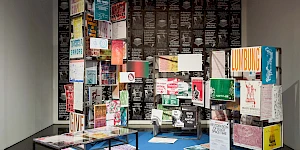
An ephemeral experiment in which the ground floor of MACBA becomes a stage for encounters, conversations and shared listening.
-
Museo Reina Sofia
Palestine Is Everywhere
‘Palestine Is Everywhere’ is an encounter and screening at Museo Reina Sofía organised together with Cinema as Assembly as part of Museum of the Commons. The conference starts at 18:30 pm (CET) and will also be streamed on the online platform linked below.
-
HDK-Valand
Book Launch: Collective Study in Times of Emergency, Gothenburg
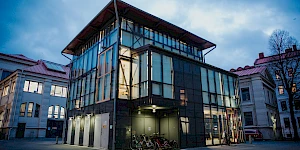
with Nick Aikens (L'Internationale Online / HDK-Valand) and Mills Dray (HDK-Valand), 17h00, Glashuset
-
Moderna galerija
Book Launch: Collective Study in Times of Emergency, Ljubljana
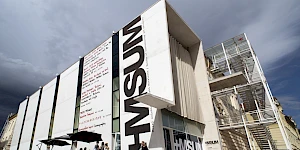
with Nick Aikens (L'Internationale Online / HDK-Valand), Bojana Piškur (MG+MSUM) and Martin Pogačar (ZRC SAZU)
-
WIELS
Book Launch: Collective Study in Times of Emergency, Brussels
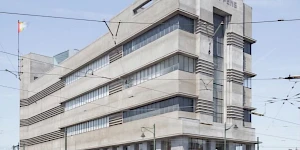
with Nick Aikens (L'Internationale Online / HDK-Valand), Subversive Film and Alex Reynolds, 19h00, Wiels Auditorium
-
–
Kyiv Biennial 2025
L’Internationale Confederation is proud to co-organise this years’ edition of the Kyiv Biennial.
-
–MACBA
Project a Black Planet: The Art and Culture of Panafrica

Curated by MACBA director Elvira Dyangani Ose, along with Antawan Byrd, Adom Getachew and Matthew S. Witkovsky, Project a Black Planet: The Art and Culture of Panafrica is the first major international exhibition to examine the cultural manifestations of Pan-Africanism from the 1920s to the present.
-
–M HKA
The Geopolitics of Infrastructure

The exhibition The Geopolitics of Infrastructure presents the work of a generation of artists bringing contemporary perspectives on the particular topicality of infrastructure in a transnational, geopolitical context.
-
–MACBAMuseo Reina Sofia
School of Common Knowledge 2025
The second iteration of the School of Common Knowledge will bring together international participants, faculty from the confederation and situated organizations in Barcelona and Madrid.
-
NCAD
Book Launch: Collective Study in Times of Emergency, Dublin

with Nick Aikens (L'Internationale Online / HDK-Valand) and members of the L'Internationale Online editorial board: Maria Berríos, Sheena Barrett, Sara Buraya Boned, Charles Esche, Sofia Dati, Sabel Gavaldon, Jasna Jaksic, Cathryn Klasto, Magda Lipska, Declan Long, Francisco Mateo Martínez Cabeza de Vaca, Bojana Piškur, Tove Posselt, Anne-Claire Schmitz, Ezgi Yurteri, Martin Pogacar, and Ovidiu Tichindeleanu, 18h00, Harry Clark Lecture Theatre, NCAD
-
–
Collective Study in Times of Emergency, Amsterdam
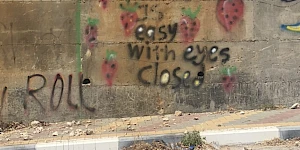
Within the context of ‘Every Act of Struggle’, the research project and exhibition at de appel in Amsterdam, L’Internationale Online has been invited to propose a programme of collective study.
-
Museo Reina Sofia
Poetry readings: Culture for Peace – Art and Poetry in Solidarity with Palestine
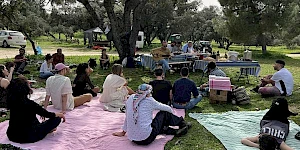
Casa de Campo, Madrid
-
WIELS
Collective Study in Times of Emergency, Brussels. Rana Issa and Shayma Nader
Join us at WIELS for an evening of fiction and poetry as part of L'Internationale Online's 'Collective Study in Times of Emergency' publishing series and public programmes. The series was launched in November 2023 in the wake of the onset of the genocide in Palestine and as a means to process its implications for the cultural sphere beyond the singular statement or utterance.
-
–Museo Reina Sofia
Study Group: Aesthetics of Peace and Desertion Tactics
In a present marked by rearmament, war, genocide, and the collapse of the social contract, this study group aims to equip itself with tools to, on one hand, map genealogies and aesthetics of peace – within and beyond the Spanish context – and, on the other, analyze strategies of pacification that have served to neutralize the critical power of peace struggles.
-
–MSN Warsaw
Near East, Far West. Kyiv Biennial 2025
The main exhibition of the 6th Kyiv Biennial 2025, titled Near East, Far West, is organized by a consortium of curators from L’Internationale. It features seven new artists’ commissions, alongside works from the collections of member institutions of L’Internationale and a number of other loans.
-
MACBA
PEI Obert: The Brighter Nations in Solidarity: Even in the Midst of a Genocide, a New World Is Being Born
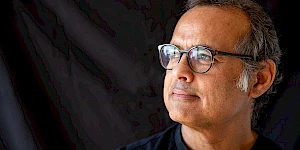
PEI Obert presents a lecture by Vijay Prashad. The Colonial West is in decay, losing its economic grip on the world and its control over our minds. The birth of a new world is neither clear nor easy. This talk envisions that horizon, forged through the solidarity of past and present anticolonial struggles, and heralds its inevitable arrival.
-
–M HKA
Homelands and Hinterlands. Kyiv Biennial 2025
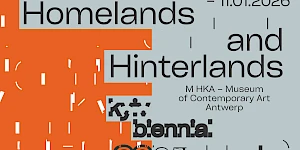
Following the trans-national format of the 2023 edition, the Kyiv Biennial 2025 will again take place in multiple locations across Europe. Museum of Contemporary Art Antwerp (M HKA) presents a stand-alone exhibition that acts also as an extension of the main biennial exhibition held at the newly-opened Museum of Modern Art in Warsaw (MSN).
In reckoning with the injustices and atrocities committed by the imperialisms of today, Kyiv Biennial 2025 reflects with historical consciousness on failed solidarities and internationalisms. It does this across an axis that the curators describe as Middle-East-Europe, a term encompassing Central Eastern Europe, the former-Soviet East and the Middle East.
-
HDK-Valand
MA Forum in collaboration with LIO: Nour Shantout
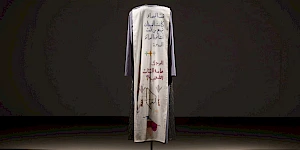
In this artist talk, Nour Shantout will present Searching for the New Dress, an ongoing artistic research project that looks at Palestinian embroidery in Shatila, a Palestinian refugee camp in Lebanon. Welcome!
-
MACBA
PEI Obert: Bodies of Evidence. A lecture by Ido Nahari and Adam Broomberg
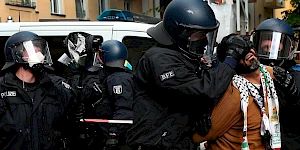
In the second day of Open PEI, writer and researcher Ido Nahari and artist, activist and educator Adam Broomberg bring us Bodies of Evidence, a lecture that analyses the circulation and functioning of violent images of past and present genocides. The debate revolves around the new fundamentalist grammar created for this documentation.
-
–
Everything for Everybody. Kyiv Biennial 2025
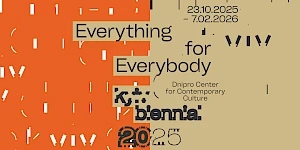
As one of five exhibitions comprising the 6th Kyiv Biennial 2025, ‘Everything for Everybody’ takes place in the Ukraine, at the Dnipro Center for Contemporary Culture.
-
–
In a Grandiose Sundance, in a Cosmic Clatter of Torture. Kyiv Biennial 2025

As one of five exhibitions comprising the 6th Kyiv Biennial 2025, ‘In a Grandiose Sundance, in a Cosmic Clatter of Torture’ takes place at the Dovzhenko Centre in Kyiv.
-
MACBA
School of Common Knowledge: Fred Moten
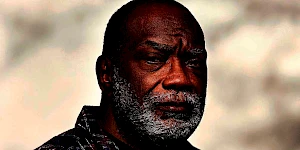
Fred Moten gives the lecture Some Prœposicions (On, To, For, Against, Towards, Around, Above, Below, Before, Beyond): the Work of Art. As part of the Project a Black Planet exhibition, MACBA presents this lecture on artworks and art institutions in relation to the challenge of blackness in the present day.
-
–MACBA
Visions of Panafrica. Film programme
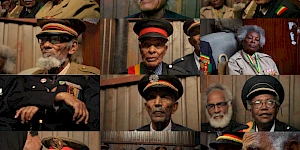
Visions of Panafrica is a film series that builds on the themes explored in the exhibition Project a Black Planet: The Art and Culture of Panafrica, bringing them to life through the medium of film. A cinema without a geographical centre that reaffirms the cultural and political relevance of Pan-Africanism.
-
MACBA
Farah Saleh. Balfour Reparations (2025–2045)

As part of the Project a Black Planet exhibition, MACBA is co-organising Balfour Reparations (2025–2045), a piece by Palestinian choreographer Farah Saleh included in Hacer Historia(s) VI (Making History(ies) VI), in collaboration with La Poderosa. This performance draws on archives, memories and future imaginaries in order to rethink the British colonial legacy in Palestine, raising questions about reparation, justice and historical responsibility.
-
MACBA
Project a Black Planet: The Art and Culture of Panafrica OPENING EVENT
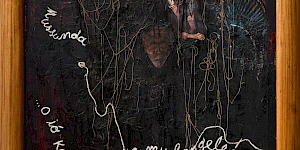
A conversation between Antawan I. Byrd, Adom Getachew, Matthew S. Witkovsky and Elvira Dyangani Ose. To mark the opening of Project a Black Planet: The Art and Culture of Panafrica, the curatorial team will delve into the exhibition’s main themes with the aim of exploring some of its most relevant aspects and sharing their research processes with the public.
-
MACBA
Palestine Cinema Days 2025: Al-makhdu’un (1972)
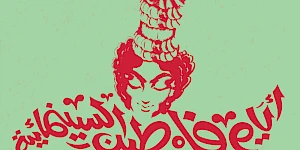
Since 2023, MACBA has been part of an international initiative in solidarity with the Palestine Cinema Days film festival, which cannot be held in Ramallah due to the ongoing genocide in Palestinian territory. During the first days of November, organizations from around the world have agreed to coordinate free screenings of a selection of films from the festival. MACBA will be screening the film Al-makhdu’un (The Dupes) from 1972.
-
Museo Reina Sofia
Cinema Commons #1: On the Art of Occupying Spaces and Curating Film Programmes
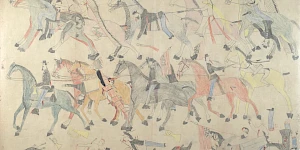
On the Art of Occupying Spaces and Curating Film Programmes is a Museo Reina Sofía film programme overseen by Miriam Martín and Ana Useros, and the first within the project The Cinema and Sound Commons. The activity includes a lecture and two films screened twice in two different sessions: John Ford’s Fort Apache (1948) and John Gianvito’s The Mad Songs of Fernanda Hussein (2001).
-
–
Vertical Horizon. Kyiv Biennial 2025
As one of five exhibitions comprising the 6th Kyiv Biennial 2025, ‘Vertical Horizon’ takes place at the Lentos Kunstmuseum in Linz, at the initiative of tranzit.at.
-
–
International Day of Solidarity with the Palestinian People: Activities
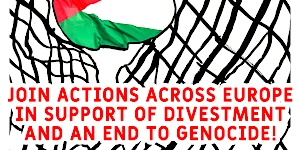
To mark International Day of Solidarity with the Palestinian People and in conjunction with our collective text, we, the cultural workers of L'Internationale have compiled a list of programmes, actions and marches taking place accross Europe. Below you will find programmes organized by partner institutions as well as activities initaited by unions and grass roots organisations which we will be joining.
This is a live document and will be updated regularly.
-
–SALT
Screening: A Bunch of Questions with No Answers
This screening is part of a series of programs and actions taking place across L’Internationale partners to mark International Day of Solidarity with the Palestinian People.
A Bunch of Questions with No Answers (2025)
Alex Reynolds, Robert Ochshorn
23 hours 10 minutes
English; Turkish subtitles -
HDK-Valand
MA Forum in collaboration with LIO: Adam Broomberg
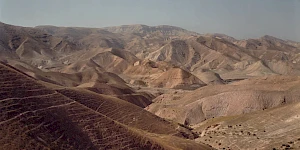
In this MA Forum we welcome artist Adam Broomberg. In his lecture he will focus on two photographic projects made in Israel/Palestine twenty years apart. Both projects use the medium of photography to communicate the weaponization of nature.
-
MACBA
PEI Obert: Until Liberation: A Collective Reading and Listening Session by Learning Palestine
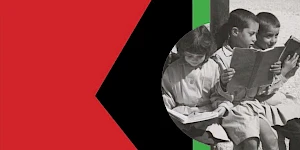
PEI Obert presents a collective session with Learning Palestine. At this historical juncture – amid the ongoing genocide in Gaza and the censorship and repression of all things Palestinian – Learning Palestine invites us to gather not only in refusal but also in affirmation.
Related contributions and publications
-
…and the Earth along. Tales about the making, remaking and unmaking of the world.
Martin PogačarLand RelationsClimatePast in the Present -
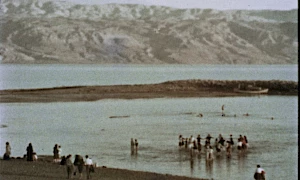
The Kitchen, an Introduction to Subversive Film with Nick Aikens, Reem Shilleh and Mohanad Yaqubi
Nick Aikens, Subversive FilmSonic and Cinema CommonslumbungPast in the PresentVan Abbemuseum -
The Repressive Tendency within the European Public Sphere
Ovidiu ŢichindeleanuInternationalismsPast in the Present -
Rewinding Internationalism
InternationalismsVan Abbemuseum -
Troubles with the East(s)
Bojana PiškurInternationalismsPast in the Present -
Right now, today, we must say that Palestine is the centre of the world
Françoise VergèsInternationalismsPast in the Present -
Body Counts, Balancing Acts and the Performativity of Statements
Mick WilsonInternationalismsPast in the Present -
Until Liberation I
Learning Palestine GroupInternationalismsPast in the Present -
Until Liberation II
Learning Palestine GroupInternationalismsPast in the Present -
The Veil of Peace
Ovidiu ŢichindeleanuPast in the Presenttranzit.ro -
Editorial: Towards Collective Study in Times of Emergency
L’Internationale Online Editorial BoardEN es sl tr arInternationalismsStatements and editorialsPast in the Present -
Opening Performance: Song for Many Movements, live on Radio Alhara
Jokkoo with/con Miramizu, Rasheed Jalloul & Sabine SalaméEN esInternationalismsSonic and Cinema CommonsPast in the PresentMACBA -
Siempre hemos estado aquí. Les poetas palestines contestan
Rana IssaEN es tr arInternationalismsPast in the Present -

Indra's Web
Vandana SinghLand RelationsPast in the PresentClimate -
Diary of a Crossing
Baqiya and Yu’adInternationalismsPast in the Present -
The Silence Has Been Unfolding For Too Long
The Free Palestine Initiative CroatiaInternationalismsPast in the PresentSituated OrganizationsInstitute of Radical ImaginationMSU Zagreb -
En dag kommer friheten att finnas
Françoise Vergès, Maddalena FragnitoEN svInternationalismsLand RelationsClimateInstitute of Radical Imagination -
Everything will stay the same if we don’t speak up
L’Internationale ConfederationEN caInternationalismsStatements and editorials -

War, Peace and Image Politics: Part 1, Who Has a Right to These Images?
Jelena VesićInternationalismsPast in the PresentZRC SAZU -
Live set: Una carta de amor a la intifada global
PrecolumbianEN esInternationalismsSonic and Cinema CommonsPast in the PresentMACBA -
Cultivating Abundance
Åsa SonjasdotterLand RelationsClimatePast in the Present -
Rethinking Comradeship from a Feminist Position
Leonida KovačSchoolsInternationalismsSituated OrganizationsMSU ZagrebModerna galerijaZRC SAZU -
Reading list - Summer School: Our Many Easts
Summer School - Our Many EastsSchoolsPast in the PresentModerna galerija -
The Genocide War on Gaza: Palestinian Culture and the Existential Struggle
Rana AnaniInternationalismsPast in the Present -
Klei eten is geen eetstoornis
Zayaan KhanEN nl frLand RelationsClimatePast in the Present -
Dispatch: ‘I don't believe in revolution, but sometimes I get in the spirit.’
Megan HoetgerSchoolsPast in the Present -
Dispatch: Notes on (de)growth from the fragments of Yugoslavia's former alliances
Ava ZevopSchoolsPast in the Present -
Glöm ”aldrig mer”, det är alltid redan krig
Martin PogačarEN svLand RelationsPast in the Present -
Broadcast: Towards Collective Study in Times of Emergency (for 24 hrs/Palestine)
L’Internationale Online Editorial Board, Rana Issa, L’Internationale Confederation, Vijay PrashadInternationalismsSonic and Cinema Commons -
Beyond Distorted Realities: Palestine, Magical Realism and Climate Fiction
Sanabel Abdel RahmanEN trInternationalismsPast in the PresentClimate -

Collective Study in Times of Emergency. A Roundtable
Nick Aikens, Sara Buraya Boned, Charles Esche, Martin Pogačar, Ovidiu Ţichindeleanu, Ezgi YurteriInternationalismsPast in the PresentSituated Organizations -

Present Present Present. On grounding the Mediateca and Sonotera spaces in Malafo, Guinea-Bissau
Filipa CésarSonic and Cinema CommonsPast in the Present -
Collective Study in Times of Emergency
InternationalismsPast in the Present -
S come Silenzio
Maddalena FragnitoEN itInternationalismsSituated Organizations -
ميلاد الحلم واستمراره
Sanaa SalamehEN hr arInternationalismsPast in the Present -
عن المكتبة والمقتلة: شهادة روائي على تدمير المكتبات في قطاع غزة
Yousri al-GhoulEN arInternationalismsPast in the Present -

Archivos negros: Episodio I. Internacionalismo radical y panafricanismo en el marco de la guerra civil española
Tania Safura AdamEN esInternationalismsPast in the Present -

Re-installing (Academic) Institutions: The Kabakovs’ Indirectness and Adjacency
Christa-Maria Lerm HayesInternationalismsPast in the Present -
Palma daktylowa przeciw redeportacji przypowieści, czyli europejski pomnik Palestyny
Robert Yerachmiel SnidermanEN plInternationalismsPast in the PresentMSN Warsaw -

Masovni studentski protesti u Srbiji: Mogućnost drugačijih društvenih odnosa
Marijana Cvetković, Vida KneževićEN rsInternationalismsPast in the Present -
No Doubt It Is a Culture War
Oleksiy Radinsky, Joanna ZielińskaInternationalismsPast in the Present -
Cinq pierres. Une suite de contes
Shayma NaderEN nl frInternationalisms -
Dispatch: As Matter Speaks
Yeongseo JeeInternationalismsPast in the Present -
Speaking in Times of Genocide: Censorship, ‘social cohesion’ and the case of Khaled Sabsabi
Alissar SeylaInternationalisms -
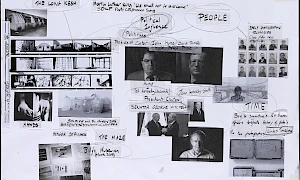
Reading List: Summer School, Landscape (post) Conflict
Summer School - Landscape (post) ConflictSchoolsLand RelationsPast in the PresentIMMANCAD -
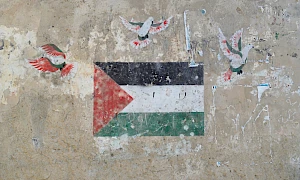
Today, again, we must say that Palestine is the centre of the world
Françoise VergèsInternationalisms -
Isabella Hammad’ın icatları
Hazal ÖzvarışEN trInternationalisms -

To imagine a century on from the Nakba
Behçet ÇelikEN trInternationalisms -
Internationalisms: Editorial
L'Internationale Online Editorial BoardInternationalisms -
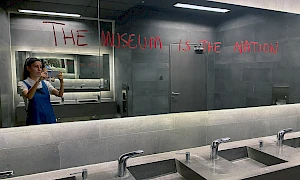
Dispatch: Institutional Critique in the Blurst of Times – On Refusal, Aesthetic Flattening, and the Politics of Looking Away
İrem GünaydınInternationalisms -
Until Liberation III
Learning Palestine GroupInternationalismsPast in the Present -

Archivos negros: Episodio II. Jazz sin un cuerpo político negro
Tania Safura AdamEN esInternationalismsPast in the Present -
Cultural Workers of L’Internationale mark International Day of Solidarity with the Palestinian People
Cultural Workers of L’InternationaleEN es pl roInternationalismsSituated OrganizationsPast in the PresentStatements and editorials -
Poetry Against Language Dioxide
Rana IssaInternationalisms -
The Object of Value
SlinkoInternationalismsLand Relations -
Translated into Socialism: An experiment in internationalism
Merve Elveren, Tevfik Rada, Sezgin BoynikInternationalisms