Unhinging the Dual Machine: The Politics of Radical Kinship for a Different Art Ecology
In her contribution for Art for Radical Ecologies (Manifesto) sociologist and cultural theorist Federica Timeto outlines the need for what she describes as ‘interspecies articulation’ across human and other than human lives. Speciesism, Timeto argues, always gives primacy to the human, even when considered from post-humanist perspectives. Dismantling it at the representational, epistemological and ideological level opens up possibilities for radical kinship between different forms of life and knowledges.
Living-with requires … [that we] multiply the ways of ‘access’, not just to think-for the perpetuated absent. To not confuse care with sole empathy, or with becoming the spokespersons of those discarded. Creating situated knowledge might therefore sometimes mean that thinking from and for particular struggles require from us to work for change from where we are, rather than drawing upon others’ situations for building a theory, and continue our conversations.
– Puig de la Bellacasa, 20171
As a reservoir of biomaterial on which capitalism has been accumulating value since its inception,2 animals have been traversing the system of Western art, in whose veins capital circulates, in multiple ways: they have been sources, models, tools and substances of artworks, as brushes, pigments, waxes, gelatines, taxidermies – most often absent referents already in pieces.3 Artists have observed, collected and used other animals to enhance their work and even passed them off as collaborators or co-authors. Turning to the animal and sometimes also turning animal,4 Western artists wear the animal dress like they had collected African masks and played drag at the beginning of the twentieth century to incorporate difference while at the same time testing their control over it.
There indeed have been cases in which some forms of reciprocity have occurred between the artist and the (alive) animal.5 However, animals have never really inaugurated a space of their own nor had a chance to intervene in the art world they were hosted in, as this would mean decentralizing some of its foundational – humanistic – assumptions. Considering animals as users or audiences of art practices, rather than merely substrate or means,6 has not been the solution either, since the unmarked artist has remained behind the curtains without erasing the human supremacy of the whole system at all, of which the same mighty artist (usually male and white, and typically Western) is a synecdoche. The encounter between artists and animals has kept swinging on the seesaw of analogy. Still, the terms on which the confrontation has occurred have mostly remained stable and unchanged, so the context in which they seesaw swings.
Much has been written about art after the animal turn in Western art theories,7 centred on the primacy of the human being and thus needing a decentring, contrary to artistic expressions rooted in different, non-Western cosmologies. This path is renowned and has been much discussed over the last two decades.8 Unfortunately, it seems that the undermining of ‘expert-thinking, hierarchy-thinking and identity-thinking’ envisaged with the advent of the animal turn has not taken place in the Western art field,9 if not for a heightened ecological awareness that relates to the contingency of the re/current crisis. What has gone unconsidered in this field is that focusing on the animal question in art practices does not necessarily imply talking about other-than-human lives; it requires interrogating a whole system of interconnected hierarchies and the oppressions that they make possible, which include animals, human and nonhuman ones, at all levels, and of which the Western art system is part: a speciesist system because also a colonialist, extractivist, racist, sexist and ableist one.
Ecological narratives have been increasingly fuelling art with new content – this is not a very ecological thing to say and do! – and pervasively updating the artistic scenario. Nevertheless, the picture has mostly stayed the same, given that the subject formation and the power formations that sustain it remain unaltered. Not only do other-than-human lives enter an already exceptionalist and excluding system, that of Western art, where the unmarked human has been continuously created and celebrated. They also access it through a representational paradigm,10 either mimetic or not, producing the more-or-less mediated givenness of animals and foreclosing any interspecies articulation, i.e., ‘the power to produce connection’ on the same plane of immanence.11 Although species is a promiscuous, variable and oxymoronic concept,12 not a universal truth but a historical concept, speciesism is a representational ideology and a set of material devices sanctioning the essential, ahistorical primacy of the human species and the given inferiority of all the other species. Speciesism very often goes undetected in everyday life, as it permeates languages, practices and imaginaries, but it is also institutionalized and can be actively mobilized to justify the oppression of the other-than-human. Taking speciesism into account requires a holistic approach to oppression and liberation that addresses a whole system of relations in which human beings as a species dominate animal/ized beings, humans included, and their environment.13
Reflecting on the functioning of speciesism at an epistemological level is the first step to dismantling the primacy of a certain kind of human and paving the way to a politics of interspecies and intraspecies alliances for common liberation. Envisioning a ‘praxic opening-out’ in actuality, as Guattari would put it,14 rather than working for an additive approach, stems from such a paradigm change. Ecology cannot be reduced to environmental discourse that is articulated in the same old words, the same words that make oppression possible: culture talking about nature, if talking does not change too, remains unidirectional. It fails to interrogate the reciprocal relations between culture and nature while resting on a foundational dualism that constrains any actual opening from the very beginning.
A critical, interested and situated, anti-speciesist approach, like the one developed in Critical Animal Studies and rooted in critical theory, feminism, social justice, anarchism and political ecology, addresses total liberation, engaging in ‘theory-to-action’ politics.15 Rather than talking about nature or animals, such a holistic and also self-reflexive approach talks about relations, and how fighting relations of power and systems of domination can lead to more lives being liberated, together in solidarity with other movements and their social justice goals. From a non-dualistic, non-speciesist perspective, this is justice for the nature-culture continuum of lives, in which ecology is never just a discourse on nature and, conversely, whatever pertains to the social dimension (like economy, politics and, of course, art theory) cannot only be a discourse about human beings. Unhinging the dual machine that governs the human/animal dichotomy when it also reverberates and composes with other binarisms is paramount. But it can only be made effective by considering the contexts that make it possible and are made possible by these asymmetries, refusing to fuel them. Either filling canvases, vitrines and rooms or employed to realize them, animals have been objects of use and exchange in the capitalist circuits of Western art.
No life is reducible to an object: objects stay put; they move only when an external force moves them. On the contrary, lives do not stand still; lives strive for life and are made and maintained in and through themselves. It is not a question of naturalness versus artificiality. Life is not natural at all: nature seen as such is always without life; it is still life.16 Every living process is an artifice that performs invention. Life touches and is touched, altered in apprehensions and encounters, and interwoven with memory, attention and imagination. Lives in the making are indistinguishable from their surroundings, just as the spider is indistinguishable from the web or the termite from the mound. There are not two domains: nature on the one hand and culture on the other. They become together in time. Organisms compose together-apart,17 inside-out, all the time.
What divides-unites life are relations that, historically considered, are also relations of power. Relations of power are exercised in hierarchies and divisions so that they can sort and transform life into its properties, thingified to be usable and exchangeable, and, in turn, become someone else’s property. So, when other-than-human lives are objectified, they are delinked from the web of life and made susceptible to being turned doubly into properties. Species is one of the intersecting divides that power relations strive to delineate and impose to identify such properties via a series of material-semiotic apparatuses. Art partakes in life, and it also partakes in these apparatuses. Western art has been, and remains, an expression of humanity, civilization, wealth, patriarchy, ability and superiority. In the Western art scene, species has become the last source to play with difference and capitalize over it.18
However, radically ecological art is entangled in nodes of situated relations that exist in non-commodifiable and non-exchangeable singularity. It aligns with life and cares for the living rather than for the sources that life offers for creative or commercial capitalization. The epistemological and the political converge here through an ethics of care that respects and maintains life’s embodied and embedded relations. Differently from relational art as it is commonly intended (and criticized) today (that is, à la Bourriaud), the relationality of radically ecological art practices does not intend to substitute use value with exchange value, even if updated in interspecies terms. Most importantly, radically ecological art deals with interspecies relationships without removing positionality from the picture, to multiply access and share for as many lives as possible. Relationality here implies commoning, brought about by actors that are human-nonhuman assemblages rather than single persons or categories.19 In such assemblages, the capabilities and competencies of all the related lives should be valorized, that is, considered, rather than evaluated, that is, exploited. In this respect, other-than-human species should appear as comrades, rather than just companions, since, as Battistoni highlights, expanding Haraway’s thought, the definition of ‘comrade’ not only designates the entanglements of life and their becoming-with, but also ‘the politics of labour’, as well as ‘new forms of collective subjectivity shared across species based not in humans’ ethical obligation, aesthetic appreciation, or spiritual experience, but rather, in recognition of mutual dependence, reciprocity, and even solidarity’.20
From a human standpoint, the one from which we can articulate our positionality, acknowledging the withs of life does not mean losing oneself in attachments and floating in the broth of multiplicity,21 as the inflation of new materialist terminology could lead us to think; it instead means recognizing where the part that one takes begins and ends, actively partaking in the attachments that one is part of, as well as in their limits.22 Understanding our embeddedness as humans in the fabric of life is never enough.23 The theory-to-action politics must be permeated with a creative dimension of making relationships and maintaining them; it is constructive, reconstructive and transformative. It is not so much a matter of creating faithful simulations or new protected spaces to compose and show interspecies encounters for an ecologically aware audience, but of practising and caring for interspecies encounters in already existing and always becoming ecologies.
There cannot be dualism here, but there is no totality either: situating oneself and taking part is one movement in many acts, jointly articulated, just like one’s standpoint is articulated with another standpoint and cannot exist in the absolute. Radically ecological art requires a radical restructuring of the anthropocentric domains ruled by the same old anthropocentric formations, however inclusive they may be, that promote ecology without a politics of interspecies alliances and total liberation. Contrary to a still ecology, i.e., an ecology without life, radical ecology should thus precede the changes in the art system without being the ultimate addition to what already exists, and work to create a different context for radical kinship and radical politics at the same time.
Related contributions and publications
-
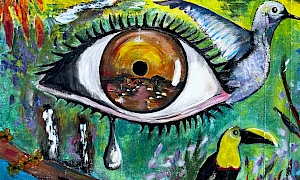
‘Territorios en resistencia’, Artistic Perspectives from Latin America
Rosa Jijón & Francesco Martone (A4C), Sofía Acosta Varea, Boloh Miranda Izquierdo, Anamaría GarzónLand RelationsClimateInstitute of Radical Imagination -
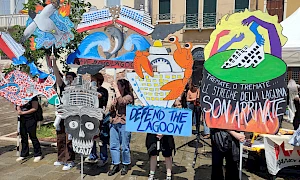
Art, Radical Ecologies and Class Composition: On the possible alliance between historical and new materialisms
Marco BaravalleLand RelationsClimateInstitute of Radical Imagination -
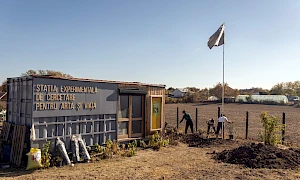
To Build an Ecological Art Institution: The Experimental Station for Research on Art and Life
Ovidiu Ţichindeleanu, Raluca VoineaLand RelationsClimateSituated Organizationstranzit.ro -
Art and Materialisms: At the intersection of New Materialisms and Operaismo
Emanuele BragaLand RelationsClimateInstitute of Radical Imagination -
En dag kommer friheten att finnas
Françoise Vergès, Maddalena FragnitoEN svInternationalismsLand RelationsClimateInstitute of Radical Imagination -
Art for Radical Ecologies Manifesto
Institute of Radical ImaginationLand RelationsClimateInstitute of Radical Imagination -
Decolonial aesthesis: weaving each other
Charles Esche, Rolando Vázquez, Teresa Cos RebolloLand RelationsClimate -
Climate Forum I – Readings
Nkule MabasoEN esLand RelationsClimateHDK-Valand -
…and the Earth along. Tales about the making, remaking and unmaking of the world.
Martin PogačarLand RelationsClimatePast in the Present -
Pollution as a Weapon of War
Svitlana MatviyenkoClimate -
Ecologising Museums
Land Relations
Related activities
-
HDK-Valand
Climate Forum I
The Climate Forum is a space of dialogue and exchange with respect to the concrete operational practices being implemented within the art field in response to climate change and ecological degradation. This is the first in a series of meetings hosted by HDK-Valand within L'Internationale's Museum of the Commons programme.
-
–Van Abbemuseum
The Soils Project
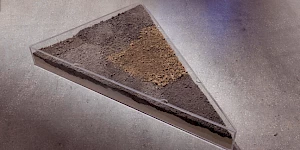
‘The Soils Project’ is part of an eponymous, long-term research initiative involving TarraWarra Museum of Art (Wurundjeri Country, Australia), the Van Abbemuseum (Eindhoven, Netherlands) and Struggles for Sovereignty, a collective based in Yogyakarta, Indonesia. It works through specific and situated practices that consider soil, as both metaphor and matter.
Seeking and facilitating opportunities to listen to diverse voices and perspectives around notions of caring for land, soil and sovereign territories, the project has been in development since 2018. An international collaboration between three organisations, and several artists, curators, writers and activists, it has manifested in various iterations over several years. The group exhibition ‘Soils’ at the Van Abbemuseum is part of Museum of the Commons. -
–Museo Reina Sofia
Sustainable Art Production
The Studies Center of Museo Reina Sofía will publish an open call for four residencies of artistic practice for projects that address the emergencies and challenges derived from the climate crisis such as food sovereignty, architecture and sustainability, communal practices, diasporas and exiles or ecological and political sustainability, among others.
-
–tranzit.ro
Non-Western Technologies for the Good Life
The experimental course ‘Non-Western Technologies for the Good Life’ (November 2023–May 2024) celebrates as its starting point the anniversary of 50 years since the publication of Tools for Conviviality, considering that Ivan Illich’s call is as relevant as ever.
-
Institute of Radical ImaginationMSU Zagreb
Red, Green, Black and White
A performative inquiry by Institute of Radical Imagination and MSU Zagreb
-
–Moderna galerijaZRC SAZU
Open Call – Summer School: Our Many Easts
Our Many Easts summer school takes place in Ljubljana 24–30 August and the application deadline is 15 March. Courses will be held in English and cover topics such as the legacy of the Eastern European avant-gardes, archives as tools of emancipation, the new “non-aligned” networks, art in times of conflict and war, ecology and the environment.