Climate Forum II – Readings
In the context of ‘Climate Forum II’, the second in a series of online events hosted by HDK-Valand as part of the Museum of the Commons (2023–2027), we revisit two texts published by L’Internationale Online, by artist Ursula Biemann and artist and researcher Mônica Hoff.
The Climate Forum is conceived as a space of dialogue and exchange responding to climate change and ecological degradation. It builds on earlier research and commissioning that resulted in the publication Climate: Our Right to Breathe (2022) and focuses on changing practices. It is driven by a wish to understand how the speculative and critical insights framed within the registers of the discursive, the affective, and the symbolic might be operationalised within everyday working.
For Climate Forum II we, the organisers, select two texts from the archive of L’Internationale Online that speak to the very dynamic of the affective and the operational, and that press for a reconfiguration of the art system's relationships to past, present and future, that appear rhetorically enticing but in fact demand systemic and epistemic change. These dynamics will undoubtedly straddle the historical reflections and present demands for action that permeate Climate Forum II.
In her contribution to Climate: Our Right to Breathe, Mônica Hoff lays out with fierce clarity the contradictions embedded within the art system's thematising of the climate “crisis”, that itself calls for a fundamental shift in how it engages and captures temporalities. In the pointedly titled essay ‘How to keep on without knowing what we already know, or what comes after magic words and salvation’ she asks:
Wouldn’t thinking about the future as something behind us, and the past as something ahead, as the Aymara people suggest, be a way to learn everything we need to unlearn, in order to stop knowing what we already know?
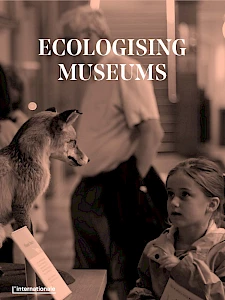
In the second text, written for the 2016 publication Ecologising Museums, edited by Nataša Petrešin-Bachelez – also a contributor to Climate Forum II – artist Ursula Biemann describes her film Subatlantic (2015); the story of a female scientist on the North Atlantic making observations on glacial metals that took place thousands of years ago. The film and essay point to the meeting of temporalities and types of knowledge – scientific, artistic and poetic – required to engage with climate breakdown beyond representational gesture or discursive signalling. The moment she writes:
… urges art and art institutions to get involved in dynamics that are not comfortably located in the designated human-centric field of cultural inquiry, although altogether disturbingly concrete and pertinent for human continuation. These efforts would not simply seek to ground scientific knowing differently or to draw physical and biological phenomena into a cultural discourse from where they have been effectively discouraged or entirely left out. These efforts aim at breaking down the opposition between science and poetry and instead offer a diverse configuration of that encounter.
Climate Forum II: Readings
Mônica Hoff, ‘How to keep on without knowing what we already know, or what comes after magic words and salvation’, in Hiuwai Chu, Meagan Down, Nkule Mabaso, Pablo Martínez, and Corina Oprea (eds.) Climate: Our Right to Breathe, Berlin, L’Internationale Online and K. Verlag, 2022, pp.281-295.
Ursula Biemann, ‘Late Subatlantic. Science Poetry in Times of Global Warming’, in Ecologising Museums, L'Internationale Online, 2015.
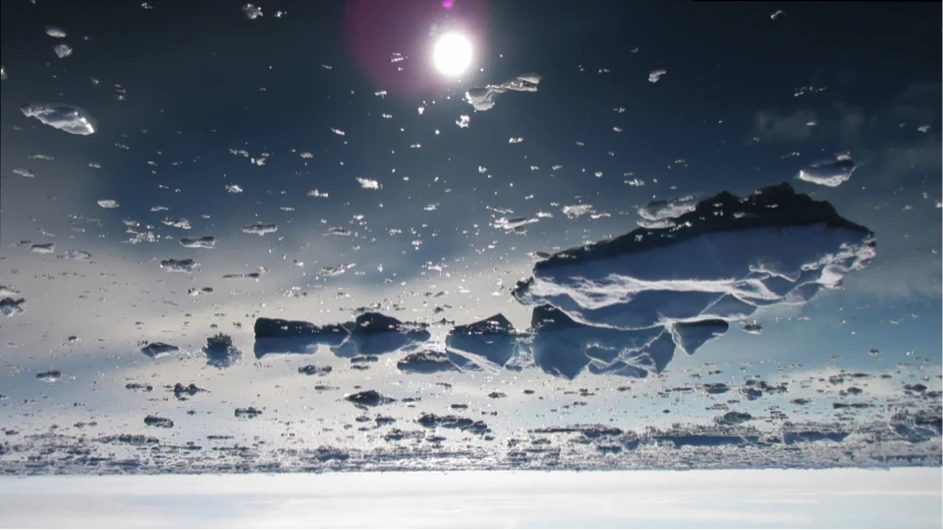
Ursula Biemann, Subatlantic, 2015
Related contributions and publications
-
Klei eten is geen eetstoornis
Zayaan KhanEN nl frLand RelationsClimatePast in the Present -
Cultivating Abundance
Åsa SonjasdotterLand RelationsClimatePast in the Present -
Climate Forum I – Readings
Nkule MabasoEN esLand RelationsClimateHDK-Valand -
Decolonial aesthesis: weaving each other
Charles Esche, Rolando Vázquez, Teresa Cos RebolloLand RelationsClimate -
…and the Earth along. Tales about the making, remaking and unmaking of the world.
Martin PogačarLand RelationsClimatePast in the Present -
Art for Radical Ecologies Manifesto
Institute of Radical ImaginationLand RelationsClimateInstitute of Radical Imagination -
Pollution as a Weapon of War
Svitlana MatviyenkoClimate -
Ecologising Museums
Land Relations
Related activities
-
HDK-Valand
Climate Forum I
The Climate Forum is a space of dialogue and exchange with respect to the concrete operational practices being implemented within the art field in response to climate change and ecological degradation. This is the first in a series of meetings hosted by HDK-Valand within L'Internationale's Museum of the Commons programme.
-
HDK-Valand
Climate Forum III
The Climate Forum is a series of online meetings hosted by HDK-Valand within L’Internationale’s Museum of the Commons programme. The series builds upon earlier research resulting in the (2022) book Climate: Our Right to Breathe and reaches toward emerging change practices.
-
HDK-Valand
Climate Forum II
The Climate Forum is a series of online meetings hosted by HDK-Valand within L’Internationale’s Museum of the Commons programme. The series builds upon earlier research resulting in the (2022) book Climate: Our Right to Breathe and reaches toward emerging change practices.
-
–Van Abbemuseum
The Soils Project
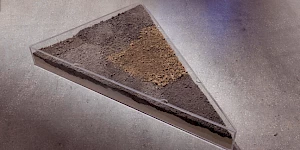
‘The Soils Project’ is part of an eponymous, long-term research initiative involving TarraWarra Museum of Art (Wurundjeri Country, Australia), the Van Abbemuseum (Eindhoven, Netherlands) and Struggles for Sovereignty, a collective based in Yogyakarta, Indonesia. It works through specific and situated practices that consider soil, as both metaphor and matter.
Seeking and facilitating opportunities to listen to diverse voices and perspectives around notions of caring for land, soil and sovereign territories, the project has been in development since 2018. An international collaboration between three organisations, and several artists, curators, writers and activists, it has manifested in various iterations over several years. The group exhibition ‘Soils’ at the Van Abbemuseum is part of Museum of the Commons. -
–Museo Reina Sofia
Sustainable Art Production
The Studies Center of Museo Reina Sofía will publish an open call for four residencies of artistic practice for projects that address the emergencies and challenges derived from the climate crisis such as food sovereignty, architecture and sustainability, communal practices, diasporas and exiles or ecological and political sustainability, among others.
-
–tranzit.ro
Non-Western Technologies for the Good Life
The experimental course ‘Non-Western Technologies for the Good Life’ (November 2023–May 2024) celebrates as its starting point the anniversary of 50 years since the publication of Tools for Conviviality, considering that Ivan Illich’s call is as relevant as ever.
-
–Moderna galerijaZRC SAZU
Open Call – Summer School: Our Many Easts
Our Many Easts summer school takes place in Ljubljana 24–30 August and the application deadline is 15 March. Courses will be held in English and cover topics such as the legacy of the Eastern European avant-gardes, archives as tools of emancipation, the new “non-aligned” networks, art in times of conflict and war, ecology and the environment.
-
–Institute of Radical Imagination
Gathering into the Maelstrom
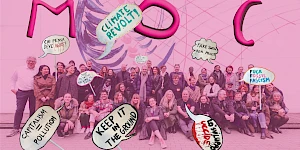
‘Gathering into the Maelstrom’ in Venice at Sale Docks is a four-day programme curated by Institute of Radical Imagination (IRI) and Sale Docks.