Troubles with the East(s)
As part of the publishing thread ‘Towards Collective Study in Times of Emergency’ curator and art historian Bojana Piškur explores the interconnect histories of Palestine and former Yugoslavia. Moving across the Bosnian war and genocide in 1995, the unfolding genocide in Palestine, the history of former Yugoslavia – its formative role in the Non-Aligned Movement and solidarity with Palestine – back to the legacy of the Ottoman Empire Piškur points to entangled threads, solidarities and ‘troubles’.
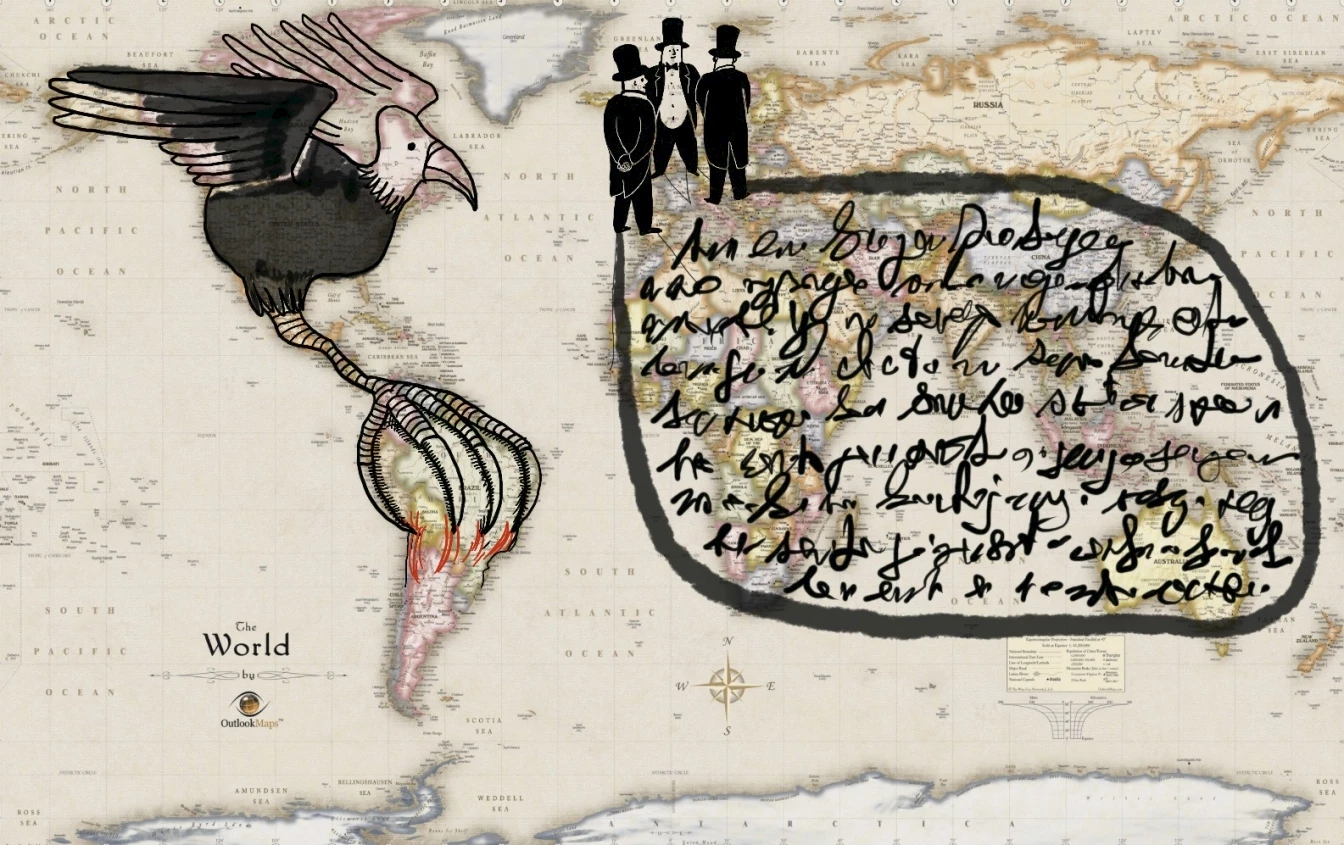
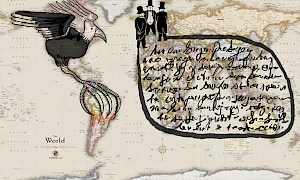
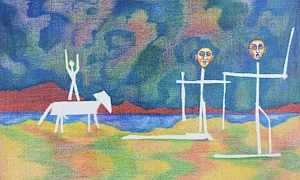
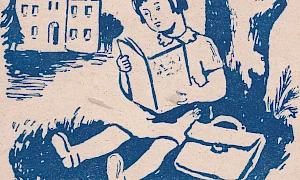
Drawing by Djordje Balmazović.
I.
The genocide of the people in Gaza has been allowed to happen, just as the genocide of Bosnian Muslims was allowed to happen in the 1990s. Like the Palestinians today, Bosnians experienced the consequences of the international community’s silence in the face of unfolding war crimes and crimes against humanity.1 Silence in the context of war means turning a blind eye. Silence also means forgetting: ‘the world forgets, as it has forgotten Bosnia’.2
‘The genocide of the Bosnian Muslims had been allowed to be carried out for so long … that the basis for believing in law, rights, justice, and democracy became problematic. By denying the Bosnian state the right to self-defense, the fabric of international law was torn apart.’3 Written by sociologist Tomaž Mastnak in 1999, these words equally speak to the decades-long colonial violence carried out in Palestine.
There are, of course, clear differences between the contexts of Bosnia and Palestine. First and foremost on the question of statehood: While Bosnia and Herzegovina received international recognition and became a member of the United Nations in 1992, this is not the case with Palestine; Palestine has not been allowed to become an independent sovereign state. The UN played its role in this, already in 1947.4
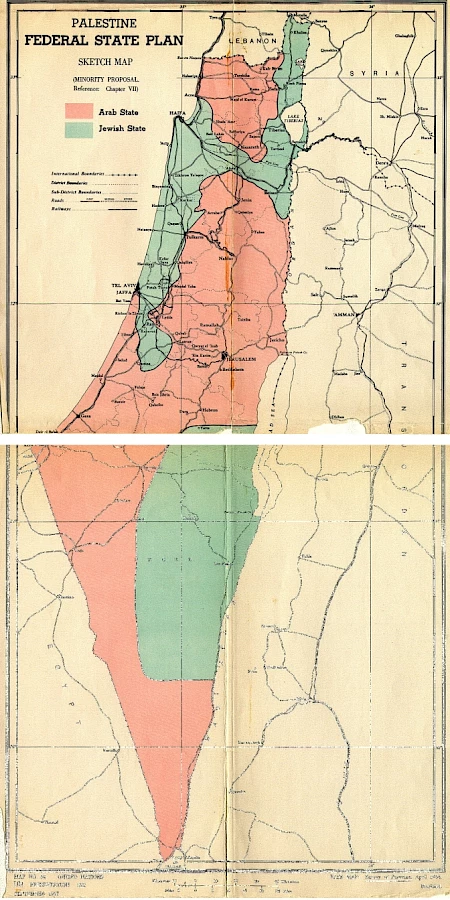
The partition of Palestine: minority or federal plan, map, 1947, United Nations.
Writer Lana Bastašić recently published an opinion piece in the Guardian calling attention to ‘white saviourist hypocrisy’ in response to what is happening in Gaza.5 In it, she identifies a pattern of extreme violence that can be recognized in the events in her native Bosnia during the war between 1992 and 1995. Her response to the question of why write about Bosnia twenty-eight years after the Dayton Peace Agreement is a grim warning that ‘there is no such thing as peace after an ethnic cleansing’.6
The war in Bosnia and Herzegovina played a central role in shaping the so-called new world order. In 2023, history repeated itself as tragedy, while the same world order yet exerts itself in Palestine. This war implicates many world powers whose involvement is fuelled by ideological and geostrategic interests, just as it was with the wars in Yugoslavia and in countless wars and conflicts since then, mainly in the Global South and in the East.
At the end of the Cold War, Eastern Europe embraced the new political system and processes of integration with the West with optimism. The Middle East approached the end of an era with certain anxieties and expectations; the following decade would be marked by a mix of conflicts, peace initiatives, economic changes, and the emergence of extremist groups in the region. Thirty years later, the world is a very different place and the only common denominator is that there is no cause for optimism any longer.
In order to better understand this complex geopolitical situation, its political and social dynamics, we need to delve briefly into the history not only of Eastern Europe, but, above all, of its very East(s); the Balkans and the Middle East.7
II.
Disillusionment with Western liberal democracy is nothing new. It has been going on for quite some time, especially in the countries of the former Eastern bloc. Ivan Krastev and Stephen Holmes have analysed how, after 1989, the most influential political leaders in Eastern Europe embraced copycat westernization as the shortest path to reform, only to witness the emergence of anti-Western sentiment and illiberal populism in many of these countries.8 This sentiment has recently been given new impetus as a result of the mass destruction and the genocide in Gaza carried out by Israel’s apartheid and settler-colonialist politics, which are fervently supported by the very same Western democracies that ‘sold’ the idea of ‘democracy’ to Eastern Europe some decades ago.
The complexities and contradictions of East–West relations go back a long way, and although there was an illusion after the end of the Cold War that they could finally be resolved, they persist today. In fact, the ideological and cultural dichotomies seem to have become even greater than before. The East and its former socialist states have intensively searched for their national and cultural identities, largely based on their pre-socialist pasts, while still carrying along all their previous historical ‘burdens’ or distinctions, such as those between the Ottoman and Habsburg Empires, Christian and Muslim religions, ‘democracy’ and communism, and so on. The former ideological dichotomy between East and West ‘has been replaced by “differences” based on long-lasting “historical legacies” and/or culture’.9
Many writers and theorists have often regarded Eastern Europe as a ‘project’ rather than a geographical place: a ‘cultural project of demi-Orientalization’ and, after the fall of communism, a project that eagerly embraced Western liberal democracy. But ‘the East’ has always been an elusive concept, constantly shifting or overlapping with other East(s) as, for example, the Balkans and the Middle East: an oriental East in Europe and the imagined Orient, the perennial colonial dream.10 In both cases, the focus has been on the stereotypical Other as the West has persistently imagined it: its incompletely developed antipode, a European burden, an irrational, violent people from the periphery of the Western world. Negative stereotyping, essentializing and over-simplification is common to concepts of Orientalism (Edward Said) and Balkanization (Maria Todorova). The processes of othering have also been used historically to justify intervention and control in the regions.
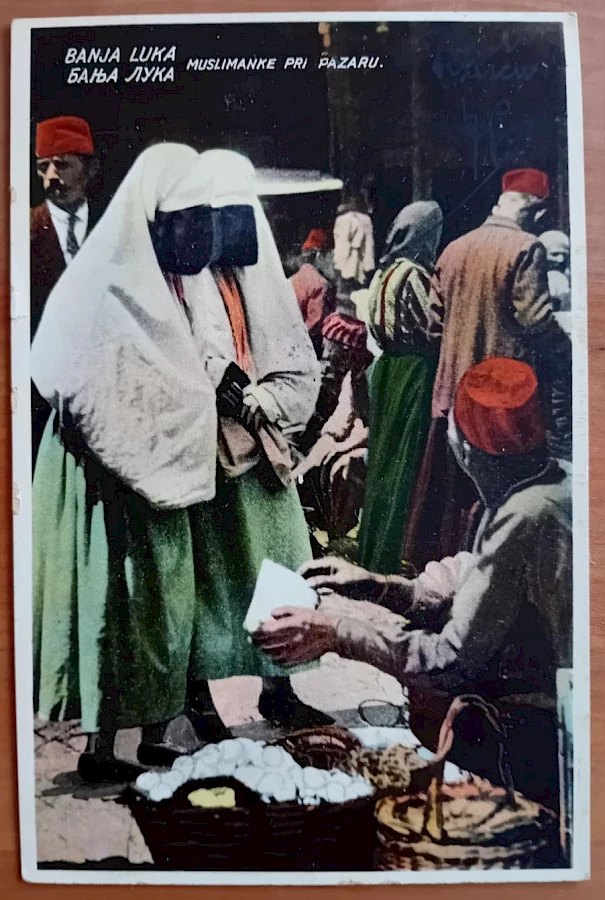
Muslim women at the market, Banja Luka, Kingdom of Yugoslavia, postcard, 1933 (private archive).
Rebecca West, famous for her Black Lamb and Grey Falcon: A Journey Through Yugoslavia travelogue written at the dawn of World War II, and in general very sympathetic towards the Yugoslav people, commented: ‘Violence was, indeed, all I knew of the Balkans: all I knew of the South Slavs’.11 Stereotypes of this kind have been even further reinforced by the patronizing perception of the oppressed from these regions throughout history. Eric Hazan has recently analysed the situation in Palestine. In the eyes of the oppressor, he writes, the oppressed are only good when they are calm and silent.12 If he rebels, he is therefore against our (Western) values, is violent without reason or is a member of a terrorist organization.
The ‘Eastern question’ that emerged in the nineteenth century, when the powers of the Ottoman Empire began to decline, clearly showed the political considerations and the strategic competition of the European powers to exert their influence over the falling empire. Mikhail Pogodin, the Russian imperial historian, wrote a memorandum to Tsar Nicholas I in 1853 saying: ‘Russia demands a treaty to protect millions of Christians, and that is deemed to strengthen its position in the East at the expense of the balance of power. We can expect nothing from the West but blind hatred and malice’.13 In this context, it is important to note the gradation of ‘Orients’, a pattern that reproduces the original dichotomy on which Orientalism is based, about which Milica Bakić-Hayden has written extensively and in relation to which she has coined the term ‘nesting orientalism’. She points out that in this pattern, Asia is more ‘Eastern’ or ‘other’ than Eastern Europe; within Eastern Europe this gradation is reproduced with the Balkans perceived as most ‘eastern’.14 In the same line, the Ottoman (oriental) heritage of the (non-Muslim) Balkans has largely been regarded as a kind of ‘cultural discontinuity’. The writing of the historian Pogodin could then be understood as a reminder to the West that Russia had stood against the Ottomans as a bastion of Christian faith and Western values, or rather: as the (West’s) East against its East(s), its Orient.
Nevertheless, the Ottoman Empire played a significant role in shaping the history and the culture of both the Balkans and the Middle East; it was common for various ethnic groups from different parts of the empire to migrate internally. In the late nineteenth century, a large number of Muslim families from Bosnia and Herzegovina migrated to Palestine, settling just south of Haifa, in what is now Caesarea on the Mediterranean coast. These communities were called Bushnaqs (Arabization of the Slavic word ‘Bošnjak’) and have since been incorporated into Palestinian society as part of the Palestinian people. However, when they arrived in Palestine the Bushnaqs were not granted the same extraterritorial privileges as were granted to the citizens of European states. Under the British Mandate, Bushnaqs were actually classified as Arabs,15 and during the Nakba they experienced expulsion in the same way as other Palestinians.
III.
This web of interactions, geopolitical shifts, conflicts and entanglements receded into the background in the aftermath of the World War II with the emergence of new political, economic and cultural identities in Eastern Europe, including those of the Balkans and the Middle East. The countries of Eastern Europe became part of the Eastern bloc, with the Soviet Union maintaining varying degrees of direct and indirect military, political, economic and cultural control over them. In the case of the Middle East, the old colonial powers still saw the region as something they were entitled to exert their influence and domination over: after the collapse of the Ottoman Empire in 1922, these powers had imposed the state system of government on the region without regard for its ethnically and religiously diverse populations. Immediately after World War II, many countries in the Middle East began the process of decolonization. Almost all of them joined the Non-Aligned Movement (NAM) at its formation in 1961.
The political, economic and cultural changes were perhaps the most profound in Yugoslavia, which not only broke with the Soviet Union and consequently with the Eastern bloc in 1948, but also introduced a new type of self-managed socialism and turned its foreign policy towards the Third World, being one of the founders of the NAM. Yugoslavia incorporated the diverse ethnic, religious and cultural identities of its peoples into a new, Yugoslav one, united under a common federal socialist state with an emphasis on equality between nations. It was not only a state but a project: so it is no surprise that, in 1947, as many as 200,000 young brigadiers from around the world, including a Palestinian brigade, took part in the building of the new Šamac-Sarajevo railway in Bosnia and Herzegovina. This project was more than a railway; it was a symbol of a new era for the newly liberated countries and their people, who throughout history had been forcibly placed on the margins of the global economic, political and cultural system. The Šamac-Sarajevo railway was an example of how these countries could begin the process of modernization on their own terms and at their own pace. At the same time, it signified the construction of a new, better world based on different, more equal foundations; a world which was emerging as a reality, not just a utopia.
IV.
In 1961, at the height of the Cold War, NAM was founded in Belgrade.16 In retrospect, we can say that its inauguration represented the first significant disturbance in a world geopolitical arena dominated by the two hegemonic blocs. NAM functioned as a social movement with the aim of changing then current global structures to bring about a more just, equitable and peaceful world order. As such, it was anti-imperialist, anti-colonial and anti-racist: it also supported the National Liberation Movements across the world fighting for independence from colonialism and various forms of occupation, and the Palestinian case was no exception. As the majority of its members were pro-Palestine, NAM strongly promoted Palestinian interests at the United Nations. At the 1973 NAM summit in Algeria, the Palestine Liberation Organization (PLO) was given observer status as the legitimate representative of the Palestinian people and their struggle, and at the 1976 Colombo summit the PLO was given full participant status. Support for the Palestinian cause has been expressed at all NAM summits and conferences. In the communiqué of the preparatory meeting for the Colombo Conference in 1964, for example, the members declared the following: ‘The Conference condemns the imperialistic policy pursued in the Middle East and, in conformity with the Charter of the United Nations, decides to: endorse the full restoration of all the rights of the Arab people of Palestine to their homeland, and their inalienable right to self-determination; declare their full support to the Arab people of Palestine in their struggle for liberation from colonialism and racism.’17
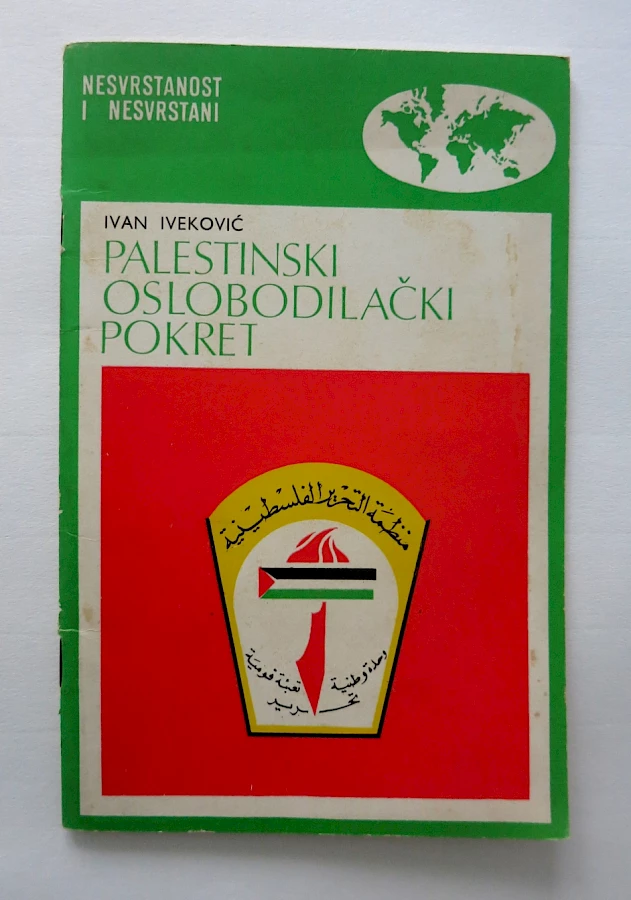
Palestine Liberation Organization, booklet from the series Nesvrstanost i nesvrstani (Non-alignment and the Non-aligned), Beograd: Izdavačko preduzeče ‘Rad’, 1974 (private archive).
As one of the founding members of NAM, Yugoslavia was fully committed to Palestine, supplying material and logistical support to Palestinian organizations (arms and medical supplies, medical treatment of Palestinian fighters in Yugoslavia, education grants for Palestinian students) and helping to legitimize the PLO’s position as the legal representative of the Palestinian people. Following the Six Day War in 1967, Yugoslav officials expressed strong support for the Palestinian right to self-determination and the establishment of an independent state, and were more in favour of the Palestinian armed struggle than in previous decades even though they explicitly condemned terrorist acts such as plane hijackings. In 1967 Yugoslavia severed diplomatic ties with Israel.
Relations between Yugoslavia and Palestine were significant not only politically but also culturally. Manifestations of various kinds – art exhibitions, translation of Palestinian authors (Mahmoud Darwish, Tawfiq Zayyad) and rock concerts in solidarity with Palestine – took place around the country. The Yugoslav people were in general very supportive of the Palestinian liberation movement, and even schoolchildren regularly participated in solidarity actions such as fundraising for their peers in Palestine. The affection was mutual: documents in the Archives of Yugoslavia reveal that many young Palestinian fighters were so impressed by the Yugoslav national liberation struggle in World War II that they nicknamed themselves Tito.18 In the late 1980s, Yugoslav aid and support for Palestine declined, partly because of the changes in Yugoslav foreign policy after Tito’s death but also as a result of a deep crisis within the federation.
In 1989, Palestinian artist Kareem Dabbah donated his work Composition (1989) to the collection of the Art Gallery of the Non-Aligned Countries in Titograd. The work, one of the copper engravings for which the artist was known, includes lines from a poem by Iraqi poet Muhammad Mahdi Al-Jawahiri. At the bottom of the engraving, the line, ‘Long live the Palestinian–Yugoslavian friendship’ stands as a statement of political and collective resistance and of solidarity between the two states – one that, at that time, was already history and one that was still future.
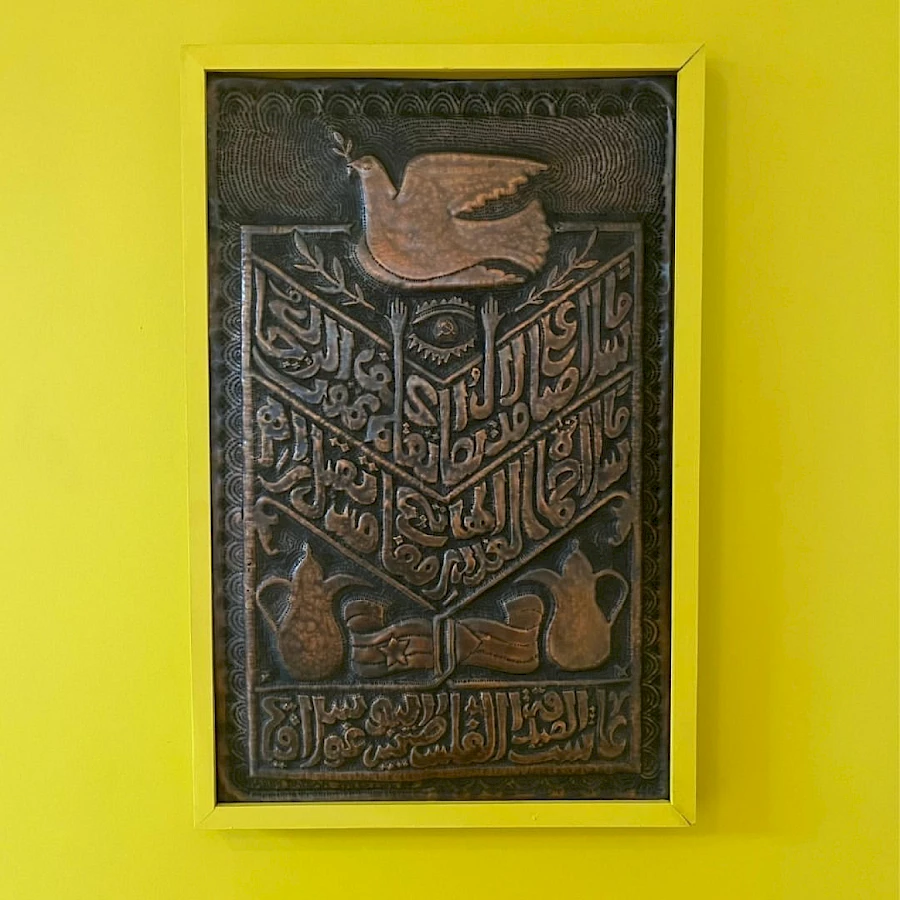
Kareem Dabbah, Composition, 1989, copper engraving. Courtesy of the Museum of Contemporary Art of Montenegro. Photo: Andy Stagg. Courtesy of The Mosaic Rooms, London.
V.
The events of the 1990s reshaped the political, economic and cultural landscape in the East(s): the dissolution of the Soviet Union and the end of the Eastern bloc; the break-up of, and wars in, Yugoslavia; the Gulf War and the subsequent conflicts and wars in the Middle East. NAM had become an anachronism in international politics; in permanent crisis and unable to resolve any armed conflict or war between its members, including the wars in Yugoslavia. The radical changes of this decade were so profound that their consequences continue haunt us to this day.
So what is left of the idea of Eastern Europe, more than thirty years after the end of the Cold War? Eastern Europe has all but disappeared from the geopolitical map of the world, replaced by Global East, Central Europe, the Baltics, Southeast Europe or the Western Balkans. The overturning of one system (communism) in order to copy another (liberal democracy) left most of the region with ‘decades of rising social inequality, pervasive corruption and the morally arbitrary redistribution of public property into the hands of small number of people’, as Krastev and Holmes put it.19 It is accurate to say that there is no longer just one Eastern Europe, but many. And if there is no more Eastern Europe as such, what has become of the East of the former East?
Even if there is no European East, so to speak, the centuries-old hostility towards the other East(s) has not disappeared, but is still present in various guises. Many leaders from the eastern part of Europe, for example, repeatedly use migration as a populist mantra, emphasizing how the region stands as a bastion ‘to protect the rights of the threatened white Christian majority who are in mortal danger’.20 Bosnia, Palestine, Syria, Iraq, the East(s) of yesterday, are now more or less ‘failed states’ whose citizens are leaving en masse.
The West has been accused of double standards; its ‘indifference to the suffering and annihilation of those deemed inferior or not human enough’ for Western civilization has been pervasive.21 One argument is that while the Western world reacted immediately and unequivocally to the invasion of Ukraine with sanctions against Russia, its reaction to the siege of Gaza could not be more different: The West has clearly sided with Israel, supplying arms and resources to the occupying force; Palestine is deemed a threat to the outpost of the ‘civilized’ world in the Middle East.
After World War II there were alternatives to domination and oppression; anticolonial, emancipatory movements inventing new political languages of liberation. All these past alternatives seem to have failed us. Even though Palestine is still a member of NAM, ‘the biggest peace movement in history’, it was not until 29 November 2023 that a relatively unnoticed statement was passed on to the UN by the delegation of Azerbaijan on NAM’s behalf. What made this statement particularly cynical is that it came via the representatives of the country responsible for 120,000 Armenians in Nagorno-Karabakh being forced to leave the region just a month before, in anticipation of ethnic cleansing.
In contrast, South Africa has recently launched a case against Israel at the UN’s International Court of Justice (ICJ), the first state to have done so, accusing Israel of genocide against Palestinians in Gaza and comparing Israel’s treatment of Palestinians to apartheid. South Africans have learned from their history; the rest of the world has not.
These questions remain: How to understand these complex histories and demand change that would actually produce a new politics of rupture in this deeply unjust world? How to finally exorcise the demons of war? To paraphrase the title of Eric Maria Remarque’s classic novel, nothing is new on the Eastern front. In Gaza, people cannot bury their dead as there are no longer any graveyards. And as we wait for the alternatives, it looks unlikely, tragically, that change will come any time soon.
Ljubljana, 2 January 2024
Related activities
-
–Van Abbemuseum
The Soils Project
‘The Soils Project’ is part of an eponymous, long-term research initiative involving TarraWarra Museum of Art (Wurundjeri Country, Australia), the Van Abbemuseum (Eindhoven, Netherlands) and Struggles for Sovereignty, a collective based in Yogyakarta, Indonesia. It works through specific and situated practices that consider soil, as both metaphor and matter.
Seeking and facilitating opportunities to listen to diverse voices and perspectives around notions of caring for land, soil and sovereign territories, the project has been in development since 2018. An international collaboration between three organisations, and several artists, curators, writers and activists, it has manifested in various iterations over several years. The group exhibition ‘Soils’ at the Van Abbemuseum is part of Museum of the Commons. -
–VCRC
Kyiv Biennial 2023
L’Internationale Confederation is a proud partner of this year’s edition of Kyiv Biennial.
-
–MACBA
Where are the Oases?
PEI OBERT seminar
with Kader Attia, Elvira Dyangani Ose, Max Jorge Hinderer Cruz, Emily Jacir, Achille Mbembe, Sarah Nuttall and Françoise VergèsAn oasis is the potential for life in an adverse environment.
-
MACBA
Anti-imperialism in the 20th century and anti-imperialism today: similarities and differences
PEI OBERT seminar
Lecture by Ramón GrosfoguelIn 1956, countries that were fighting colonialism by freeing themselves from both capitalism and communism dreamed of a third path, one that did not align with or bend to the politics dictated by Washington or Moscow. They held their first conference in Bandung, Indonesia.
-
–Van Abbemuseum
Maria Lugones Decolonial Summer School
Recalling Earth: Decoloniality and Demodernity
Course Directors: Prof. Walter Mignolo & Dr. Rolando VázquezRecalling Earth and learning worlds and worlds-making will be the topic of chapter 14th of the María Lugones Summer School that will take place at the Van Abbemuseum in Eindhoven.
-
–MSN Warsaw
Archive of the Conceptual Art of Odesa in the 1980s
The research project turns to the beginning of 1980s, when conceptual art circle emerged in Odesa, Ukraine. Artists worked independently and in collaborations creating the first examples of performances, paradoxical objects and drawings.
-
–Moderna galerijaZRC SAZU
Summer School: Our Many Easts
Our Many Easts summer school is organised by Moderna galerija in Ljubljana in partnership with ZRC SAZU (the Research Centre of the Slovenian Academy of Sciences and Arts) as part of the L’Internationale project Museum of the Commons.
-
–Moderna galerijaZRC SAZU
Open Call – Summer School: Our Many Easts
Our Many Easts summer school takes place in Ljubljana 24–30 August and the application deadline is 15 March. Courses will be held in English and cover topics such as the legacy of the Eastern European avant-gardes, archives as tools of emancipation, the new “non-aligned” networks, art in times of conflict and war, ecology and the environment.
-
–MACBA
Song for Many Movements: Scenes of Collective Creation
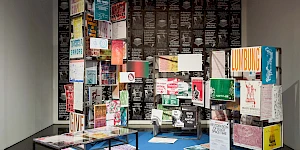
An ephemeral experiment in which the ground floor of MACBA becomes a stage for encounters, conversations and shared listening.
-
Museo Reina Sofia
Palestine Is Everywhere
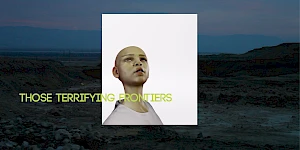
‘Palestine Is Everywhere’ is an encounter and screening at Museo Reina Sofía organised together with Cinema as Assembly as part of Museum of the Commons. The conference starts at 18:30 pm (CET) and will also be streamed on the online platform linked below.
-
HDK-Valand
Book Launch: Collective Study in Times of Emergency, Gothenburg
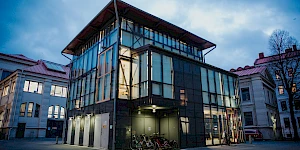
with Nick Aikens (L'Internationale Online / HDK-Valand) and Mills Dray (HDK-Valand), 17h00, Glashuset
-
Moderna galerija
Book Launch: Collective Study in Times of Emergency, Ljubljana
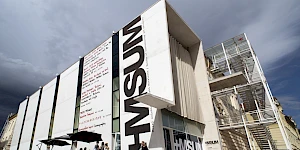
with Nick Aikens (L'Internationale Online / HDK-Valand), Bojana Piškur (MG+MSUM) and Martin Pogačar (ZRC SAZU)
-
WIELS
Book Launch: Collective Study in Times of Emergency, Brussels
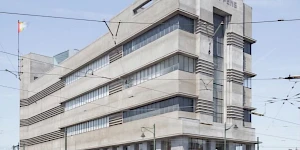
with Nick Aikens (L'Internationale Online / HDK-Valand), Subversive Film and Alex Reynolds, 19h00, Wiels Auditorium
-
–
Kyiv Biennial 2025

L’Internationale Confederation is proud to co-organise this years’ edition of the Kyiv Biennial.
-
–MACBA
Project a Black Planet: The Art and Culture of Panafrica

Curated by MACBA director Elvira Dyangani Ose, along with Antawan Byrd, Adom Getachew and Matthew S. Witkovsky, Project a Black Planet: The Art and Culture of Panafrica is the first major international exhibition to examine the cultural manifestations of Pan-Africanism from the 1920s to the present.
-
–M HKA
The Geopolitics of Infrastructure

The exhibition The Geopolitics of Infrastructure presents the work of a generation of artists bringing contemporary perspectives on the particular topicality of infrastructure in a transnational, geopolitical context.
-
–MACBAMuseo Reina Sofia
School of Common Knowledge 2025
The second iteration of the School of Common Knowledge will bring together international participants, faculty from the confederation and situated organizations in Barcelona and Madrid.
-
NCAD
Book Launch: Collective Study in Times of Emergency, Dublin

with Nick Aikens (L'Internationale Online / HDK-Valand) and members of the L'Internationale Online editorial board: Maria Berríos, Sheena Barrett, Sara Buraya Boned, Charles Esche, Sofia Dati, Sabel Gavaldon, Jasna Jaksic, Cathryn Klasto, Magda Lipska, Declan Long, Francisco Mateo Martínez Cabeza de Vaca, Bojana Piškur, Tove Posselt, Anne-Claire Schmitz, Ezgi Yurteri, Martin Pogacar, and Ovidiu Tichindeleanu, 18h00, Harry Clark Lecture Theatre, NCAD
-
–
Collective Study in Times of Emergency, Amsterdam
Within the context of ‘Every Act of Struggle’, the research project and exhibition at de appel in Amsterdam, L’Internationale Online has been invited to propose a programme of collective study.
-
Museo Reina Sofia
Poetry readings: Culture for Peace – Art and Poetry in Solidarity with Palestine
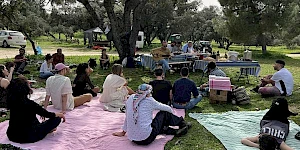
Casa de Campo, Madrid
-
WIELS
Collective Study in Times of Emergency, Brussels. Rana Issa and Shayma Nader
Join us at WIELS for an evening of fiction and poetry as part of L'Internationale Online's 'Collective Study in Times of Emergency' publishing series and public programmes. The series was launched in November 2023 in the wake of the onset of the genocide in Palestine and as a means to process its implications for the cultural sphere beyond the singular statement or utterance.
-
–Museo Reina Sofia
Study Group: Aesthetics of Peace and Desertion Tactics
In a present marked by rearmament, war, genocide, and the collapse of the social contract, this study group aims to equip itself with tools to, on one hand, map genealogies and aesthetics of peace – within and beyond the Spanish context – and, on the other, analyze strategies of pacification that have served to neutralize the critical power of peace struggles.
-
–MSN Warsaw
Near East, Far West. Kyiv Biennial 2025

The main exhibition of the 6th Kyiv Biennial 2025, titled Near East, Far West, is organized by a consortium of curators from L’Internationale. It features seven new artists’ commissions, alongside works from the collections of member institutions of L’Internationale and a number of other loans.
-
MACBA
PEI Obert: The Brighter Nations in Solidarity: Even in the Midst of a Genocide, a New World Is Being Born
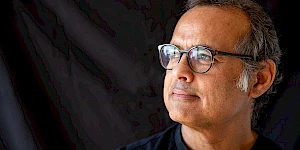
PEI Obert presents a lecture by Vijay Prashad. The Colonial West is in decay, losing its economic grip on the world and its control over our minds. The birth of a new world is neither clear nor easy. This talk envisions that horizon, forged through the solidarity of past and present anticolonial struggles, and heralds its inevitable arrival.
-
–M HKA
Homelands and Hinterlands. Kyiv Biennial 2025
Following the trans-national format of the 2023 edition, the Kyiv Biennial 2025 will again take place in multiple locations across Europe. Museum of Contemporary Art Antwerp (M HKA) presents a stand-alone exhibition that acts also as an extension of the main biennial exhibition held at the newly-opened Museum of Modern Art in Warsaw (MSN).
In reckoning with the injustices and atrocities committed by the imperialisms of today, Kyiv Biennial 2025 reflects with historical consciousness on failed solidarities and internationalisms. It does this across an axis that the curators describe as Middle-East-Europe, a term encompassing Central Eastern Europe, the former-Soviet East and the Middle East.
-
HDK-Valand
MA Forum in collaboration with LIO: Nour Shantout
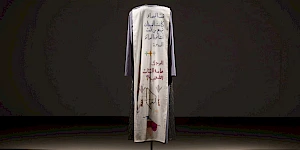
In this artist talk, Nour Shantout will present Searching for the New Dress, an ongoing artistic research project that looks at Palestinian embroidery in Shatila, a Palestinian refugee camp in Lebanon. Welcome!
-
MACBA
PEI Obert: Bodies of Evidence. A lecture by Ido Nahari and Adam Broomberg
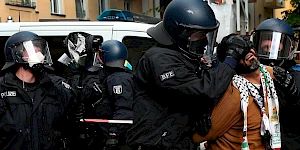
In the second day of Open PEI, writer and researcher Ido Nahari and artist, activist and educator Adam Broomberg bring us Bodies of Evidence, a lecture that analyses the circulation and functioning of violent images of past and present genocides. The debate revolves around the new fundamentalist grammar created for this documentation.
-
–
Everything for Everybody. Kyiv Biennial 2025
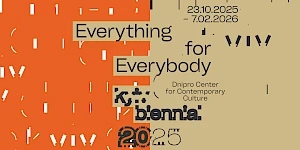
As one of five exhibitions comprising the 6th Kyiv Biennial 2025, ‘Everything for Everybody’ takes place in the Ukraine, at the Dnipro Center for Contemporary Culture.
-
–
In a Grandiose Sundance, in a Cosmic Clatter of Torture. Kyiv Biennial 2025

As one of five exhibitions comprising the 6th Kyiv Biennial 2025, ‘In a Grandiose Sundance, in a Cosmic Clatter of Torture’ takes place at the Dovzhenko Centre in Kyiv.
-
MACBA
School of Common Knowledge: Fred Moten
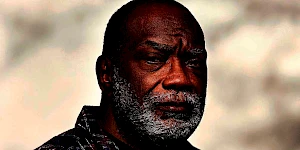
Fred Moten gives the lecture Some Prœposicions (On, To, For, Against, Towards, Around, Above, Below, Before, Beyond): the Work of Art. As part of the Project a Black Planet exhibition, MACBA presents this lecture on artworks and art institutions in relation to the challenge of blackness in the present day.
-
–MACBA
Visions of Panafrica. Film programme
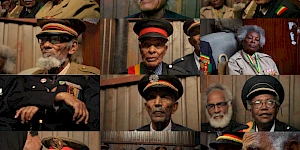
Visions of Panafrica is a film series that builds on the themes explored in the exhibition Project a Black Planet: The Art and Culture of Panafrica, bringing them to life through the medium of film. A cinema without a geographical centre that reaffirms the cultural and political relevance of Pan-Africanism.
-
MACBA
Farah Saleh. Balfour Reparations (2025–2045)

As part of the Project a Black Planet exhibition, MACBA is co-organising Balfour Reparations (2025–2045), a piece by Palestinian choreographer Farah Saleh included in Hacer Historia(s) VI (Making History(ies) VI), in collaboration with La Poderosa. This performance draws on archives, memories and future imaginaries in order to rethink the British colonial legacy in Palestine, raising questions about reparation, justice and historical responsibility.
-
MACBA
Project a Black Planet: The Art and Culture of Panafrica OPENING EVENT
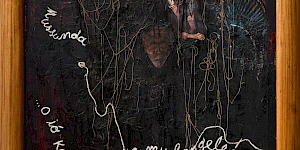
A conversation between Antawan I. Byrd, Adom Getachew, Matthew S. Witkovsky and Elvira Dyangani Ose. To mark the opening of Project a Black Planet: The Art and Culture of Panafrica, the curatorial team will delve into the exhibition’s main themes with the aim of exploring some of its most relevant aspects and sharing their research processes with the public.
-
MACBA
Palestine Cinema Days 2025: Al-makhdu’un (1972)
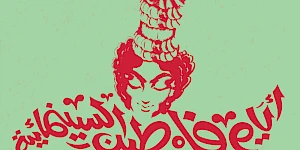
Since 2023, MACBA has been part of an international initiative in solidarity with the Palestine Cinema Days film festival, which cannot be held in Ramallah due to the ongoing genocide in Palestinian territory. During the first days of November, organizations from around the world have agreed to coordinate free screenings of a selection of films from the festival. MACBA will be screening the film Al-makhdu’un (The Dupes) from 1972.
-
Museo Reina Sofia
Cinema Commons #1: On the Art of Occupying Spaces and Curating Film Programmes
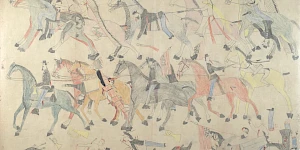
On the Art of Occupying Spaces and Curating Film Programmes is a Museo Reina Sofía film programme overseen by Miriam Martín and Ana Useros, and the first within the project The Cinema and Sound Commons. The activity includes a lecture and two films screened twice in two different sessions: John Ford’s Fort Apache (1948) and John Gianvito’s The Mad Songs of Fernanda Hussein (2001).
-
–
Vertical Horizon. Kyiv Biennial 2025
As one of five exhibitions comprising the 6th Kyiv Biennial 2025, ‘Vertical Horizon’ takes place at the Lentos Kunstmuseum in Linz, at the initiative of tranzit.at.
-
–
International Day of Solidarity with the Palestinian People: Activities
To mark International Day of Solidarity with the Palestinian People and in conjunction with our collective text, we, the cultural workers of L'Internationale have compiled a list of programmes, actions and marches taking place accross Europe. Below you will find programmes organized by partner institutions as well as activities initaited by unions and grass roots organisations which we will be joining.
This is a live document and will be updated regularly.
-
–SALT
Screening: A Bunch of Questions with No Answers
This screening is part of a series of programs and actions taking place across L’Internationale partners to mark International Day of Solidarity with the Palestinian People.
A Bunch of Questions with No Answers (2025)
Alex Reynolds, Robert Ochshorn
23 hours 10 minutes
English; Turkish subtitles -
HDK-Valand
MA Forum in collaboration with LIO: Adam Broomberg
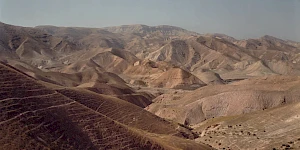
In this MA Forum we welcome artist Adam Broomberg. In his lecture he will focus on two photographic projects made in Israel/Palestine twenty years apart. Both projects use the medium of photography to communicate the weaponization of nature.
-
MACBA
PEI Obert: Until Liberation: A Collective Reading and Listening Session by Learning Palestine
PEI Obert presents a collective session with Learning Palestine. At this historical juncture – amid the ongoing genocide in Gaza and the censorship and repression of all things Palestinian – Learning Palestine invites us to gather not only in refusal but also in affirmation.
Related contributions and publications
-
…and the Earth along. Tales about the making, remaking and unmaking of the world.
Martin PogačarLand RelationsClimatePast in the Present -
The Kitchen, an Introduction to Subversive Film with Nick Aikens, Reem Shilleh and Mohanad Yaqubi
Nick Aikens, Subversive FilmSonic and Cinema CommonslumbungPast in the PresentVan Abbemuseum -
The Repressive Tendency within the European Public Sphere
Ovidiu ŢichindeleanuInternationalismsPast in the Present -
Rewinding Internationalism
InternationalismsVan Abbemuseum -
Troubles with the East(s)
Bojana PiškurInternationalismsPast in the Present -
Right now, today, we must say that Palestine is the centre of the world
Françoise VergèsInternationalismsPast in the Present -
Body Counts, Balancing Acts and the Performativity of Statements
Mick WilsonInternationalismsPast in the Present -
Until Liberation I
Learning Palestine GroupInternationalismsPast in the Present -
Until Liberation II
Learning Palestine GroupInternationalismsPast in the Present -
The Veil of Peace
Ovidiu ŢichindeleanuPast in the Presenttranzit.ro -
Editorial: Towards Collective Study in Times of Emergency
L’Internationale Online Editorial BoardEN es sl tr arInternationalismsStatements and editorialsPast in the Present -
Opening Performance: Song for Many Movements, live on Radio Alhara
Jokkoo with/con Miramizu, Rasheed Jalloul & Sabine SalaméEN esInternationalismsSonic and Cinema CommonsPast in the PresentMACBA -
Siempre hemos estado aquí. Les poetas palestines contestan
Rana IssaEN es tr arInternationalismsPast in the Present -

Indra's Web
Vandana SinghLand RelationsPast in the PresentClimate -
Diary of a Crossing
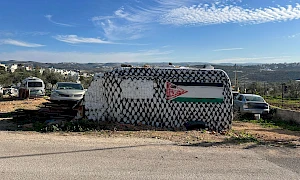
Baqiya and Yu’adInternationalismsPast in the Present -
The Silence Has Been Unfolding For Too Long
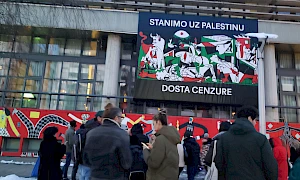
The Free Palestine Initiative CroatiaInternationalismsPast in the PresentSituated OrganizationsInstitute of Radical ImaginationMSU Zagreb -
En dag kommer friheten att finnas
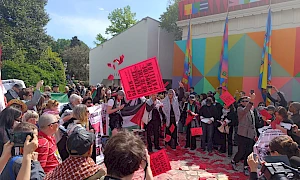
Françoise Vergès, Maddalena FragnitoEN svInternationalismsLand RelationsClimateInstitute of Radical Imagination -
Everything will stay the same if we don’t speak up
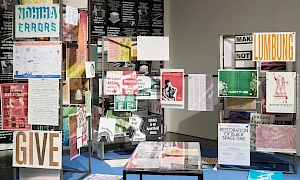
L’Internationale ConfederationEN caInternationalismsStatements and editorials -

War, Peace and Image Politics: Part 1, Who Has a Right to These Images?
Jelena VesićInternationalismsPast in the PresentZRC SAZU -
Live set: Una carta de amor a la intifada global
PrecolumbianEN esInternationalismsSonic and Cinema CommonsPast in the PresentMACBA -
Cultivating Abundance
Åsa SonjasdotterLand RelationsClimatePast in the Present -
Rethinking Comradeship from a Feminist Position
Leonida KovačSchoolsInternationalismsSituated OrganizationsMSU ZagrebModerna galerijaZRC SAZU -
Reading list - Summer School: Our Many Easts
Summer School - Our Many EastsSchoolsPast in the PresentModerna galerija -
The Genocide War on Gaza: Palestinian Culture and the Existential Struggle
Rana AnaniInternationalismsPast in the Present -
Klei eten is geen eetstoornis
Zayaan KhanEN nl frLand RelationsClimatePast in the Present -
Dispatch: ‘I don't believe in revolution, but sometimes I get in the spirit.’
Megan HoetgerSchoolsPast in the Present -
Dispatch: Notes on (de)growth from the fragments of Yugoslavia's former alliances
Ava ZevopSchoolsPast in the Present -
Glöm ”aldrig mer”, det är alltid redan krig
Martin PogačarEN svLand RelationsPast in the Present -
Broadcast: Towards Collective Study in Times of Emergency (for 24 hrs/Palestine)
L’Internationale Online Editorial Board, Rana Issa, L’Internationale Confederation, Vijay PrashadInternationalismsSonic and Cinema Commons -
Beyond Distorted Realities: Palestine, Magical Realism and Climate Fiction
Sanabel Abdel RahmanEN trInternationalismsPast in the PresentClimate -

Collective Study in Times of Emergency. A Roundtable
Nick Aikens, Sara Buraya Boned, Charles Esche, Martin Pogačar, Ovidiu Ţichindeleanu, Ezgi YurteriInternationalismsPast in the PresentSituated Organizations -

Present Present Present. On grounding the Mediateca and Sonotera spaces in Malafo, Guinea-Bissau
Filipa CésarSonic and Cinema CommonsPast in the Present -
Collective Study in Times of Emergency
InternationalismsPast in the Present -
S come Silenzio
Maddalena FragnitoEN itInternationalismsSituated Organizations -
ميلاد الحلم واستمراره
Sanaa SalamehEN hr arInternationalismsPast in the Present -
عن المكتبة والمقتلة: شهادة روائي على تدمير المكتبات في قطاع غزة
Yousri al-GhoulEN arInternationalismsPast in the Present -

Archivos negros: Episodio I. Internacionalismo radical y panafricanismo en el marco de la guerra civil española
Tania Safura AdamEN esInternationalismsPast in the Present -

Re-installing (Academic) Institutions: The Kabakovs’ Indirectness and Adjacency
Christa-Maria Lerm HayesInternationalismsPast in the Present -
Palma daktylowa przeciw redeportacji przypowieści, czyli europejski pomnik Palestyny
Robert Yerachmiel SnidermanEN plInternationalismsPast in the PresentMSN Warsaw -

Masovni studentski protesti u Srbiji: Mogućnost drugačijih društvenih odnosa
Marijana Cvetković, Vida KneževićEN rsInternationalismsPast in the Present -
No Doubt It Is a Culture War
Oleksiy Radinsky, Joanna ZielińskaInternationalismsPast in the Present -
Cinq pierres. Une suite de contes
Shayma NaderEN nl frInternationalisms -
Dispatch: As Matter Speaks
Yeongseo JeeInternationalismsPast in the Present -
Speaking in Times of Genocide: Censorship, ‘social cohesion’ and the case of Khaled Sabsabi
Alissar SeylaInternationalisms -
Reading List: Summer School, Landscape (post) Conflict
Summer School - Landscape (post) ConflictSchoolsLand RelationsPast in the PresentIMMANCAD -
Today, again, we must say that Palestine is the centre of the world
Françoise VergèsInternationalisms -
Isabella Hammad’ın icatları
Hazal ÖzvarışEN trInternationalisms -

To imagine a century on from the Nakba
Behçet ÇelikEN trInternationalisms -
Internationalisms: Editorial
L'Internationale Online Editorial BoardInternationalisms -
Dispatch: Institutional Critique in the Blurst of Times – On Refusal, Aesthetic Flattening, and the Politics of Looking Away
İrem GünaydınInternationalisms -
Until Liberation III
Learning Palestine GroupInternationalismsPast in the Present -
Archivos negros: Episodio II. Jazz sin un cuerpo político negro
Tania Safura AdamEN esInternationalismsPast in the Present -
Cultural Workers of L’Internationale mark International Day of Solidarity with the Palestinian People
Cultural Workers of L’InternationaleEN es pl roInternationalismsSituated OrganizationsPast in the PresentStatements and editorials -
Poetry Against Language Dioxide
Rana IssaInternationalisms -
The Object of Value
SlinkoInternationalismsLand Relations -
Translated into Socialism: An experiment in internationalism
Merve Elveren, Tevfik Rada, Sezgin BoynikInternationalisms