Dispatch: Notes On Generosity
In her dispatch from the second edition of the School of Common Knowledge, held in Barcelona and Madrid in November 2025, Amanda Macedo Macedo offers a series of notes on generosity, weaving reflections on the experiences, infrastructures, propositions and contradictions that permeated the school.
1. A Gesture of Generosity
In The Undercommons, Fred Moten and Stefano Harney describe generosity as a fugitive practice – a form of ‘study’ that gives without reserve, sharing time, resources, and thought outside institutional logics.1 This is precisely what I experienced last November during the second edition of the School of Common Knowledge (SCK). The program asked us to reflect on rooting and uprooting within our colonial, migrant, situated, and ecological present–conditions that resist stability, demand attention, and unsettle.
In this context, generosity revealed itself not as a ceremonial gesture – the kind institutions often perform, welcoming yet subtly patronizing – but as shared rigor, vulnerability, and co-presence. It aligned with what Moten elsewhere describes as the sensual: an attraction, a pull, a vibrational relation that makes connection possible even amid rupture.2
Yet a question lingers, insistent and unresolved: Can institutions ever move outside their own organizing logics? Can they sustain the fugitive forms of generosity they seek to convene?
2. The Gathering: A Partial View of a Collective Effort
For one intense week, curators, artists, and scholars from different geographies gathered in a condensed space of study across Madrid and Barcelona. As a participant, I saw only one surface of the labor sustaining the gathering, yet even from that partial vantage I sensed the depth of collaboration: the long preparation, the invisible work, the care that allowed the space to hold so much difference without collapsing. Shannon Jackson calls this often-unrecognized labor the ‘infrastructure of generosity’.3 What appears as surplus – what lies beneath, besides, or around the event – is in fact what holds it together.
Among participants, there was a shared sense of being overwhelmed, of tiredness, preparedness and unpreparedness – the friction that comes from intense proximity. Yet these affective states also contributed to an informal occupation of the spaces we moved through: shared meals, shared tables, shared walks, shared subway rides. In each of these small acts, another form of learning took shape. A form of learning that comes from joy, from singing together, untangling wool and cutting crosses on olives. For every person involved, there was something distinct to carry forward.
This is knowledge that moves like water.
It sticks. It washes away. It returns.
Institutions often struggle to hold such fugitive flows, but they must learn to make room for what escapes capture – and to remain at ease with that escape. It was clear that collective efforts had already been made with different groups and organizations, a labor made especially visible in Reina Sofia’s Museo Tentacular work and its articulation of collaborative, shifting networks.
Achille Mbembe argues that inhabiting the world entails acknowledging our shared vulnerability, our co-exposure, and our entanglement – what he terms the terrestrial condition.4 The SCK rendered this condition tangible: bodies co-present in study, mutually exposed, forming a reciprocity that, while fragile, nonetheless structured the entire encounter. There were moments when we were invited – but also pushed by the urgencies unfolding around us – to reflect on our own positionalities, on the fragile and uneven privileges we carried into the room, all against a backdrop of a resurgent far right in Europe and the renewed normalization of genocide and imperial violence.
This terrestriality, as Mbembe describes it, is not a given but an ethic – one that the SCK must continue to hold with care: bodies learning together, exposed to one another, bound by a fragile but real reciprocity in co-learning and unlearning.
3. Small Gestures: The Infrastructure of Care
Mbembe’s call for an ethics of repair implies a shared responsibility – a refusal to remain passive spectators. Under our current conditions, we are asked to become participants, actants, responsible for one another and for the worlds we touch. This requires resisting the deeply implanted individualism that structures contemporary life, the reflex that makes it easier to blame institutional machinery rather than recognize our own implication.
We each carry different experiences of horizontality, and we know hierarchical structures persist and reassert themselves. Yet I learned from people learning – from the ways we leaned toward one another organically. We must learn to sit with discomfort, and trust that knowledge will continue to unfold outside institutional walls – that the most valuable aspects of any collective encounter are often the seeds dispersed elsewhere, the cross-pollinations that exceed capture, the exchanges that are, by nature, immeasurable.
I think of Phaedrus, set outside the city walls, where Plato suggests that knowledge moves like a living thing – taking root unpredictably, germinating where conditions allow.5 Perhaps this is the kind of learning that travels with us: scattered, fragile, and persistent. A knowledge that flourishes not within the surveilled spaces of the institution but in the informal, immeasurable intervals in between.
I am grateful – for the discomforts that made us pause, for the silences that held more than words; for smoking breaks, shared meals, untranslatable conversations; for the deep listening and the quiet attempts to hold one another with care; and even for the body faltering under too-muchness, reminding us of our limits and of our need for one another.
4. Uprooting / Unbelonging
Roots are often hidden and difficult to trace. As Emmanuel Coccia notes, they do not belong to a single form or function; they adapt, delegate, and sometimes merge into symbiotic relations that exceed any one organism.6 To think with roots is to recognize that grounding is never singular. It is a practice of entanglement – a continual negotiation with what surrounds us, evolving and improvising as conditions shift.
As participants, we were previously asked to reflect on the meaning of uprooting. I wrote that to think of (up)rooting is to think of grounding, but also of entanglement – of how bodies, languages, and histories take hold in soil that is never neutral. Rooting suggests relation: a reaching downward and outward, an anchoring in something larger than the self. Yet roots are never fixed; they branch, split, graft. Uprooting, in turn, carries its own possibilities: a dislodging from imposed coordinates of origin, identity, nation. To be uprooted is to be forced into movement, but also to invent new modes of belonging – or to inhabit unbelonging itself.
In his closing lecture, Some Prœpositions (On, To, For, Against, Towards, Around, Above, Below, Before, Beyond): the Work of Art,7 delivered at MACBA, Fred Moten insisted that – as problematic as it is generative – ‘thinking requires having a location (in time and space)’ – even if provisional. A discourse that he signaled is linked to the history of slavery in the Americas, that radical and catastrophic denial of position, the violent severing from land and kin, the imposition of dislocation as the very condition of life.
This insistence on location clarifies what uprooting reveals: how unstable any ground can be, how every location is provisional. And once that ground shifts, another condition emerges – not defined by lack but by possibility. This is where unbelonging emerges as a generative proposition. Unbelonging, as Iván A. Ramos writes, is not a lack but a force – an affective refusal of forced authenticity, of nation, of purity. It opens alternative modes of community, alternative ways of being with.8
Force was also a word I returned to throughout the week as bodies, ideas, and affects moved around us. Where does that force come from? What does it make possible?
5. Pedagogies of Interruption
While at the SCK, I kept coming back to what Marisa Belausteguigoitia and Rian Lozano describe as pedagogías del contagio: ‘classrooms, workshops, and pedagogical praxis as ‘contaminated,’ that is, committed to social urgencies.’9 These are pedagogies that leak, infiltrate, contaminate, and perforate institutions – creating holes where air and light can move. They refuse containment; they cultivate relations that exceed the classroom, seeping outward. They enact a prœpositions, the co-inspiring tension of working against the institution while inevitably being inside it.
There was a moment when the pervasive borders of the institution became painfully clear. Outside the space we were using as a classroom at MACBA, several police officers harassed a group of Black men that were in public space. I arrived a few minutes after the police had left, but witnessing the aftermath made it unmistakably clear that violence is not an abstraction – not something we analyse from afar. It is already here, structuring the everyday. It enters the classroom uninvited, staining the terms of study, reminding us that learning does not occur outside the world but inside it.
Everyone responded differently, each reaction carrying a story and a positionality. It was not, for many of us, the first time we had experienced harassment or witnessed state violence. What stays with me is the shared discomfort that followed – the collective recognition that study is always shaped by the forces that exceed it, that vulnerability and exposure are unevenly distributed.
Even the transparent window of the education space at MACBA – seemingly neutral – organizes us, distributes bodies, divides sensorial access. To acknowledge this is not to despair, but to recognize how structures act on us and how we might begin to unmake them slowly, patiently.
Perhaps what we need, too, is what Simone Weil calls attention: a capacity to suspend the self, to wait without mastery, to endure the void that precedes understanding.10 Attention not as a technique, but as an ethical posture – an act of generosity.
A few hours later, in what felt like a prelude spoken from the future back into the past, Moten opened his lecture with a line that stayed with me: ‘There is a beautiful generativity to being interrupted, and it is an openness to contingent conditions that one hopefully is able to engage with…’ His words reframed interruption not as a breakdown but as a condition of possibility – an uneven, contingent terrain on which relation becomes thinkable.
To interrupt is not to stop.
It is to begin again, and again – without shame.
There are no correct answers, only openings.
True generosity requires knowing that we come from different histories and that relation demands responsibility: response-ability.11 And perhaps that is why we refuse to belong – not in the terms offered by the state, not through a citizenship defined by exclusion and violence. Yet we are continually compelled to aspire to precisely what negates us.
So, I return to the question of ‘force’:
Where does it come from?
Where does it reside?
And how does it shape the ways we move, resist, and relate?
6. Closing: What Continues
The museum, like the state, is a rigid architecture. Can it be decolonized – truly? Can it unlearn the epistemologies that built its walls? And when I think about the museum, I inevitably think of the university as well.
A friend once told me that the only time people will see light coming from the university is when the university is on fire. And yet I do not wish to be the one who sets the building ablaze, not now. I am not there – perhaps I will never be there. I am still drawn to the cracks in the structure, still searching for the spaces where we might reside otherwise, where unbelonging becomes a force for reimagining what institutions could hold.
Moten offered another way of imagining this in response to a question from the audience: we to recognize our implication as an ethical imperative – especially now, when everything feels at risk. In this time, it should be us – those who love art (art as an institution) – who close it down. ‘I don’t want them to shut the museum; we will do it right.’12 His words refused both destruction and complacency, insisting instead on a collective reorientation of how institutions might be inhabited, reshaped, or held to account.
What I learned at the SCK is at once straightforward and demanding: generosity is an orientation, a shared risk, a willingness to let our thinking and our bodies be touched by others. It is an improvised and fragile infrastructure – yet a vital one. Generosity encourages precision and not dismissal.
What unfolded at the school continues to pulse quietly, like an undercurrent.
A reminder that study is collective, and not owned by any institution.
That interruption can be a form of care.
That unbelonging can open the possibility of new attachments.
And that generosity, like water, moves where it is needed – finding its way through cracks, overflowing the structures that attempt to contain it.
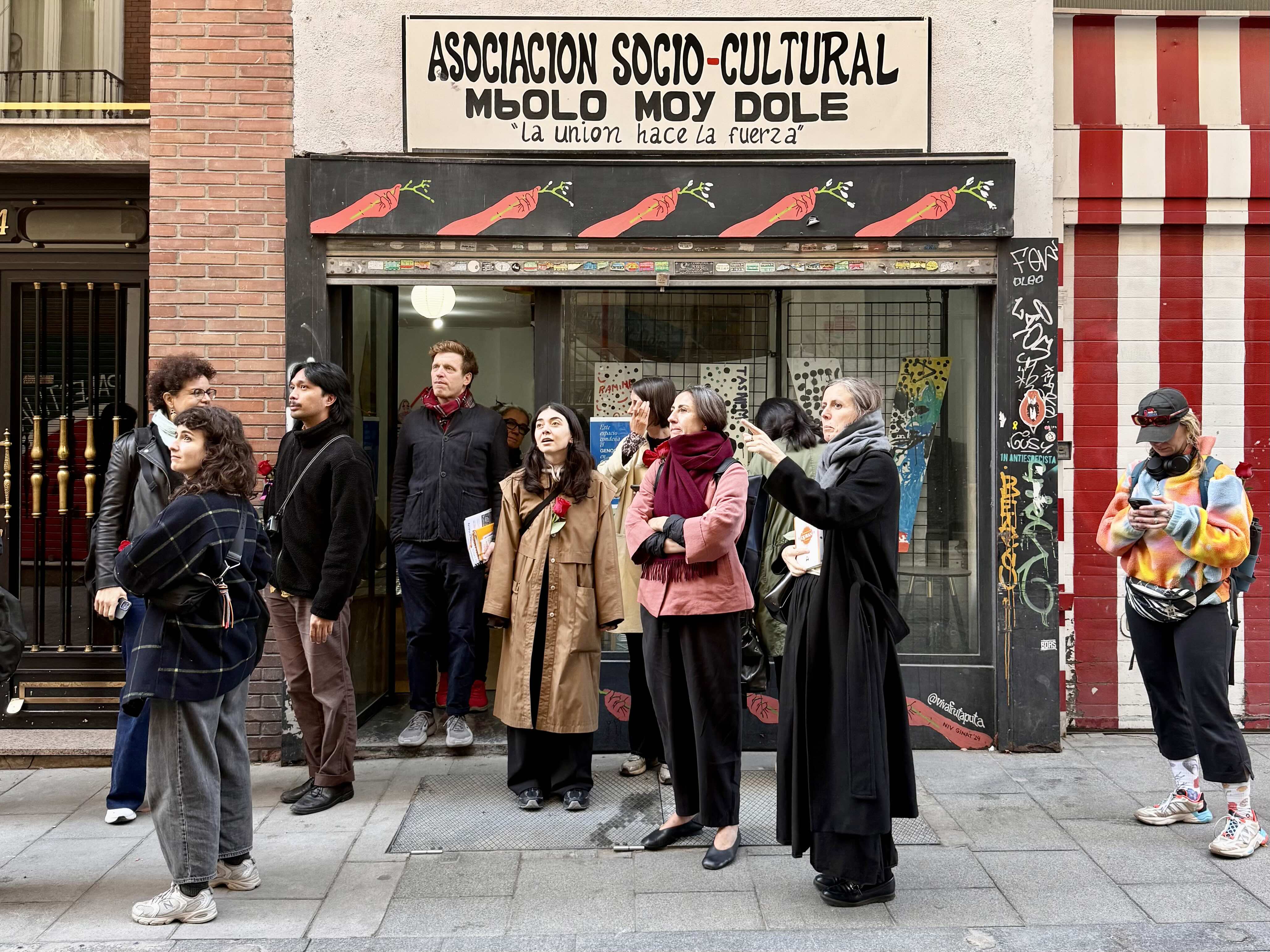
Mbolo Moy Dole Association.
All photos Amanda Macedo Macedo
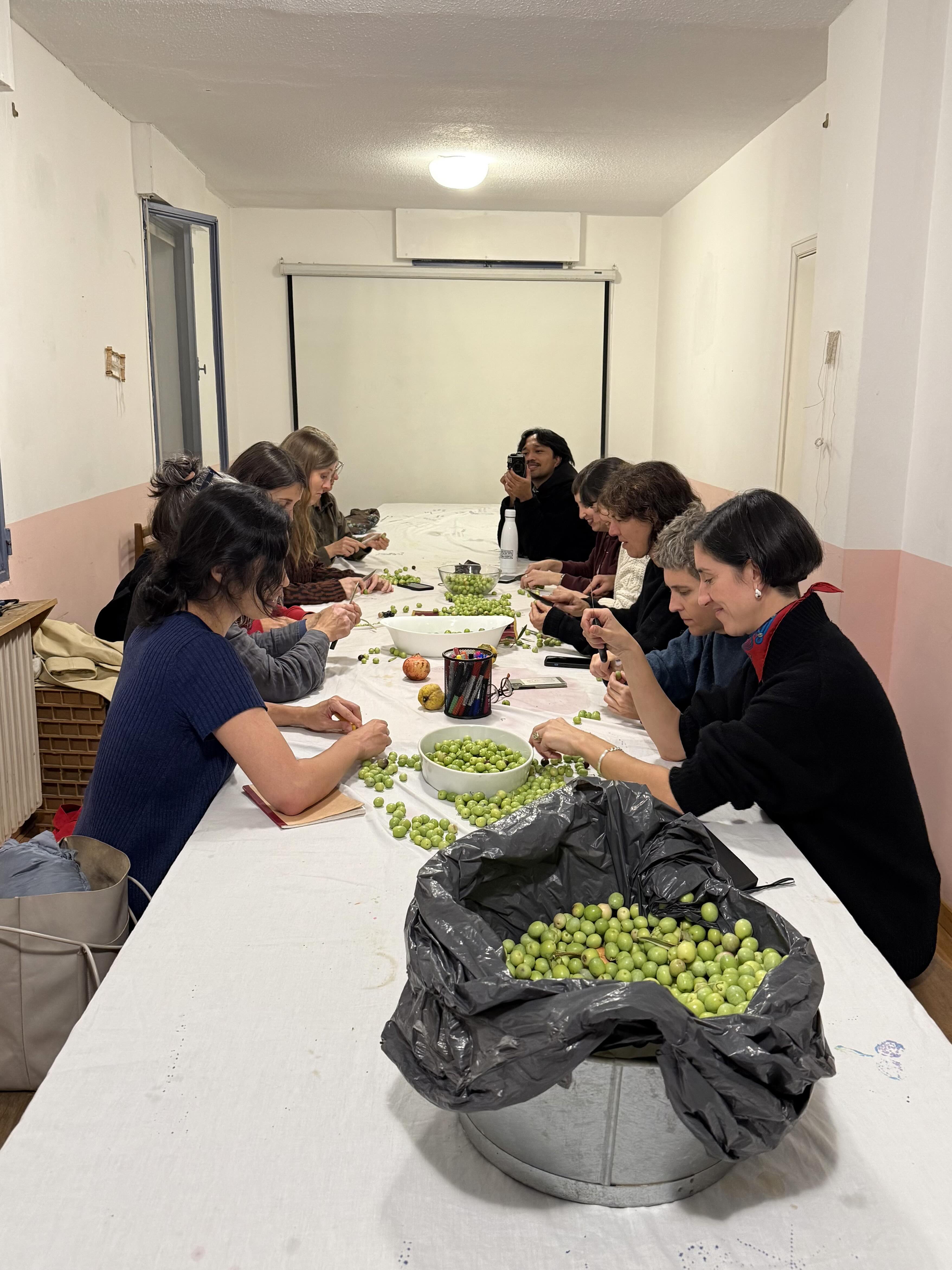
Rajando olives at Paisanaje
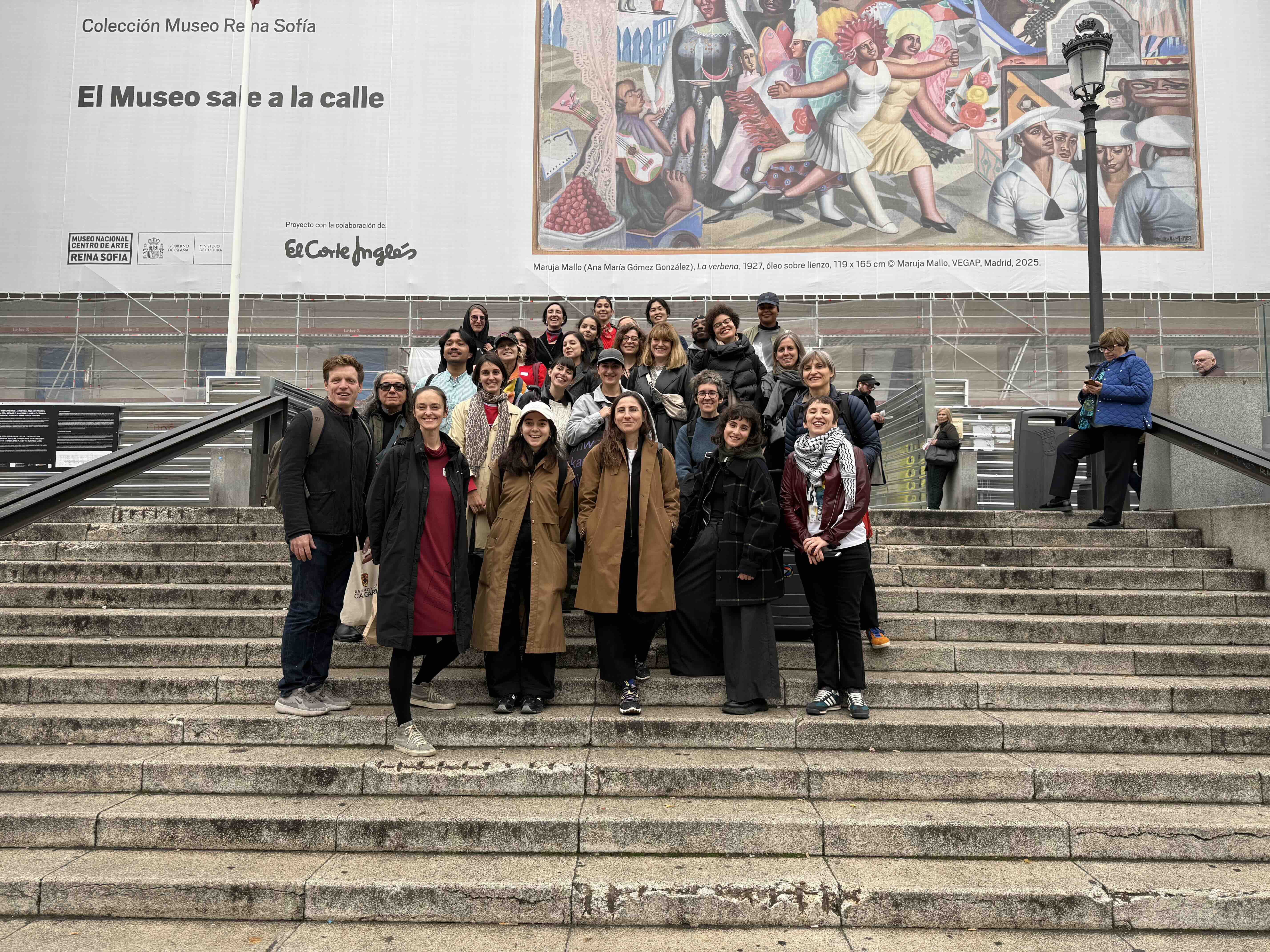
SCK cohort at Museo Reina Sofía
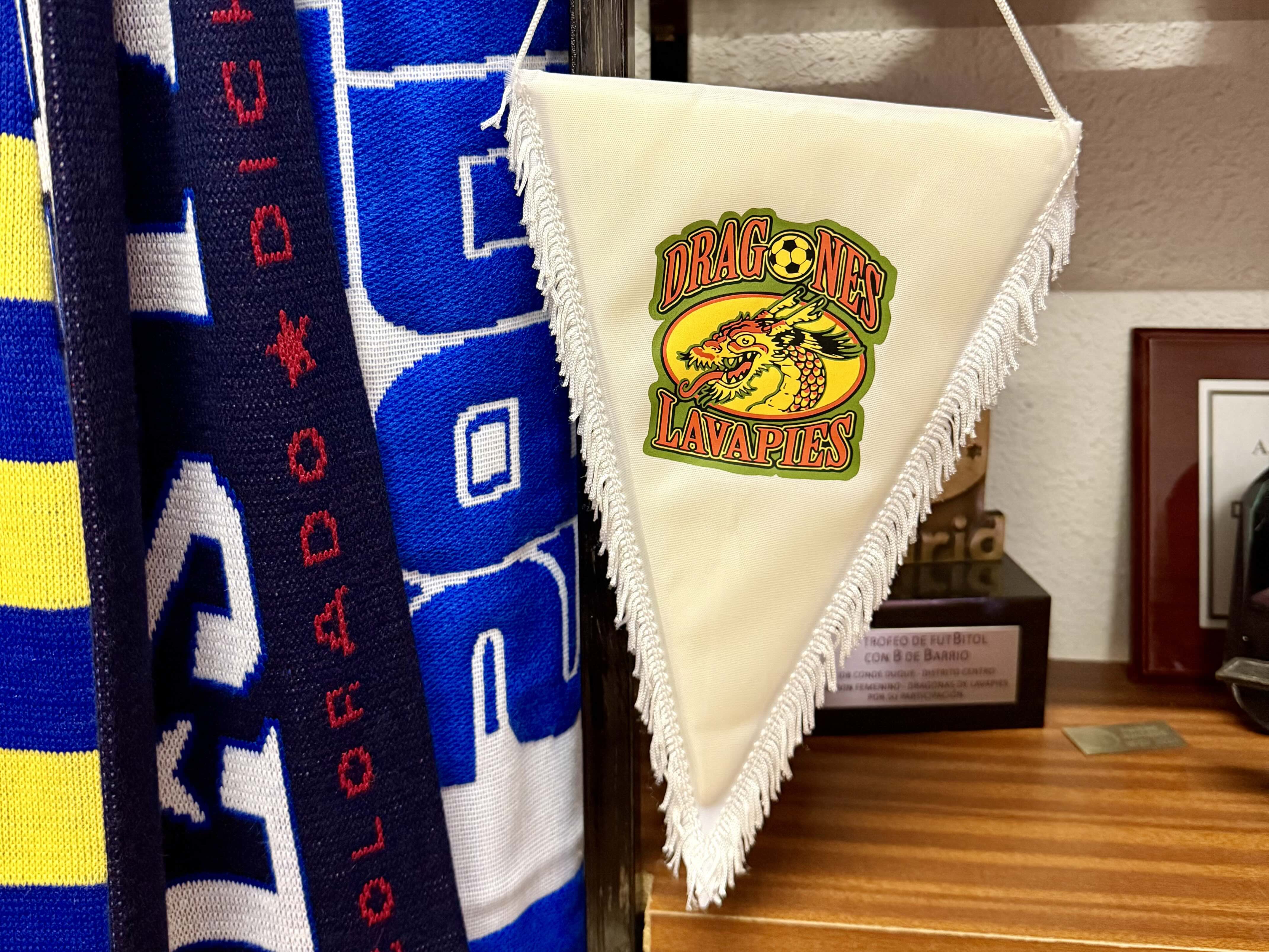
Dragones de Lavapiés
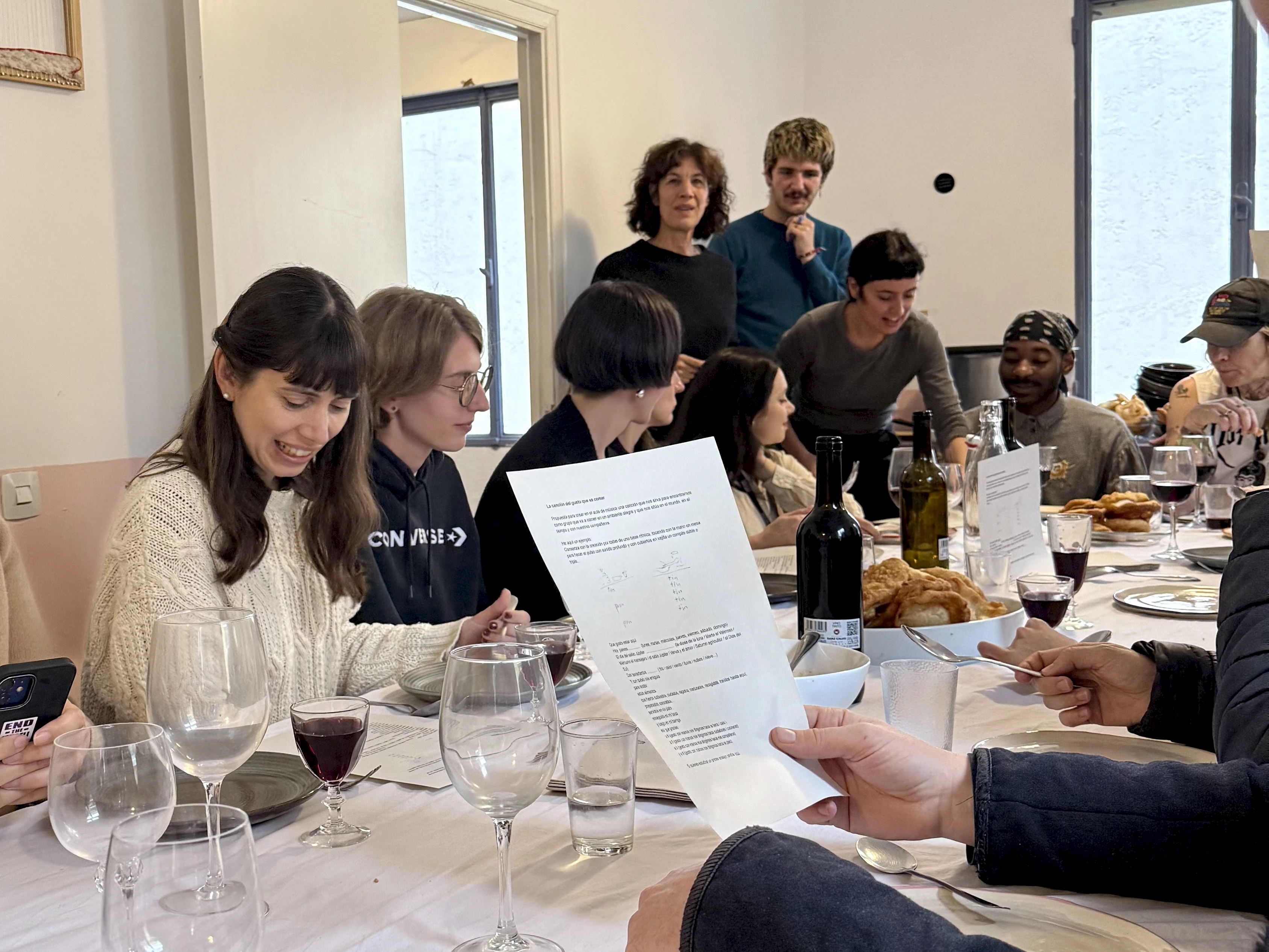
La canción del gusto que es comer
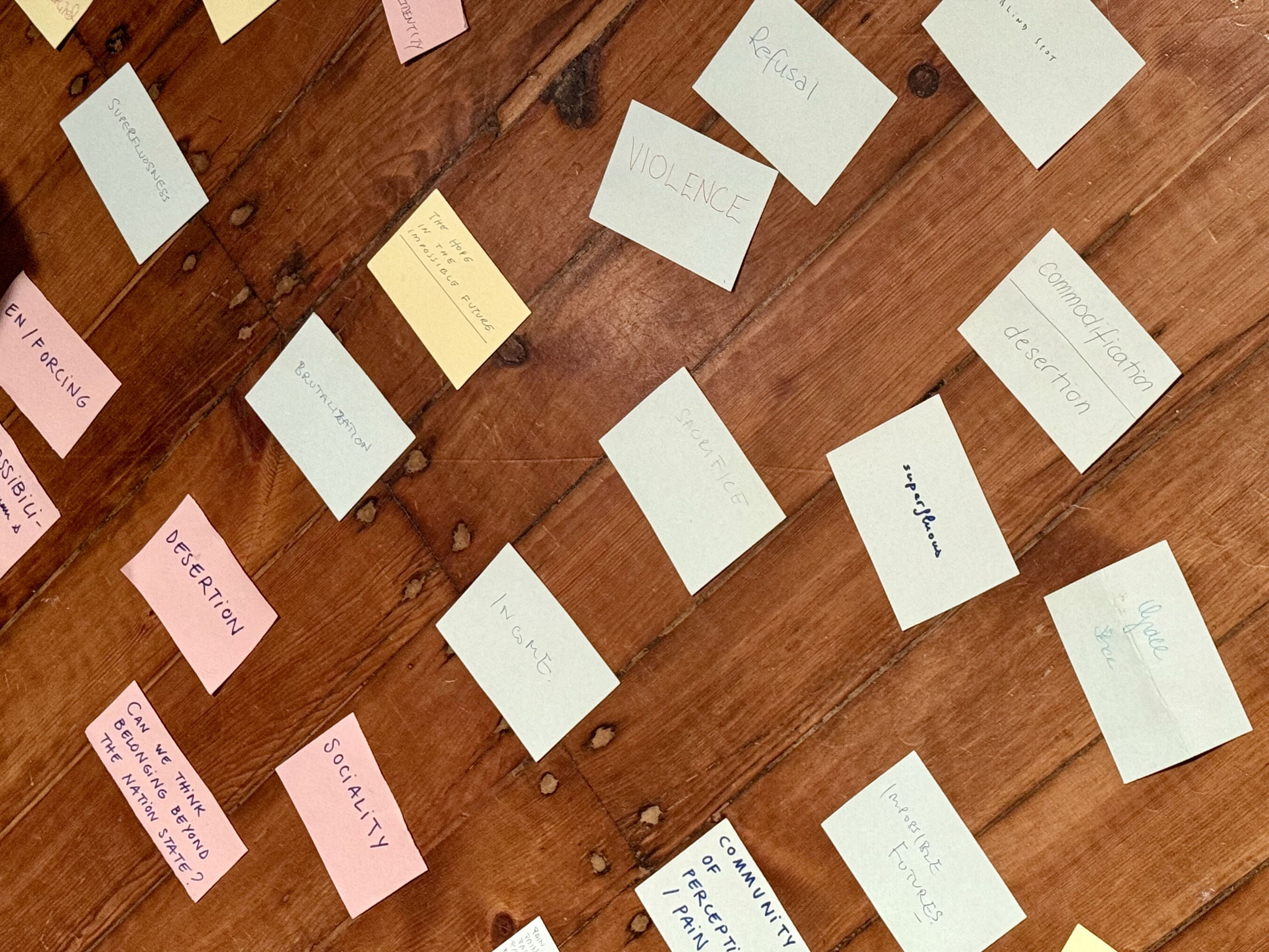
Keywords
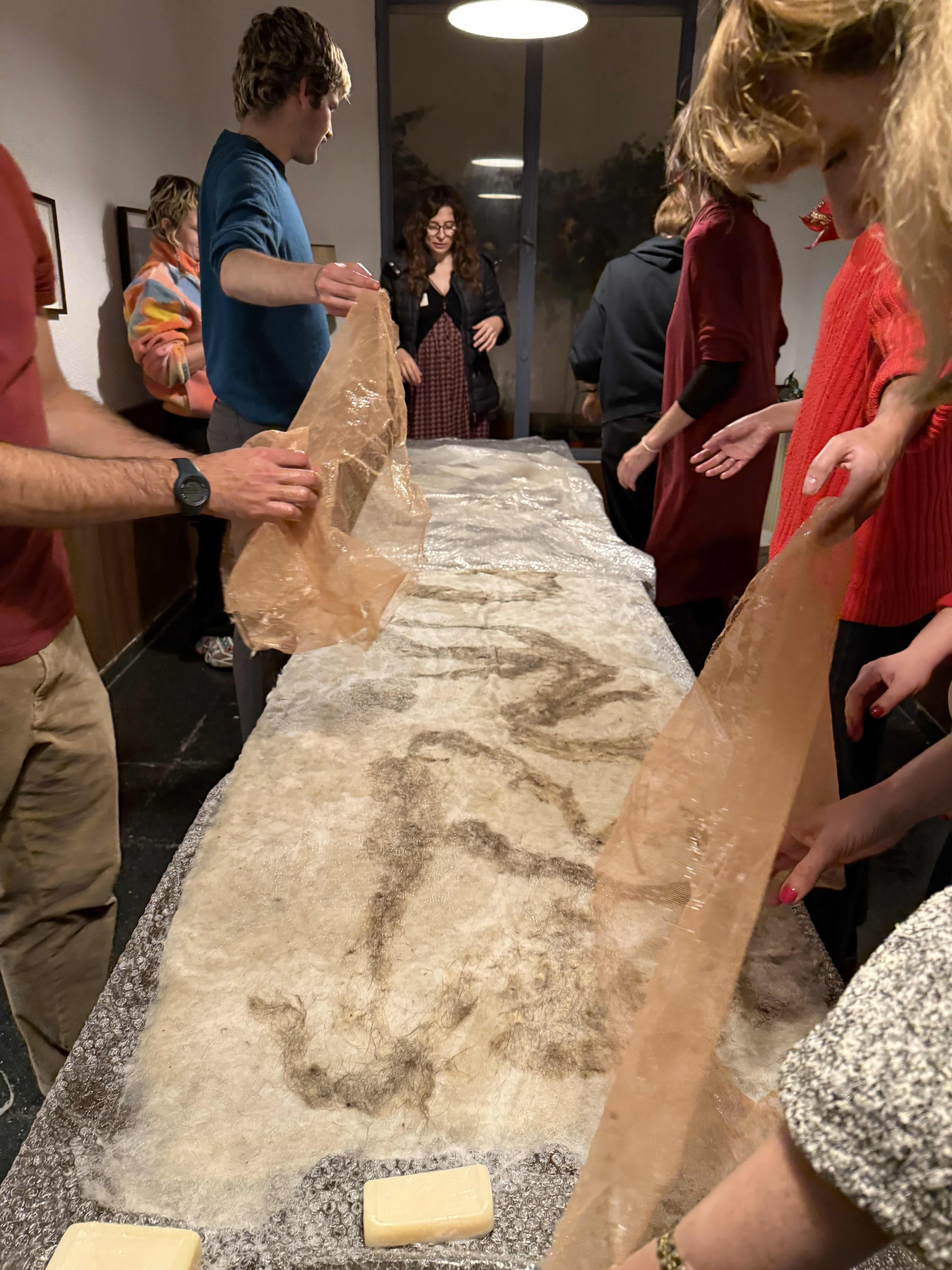
Wool preparation at Paisanaje
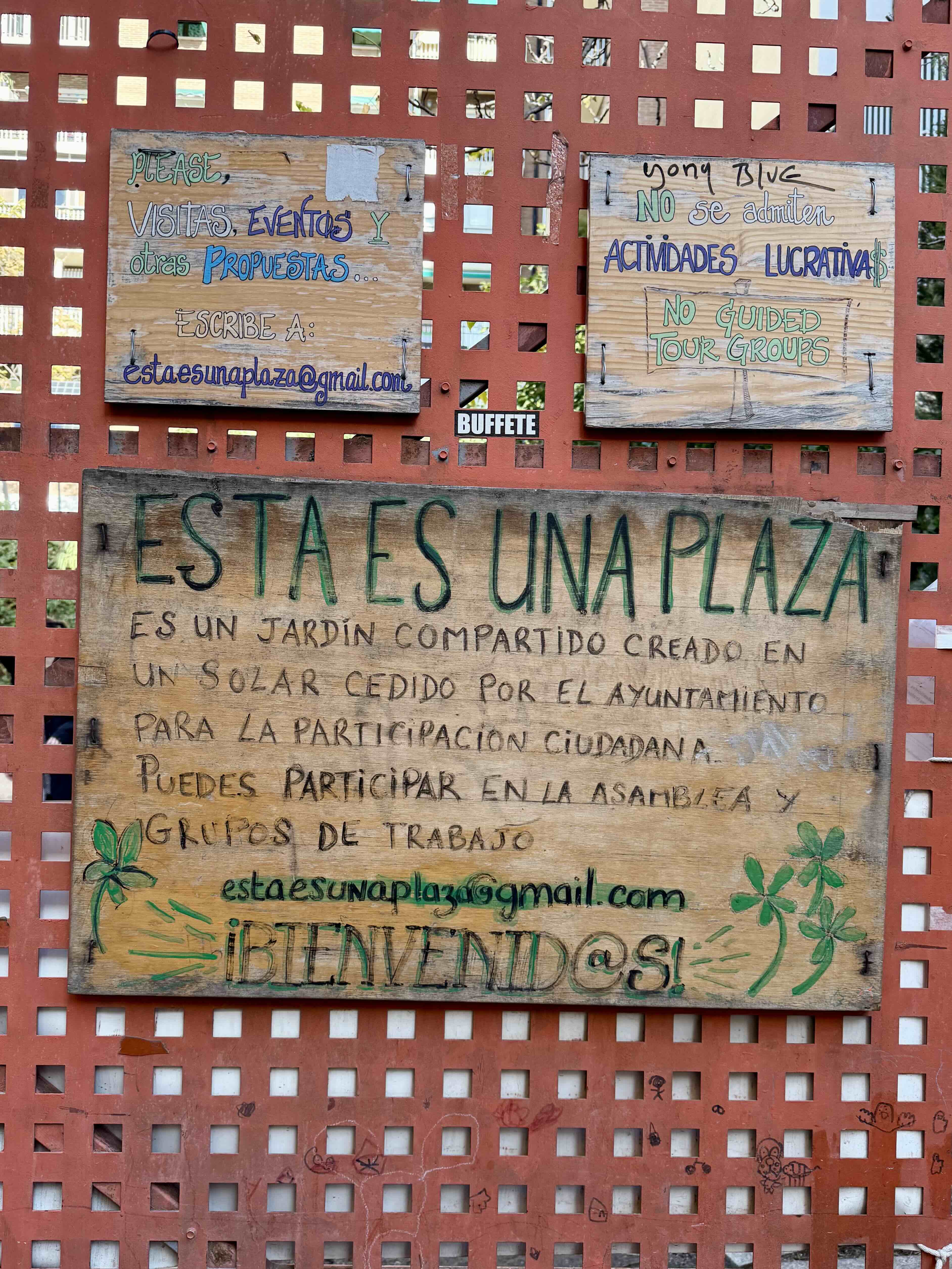
Esta es una Plaza public garden
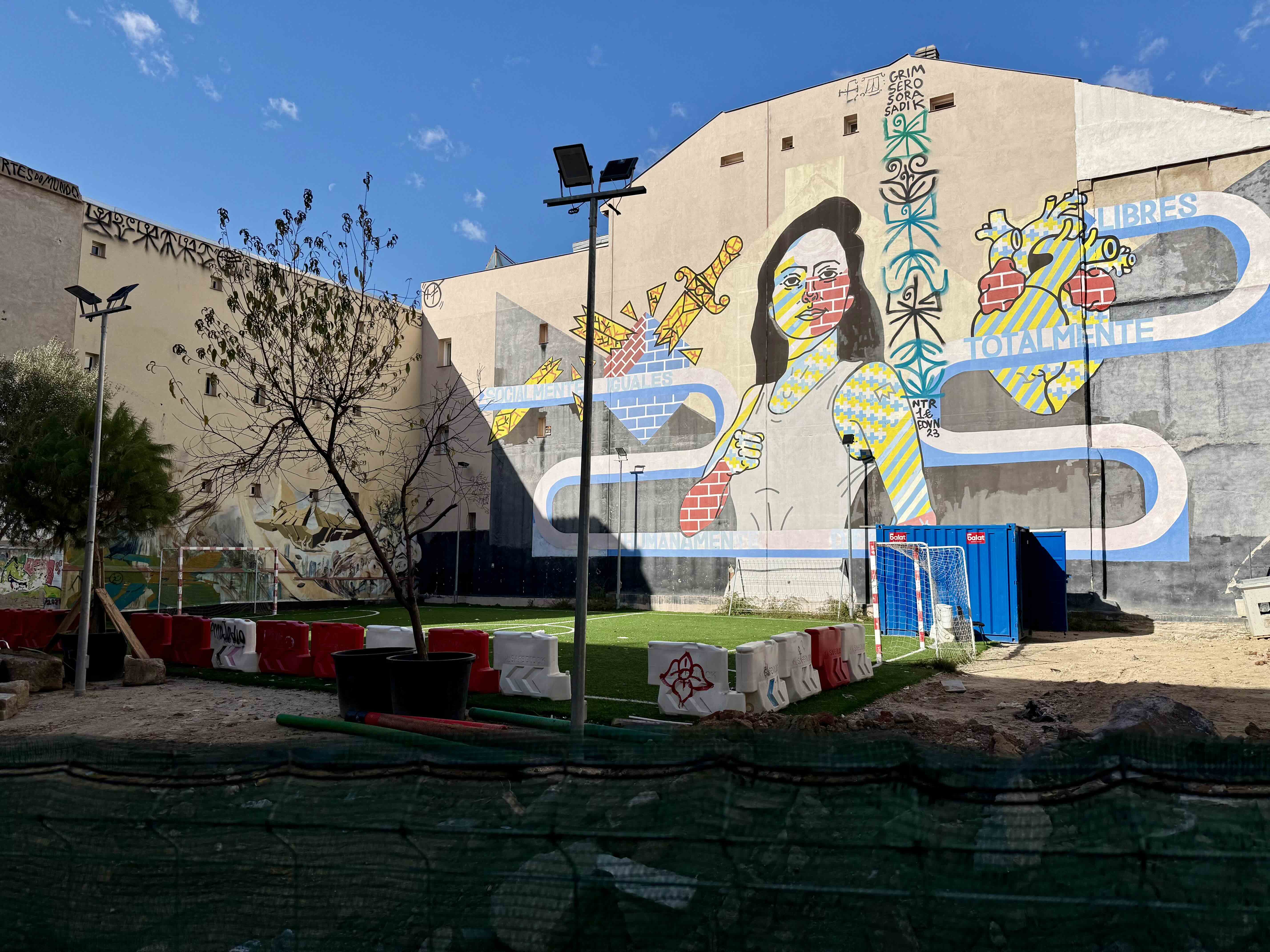
Dragones de Lavapies’public field

Asociación Valiente Bangla
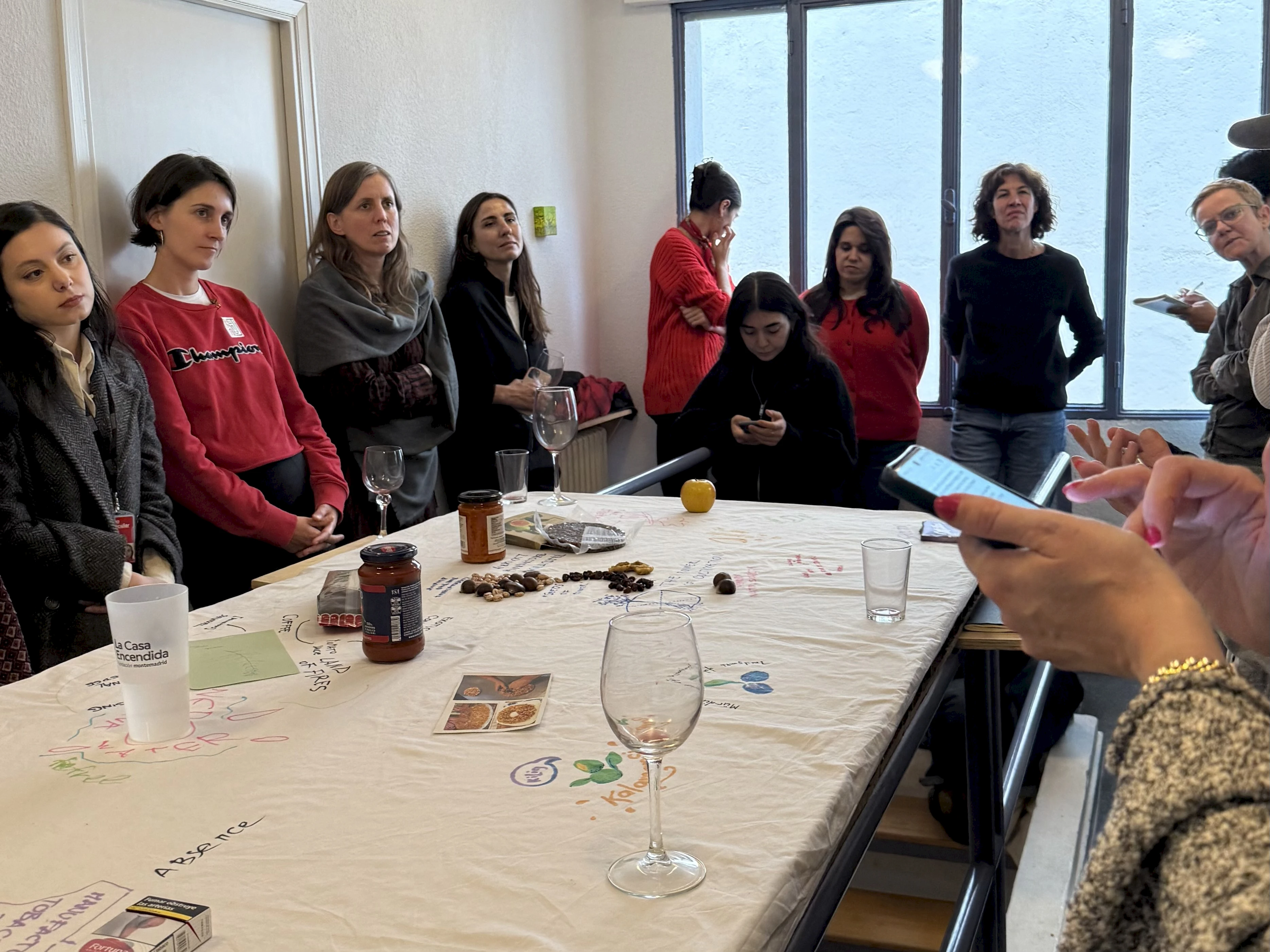
Sharing food and sharing histories
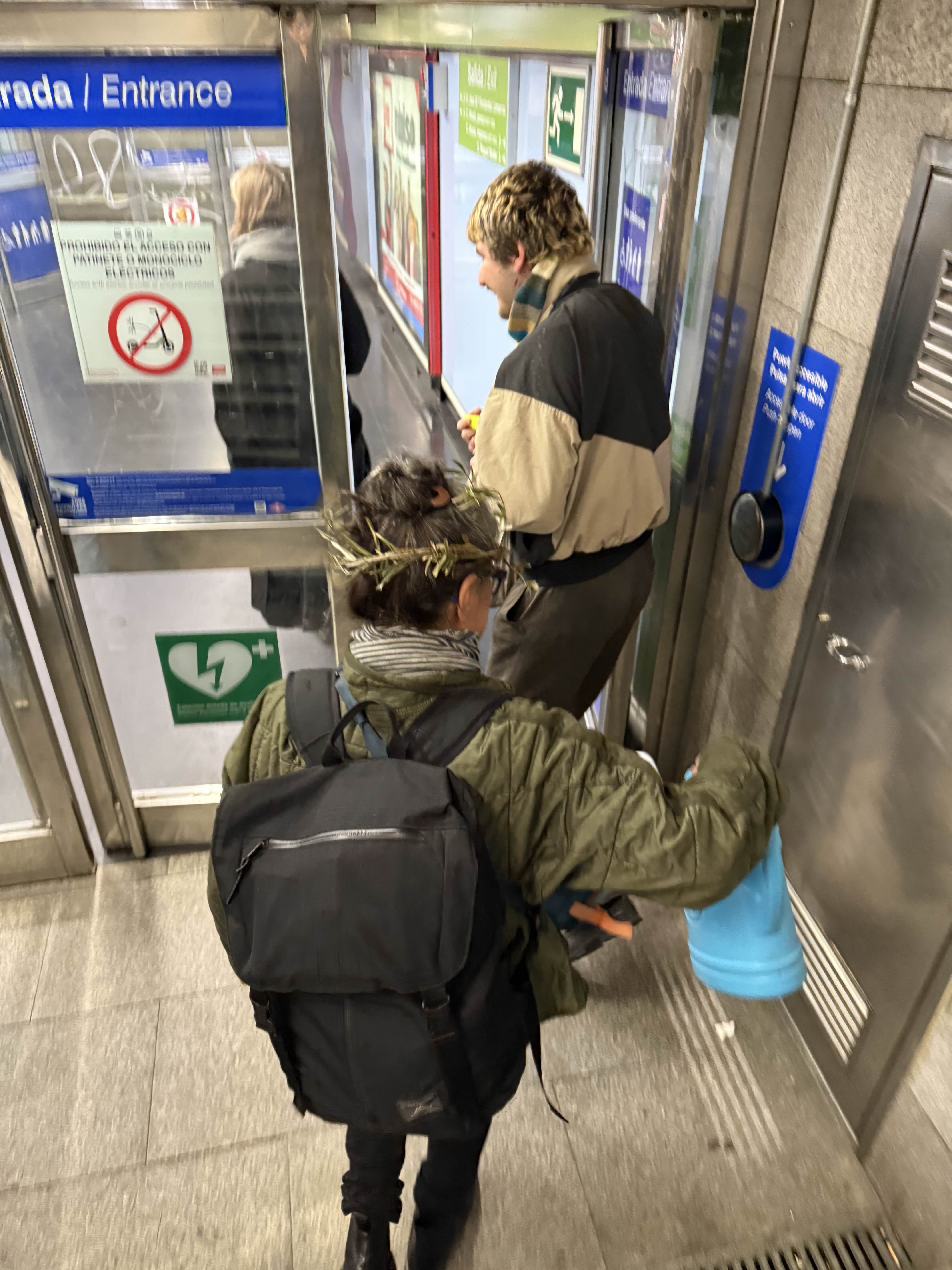
Subway commute in Madrid
Related contributions and publications
-
Schools: Editorial
L'Internationale Online Editorial BoardSchools -
Activating Pink Triangle. Didactic materials and pedagogical proposals for a diverse school
Museo Reina Sofia -
Glossary of Common Knowledge, Vol. 2
Schools -
Glossary of Common Knowledge
Schools -
Prácticas lumbung para resistir y colaborar desde el arte
Constanza Yévenes BiénzobasEN eslumbungSituated OrganizationsMuseo Reina Sofia -
Algunos términos que guían a lumbung press: Definiendo “edición”
Erick BeltránEN eslumbungSituated OrganizationsMACBA -
In the Battles of Language / En las batallas del lenguaje
Marina Garcés, Silvia Rivera CusicanquiDialoguesMACBA
Related activities
-
MACBA
School of Common Knowledge: Fred Moten
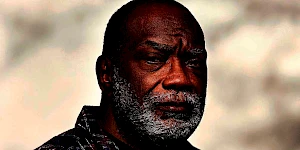
Fred Moten gives the lecture Some Prœposicions (On, To, For, Against, Towards, Around, Above, Below, Before, Beyond): the Work of Art. As part of the Project a Black Planet exhibition, MACBA presents this lecture on artworks and art institutions in relation to the challenge of blackness in the present day.
-
–Museo Reina SofiaMACBA
Open Call – School of Common Knowledge 2025
Museo Reina Sofía and MACBA Museu d’Art Contemporani de Barcelona (MACBA) invite applications for the 2025 iteration of the School of Common Knowledge, which will take place in Madrid and Barcelona 11-16 November 2025. The School of Common Knowledge (SCK) draws on the network, knowledge and experience of L’Internationale. Its ambition is to be both nomadic and situated, looking at specific cultural and geopolitical situations while exploring their relations and interdependencies with the rest of the world. This year, the SCK program focuses on the contested and dynamic notions of rooting and uprooting in the framework of present – colonial, migrant, situated, and ecological – complexities. Building on the legacy of the Glossary of Common Knowledge and the current European program Museum of the Commons, the SCK invites participants to reflect on the power of language to shape our understanding of art and society through a co-learning methodology.
-
–MACBAMuseo Reina Sofia
School of Common Knowledge 2025
The second iteration of the School of Common Knowledge will bring together international participants, faculty from the confederation and situated organizations in Barcelona and Madrid.
-
–MACBA
The Open Kitchen. The fermented seed, colonialism and extractivism
The MACBA Kitchen is a working group situated against the backdrop of ecosocial crisis. Participants in the group aim to highlight the importance of intuitively imagining an ecofeminist kitchen, and take a particular interest in the wisdom of individuals, projects and experiences that work with dislocated knowledge in relation to food sovereignty.
-
MACBA
The Kitchen: Workshop by Marina Monsonís
The Kitchen is a meeting place open to the participation of all, especially people and organizations that want to share their knowledge and experiences around the kitchen.
-
–MACBA
Where are the Oases?
PEI OBERT seminar
with Kader Attia, Elvira Dyangani Ose, Max Jorge Hinderer Cruz, Emily Jacir, Achille Mbembe, Sarah Nuttall and Françoise VergèsAn oasis is the potential for life in an adverse environment.
-
MACBA
Mobile Garden. A Place to Meet
An open space, a social space. How could the Museum be more open to the needs of the neighbourhood?
-
MACBA
Anti-imperialism in the 20th century and anti-imperialism today: similarities and differences
PEI OBERT seminar
Lecture by Ramón GrosfoguelIn 1956, countries that were fighting colonialism by freeing themselves from both capitalism and communism dreamed of a third path, one that did not align with or bend to the politics dictated by Washington or Moscow. They held their first conference in Bandung, Indonesia.
-
Museo Reina Sofia
School of Commoning Practices
This exchange programme gathers different schools organized by volunteers and migrant communities in Athens (Open School for Migrants) and Madrid (School of Rights, Escuela de Español and Situated mediation School) in order to share their knowledge, exchange strategies and reflect on the experience of working together with migrant communities.